Reg No. - CHHBIL/2010/41479ISSN - 2582-919X

Centre Requires Visa for Continued Stay of Eligible Minority Migrants From Three Countries
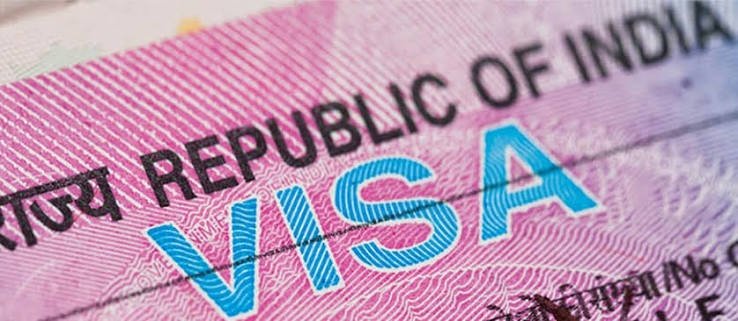
An Indian visa. The Home Ministry’s amended order requires eligible migrants covered by the exemption to obtain a visa for continued stay in India. (Representational image)
The Home Ministry retains conditional relief for Hindus, Sikhs, Buddhists, Jains, Parsis and Christians who sought shelter in India by 31 December 2024, while requiring them to obtain a visa to remain in the country.
Key Highlights
- The amendment covers members of six minority communities from Afghanistan, Bangladesh and Pakistan who entered India on or before 31 December 2024 because of religious persecution or fear of it.
- It applies to eligible people who arrived without valid travel documents or whose documents subsequently expired. They must obtain a visa in the appropriate category for continued stay.
- The order was dated 4 November 2026 and took effect when it was published in the Official Gazette on 5 November.
- The 2024 cut-off applies to this immigration exemption. The Citizenship (Amendment) Act, 2019, has a separate entry cut-off of 31 December 2014.
New Delhi: The Ministry of Home Affairs has made a visa mandatory for the continued stay of eligible migrants from six religious minority communities in Afghanistan, Bangladesh and Pakistan who sought shelter in India on or before 31 December 2024. The change covers people who entered without valid travel documents and those whose documents expired after arrival.
The Immigration and Foreigners (Exemption) (Amendment) Order, 2026, revises the exemption framework introduced in September 2025. It retains conditional relief from ordinary passport and visa requirements for the specified groups, while expressly requiring each eligible person to obtain an “appropriate category of visa” after entry to continue living in India.
Who falls within the exemption
The provision names six communities: Hindus, Sikhs, Buddhists, Jains, Parsis and Christians. It covers people from Afghanistan, Bangladesh or Pakistan who were compelled to seek shelter in India because they faced religious persecution or feared it. The date of entry is inclusive, so a person who arrived on 31 December 2024 can fall within the provision if the other conditions are met.
The amendment addresses two situations. The first is arrival without a valid passport or other travel document. The second is arrival with valid documents that have since expired. The exemption provides relief for both situations, and the requirement to obtain a visa for continued stay applies in both. The clause specifies the need for an appropriate visa category without naming a single category for everyone it covers. r
Why the immigration and citizenship dates differ
The 31 December 2024 date determines which arrivals can fall within this immigration exemption. Citizenship eligibility is governed separately. The Citizenship (Amendment) Act, 2019, refers to members of the same six communities from the same three countries who entered India on or before 31 December 2014 and meet the applicable statutory conditions.
That distinction matters for people who arrived between the two dates. Someone who entered in 2020, for example, may meet the date condition for the immigration exemption and still be required to obtain a visa for continued stay. Their date of entry falls outside the cut-off specified in the 2019 citizenship amendment.
The order also revises other travel exemptions
The amendment, issued under Section 33 of the Immigration and Foreigners Act, 2025, makes separate changes for several other categories. These include documentation rules for travel involving Nepal and Bhutan, permit and registration conditions for specified Tibetan entrants, and provisions for registered Sri Lankan Tamil nationals who took shelter in India by 9 January 2015. The conditions vary by category. The visa requirement for the six minority communities appears in the specific clause governing their entry and stay.

YOU MAY LIKE THIS