Reg No. - CHHBIL/2010/41479ISSN - 2582-919X

Behind Chandra’s Tata Sons Exit: Boardroom Differences End a Decade at the Top
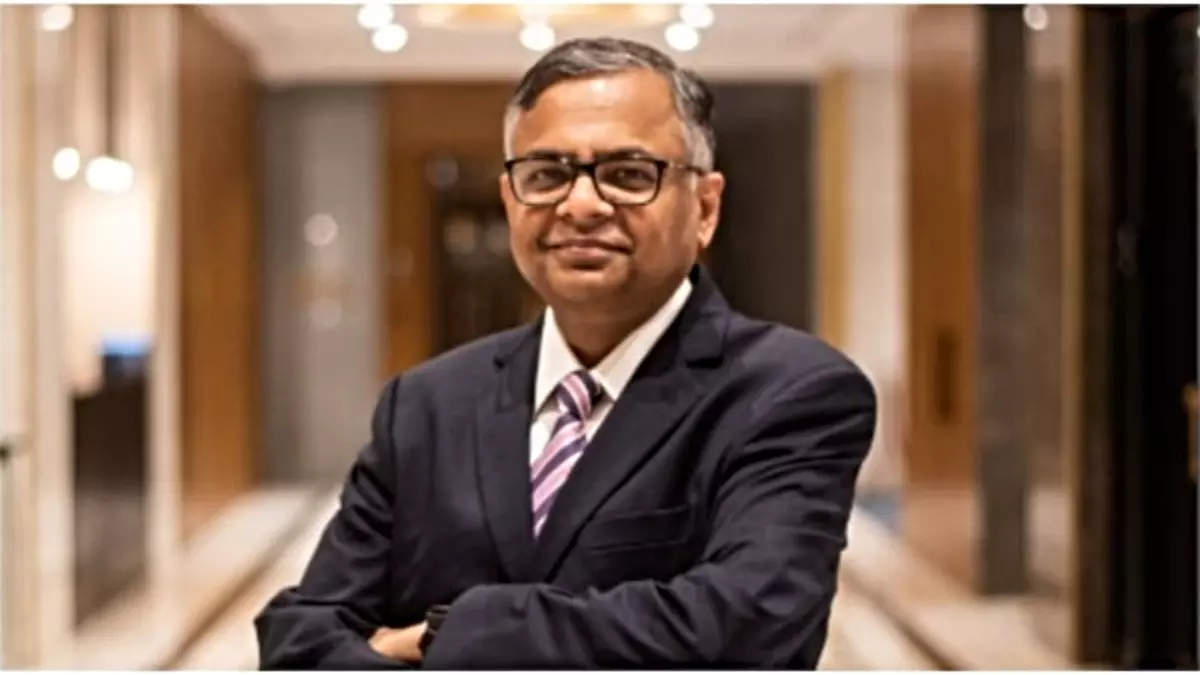
Tata Sons Chairman N Chandrasekaran, who has decided not to seek reappointment after his current term ends on February 20, 2027, bringing his decade-long leadership of the Tata Group’s holding company towards a close-Photo Credit:PTI
Lack of unanimous support for a third term leaves Tata Group facing a crucial succession decision as strategic differences surface within its leadership
N Chandrasekaran will step down as Chairman of Tata Sons when his current term ends on 20 February 2027, bringing to a close a decade at the helm of one of India’s most powerful corporate groups and opening a consequential succession battle at the Tata conglomerate.
Chandrasekaran, widely known as Chandra, announced that he would not offer himself for reappointment after months of uncertainty over a proposed third five-year term.
His decision followed the failure of the Tata Sons board to reach unanimity over his continuation, even though the Sir Dorabji Tata Trust and Sir Ratan Tata Trust had recommended extending his tenure by another five years.
Explaining his decision, Chandrasekaran said he had completed 40 years of professional life with the Tata Group and described the opportunity to lead the institution as immensely satisfying.
He said the two principal Tata trusts had unanimously recommended his extension and that the proposal had subsequently been recorded and recommended by the Tata Sons Nomination and Remuneration Committee and the board.
The matter came before the Tata Sons board on 24 February 2026, but the proposal did not proceed because one board member did not support it.
Chandrasekaran did not publicly identify the dissenting director.
“In the absence of unanimous support, I chose to defer the decision,” he said, adding that six months had passed without a resolution.
Why Chandra decided not to wait
For Chandrasekaran, continuing uncertainty over the chairmanship appears to have become increasingly difficult to reconcile with the scale of decisions confronting the group.
Tata Sons sits at the centre of an enormous corporate network spanning information technology, automobiles, steel, aviation, consumer businesses, financial services, electronics and emerging areas such as semiconductor manufacturing.
Chandrasekaran said several strategic projects were at critical stages of execution and argued that clarity over who would lead the group beyond February 2027 was important not only for Tata Sons but also for employees, investors, partners and other stakeholders.
Against that background, he informed the board that he would not seek reappointment and asked it to decide on his successor early enough to permit an orderly transition.’
Noel Tata and the differences behind the impasse
The unresolved reappointment has unfolded against reported differences between Chandrasekaran and Tata Trusts Chairman Noel Tata, who assumed the chairmanship of Tata Trusts following Ratan Tata’s death in 2024.
Tata Trusts collectively controls around two-thirds of Tata Sons, giving the trusts a decisive position in the governance architecture of the group.
Reports preceding Chandrasekaran’s announcement had pointed to differences over several strategic questions, including the future status of Tata Sons, the performance and direction of major group businesses and the broader relationship between Tata Sons and Tata Trusts.
One particularly sensitive issue has been the possibility of a public listing of Tata Sons. Reports have indicated that Noel Tata sought clarity over keeping Tata Sons unlisted, while questions have also persisted over how an exit could eventually be provided to the Shapoorji Pallonji Group, a major minority shareholder, without taking the holding company public.
The disagreement should nevertheless not be reduced to a personal confrontation between the two men. At its core lies a larger governance question: how should power and strategic oversight be balanced between Tata Sons, which manages the commercial empire, and Tata Trusts, its controlling shareholder?
Boardroom differences did not stop business
Despite the tensions surrounding Chandrasekaran’s reappointment, the differences did not bring the functioning of the group to a standstill.
Board-level discussions continued on major businesses and strategic concerns, including Air India and the group’s digital operations.
That distinction is important. The episode reflects a disagreement over leadership, governance and strategy rather than evidence of institutional paralysis across the Tata Group.
What has changed with Chandrasekaran’s announcement is that the uncertainty now has a deadline.
By February 2027, Tata Sons must have a leadership structure capable of steering a sprawling group through some of its most ambitious — and difficult — investments.
Four decades with Tata, a decade at the top
Chandrasekaran’s departure will close an extraordinary career within the Tata system.
He joined Tata Consultancy Services in 1987 and rose through its ranks before becoming TCS chief executive in 2009. In 2017, he was appointed Chairman of Tata Sons following the turbulent removal of Cyrus Mistry and Ratan Tata’s period as interim chairman.
Under Chandrasekaran, the group expanded aggressively into aviation, electronics, electric mobility and semiconductor manufacturing while continuing to build its established businesses.
The acquisition and rebuilding of Air India became one of the most visible projects of his tenure, while the group also committed substantial capital to technology-intensive manufacturing.
But the final phase of his chairmanship has coincided with formidable challenges, ranging from difficulties at Air India and Jaguar Land Rover to disruption in the global technology industry as artificial intelligence reshapes the traditional IT-services business.
The succession question now takes centre stage
Chandrasekaran’s announcement does not mean an immediate change of leadership. He remains Tata Sons Chairman until his existing tenure expires on 20 February 2027.
What it does is remove the uncertainty over whether he will seek another five years.
The more important question now confronting Tata Sons and Tata Trusts is who comes next — and whether the choice can command the broad confidence that Chandrasekaran himself concluded was necessary to continue.
That decision will carry significance far beyond the chairman’s office. Tata Sons controls a corporate group operating across more than 100 countries, and decisions made at the holding-company level influence some of India’s largest businesses.
Chandrasekaran described leading Tata Sons as “a great honour and a profound responsibility”.
His decision to leave rather than continue amid an unresolved boardroom divide now turns the spotlight from his tenure to the Tata Group’s next generation of leadership.

YOU MAY LIKE THIS