Reg No. - CHHBIL/2010/41479ISSN - 2582-919X

Arun Sao Tells Urban Officials to Hit the Streets: ‘See the Ground Reality, Get the Work Done’
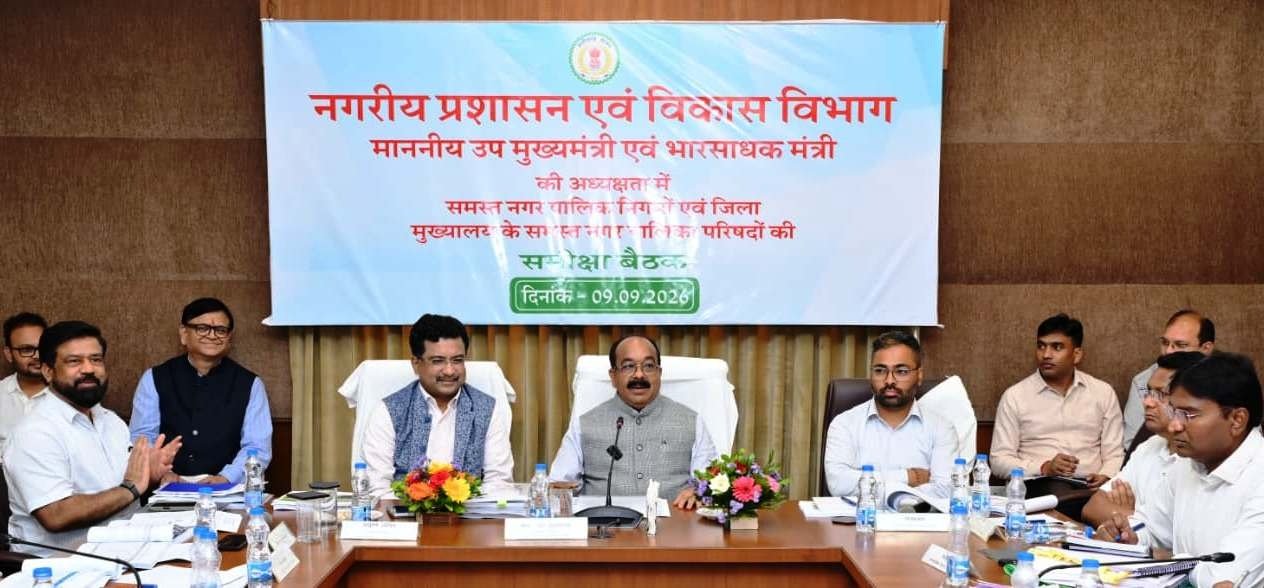
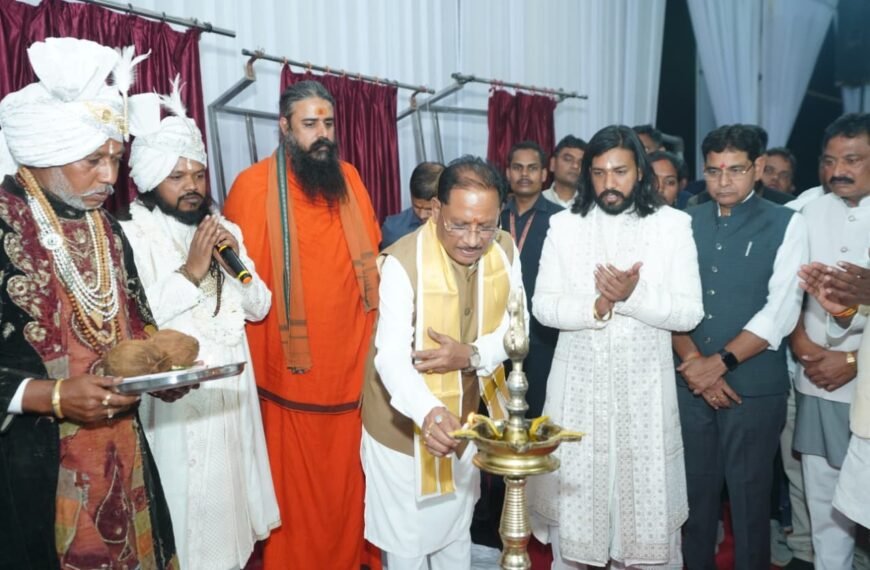
Deputy Chief Minister and Urban Administration Minister Arun Sao (centre) reviews urban development and civic services with Principal Secretary Sonmoni Borah (third from left) and senior officials in Nava Raipur on September 9, 2026. Sao called for daily morning inspections to see the “ground reality”, while Borah stressed that the impact of urban governance must be visible to citizens-Photo Credit: primelookindia. com via CG/DPR
Deputy CM calls for morning inspections, faster civic works and online property-tax payments; Sonmoni Borah says impact of urban governance must be visible on the ground
Key Highlights
- Morning field inspections: Commissioners and CMOs asked to personally inspect sanitation, construction and civic conditions.
- Online property tax: Urban bodies directed to expand digital payment facilities and identify new taxable properties.
- 50-year water roadmap: Cities asked to plan now for long-term water demand, conservation, harvesting and reuse.
- Action against encroachments: Officials told to intervene promptly against illegal occupation and unauthorised construction.
- Urban forests: Vacant urban spaces to be identified for intensive plantation and green development.
- Ground-level results: Sonmoni Borah says citizens should see and experience the impact of municipal governance.
Raipur: Chhattisgarh Deputy Chief Minister and Urban Administration and Development Minister Arun Sao has asked senior municipal officials to move beyond office-based reviews and personally inspect cities every morning, saying effective urban governance must be visible on the streets and experienced by citizens.
Reviewing the functioning of all municipal corporations and municipalities located at district headquarters at a meeting in Nava Raipur on September 9, Sao directed municipal commissioners and Chief Municipal Officers (CMOs) to accelerate development projects, strengthen sanitation, improve revenue collection and ensure timely implementation of government schemes.
He stressed that urban local bodies should not function merely as institutions that spend allocated budgets, but should plan for the future of cities and provide reliable civic amenities.
“Officials should go out into the city in the morning, see the ground reality and get the work done,” Sao said, emphasising regular field inspections.
Principal Secretary, Urban Administration and Development, Sonmoni Borah and Director Nilesh Kumar Kshirsagar were among the senior officials present at the review.
From Property Tax to Water Security: Sao Sets Priorities
Sao asked urban bodies to develop an effective system of regular reviews covering revenue collection, construction, sanitation and implementation of welfare schemes on different days of the week.
He directed officials to expand online property-tax payment facilities and conduct property surveys to identify properties that have not yet entered the tax network. The objective, he said, should be to strengthen municipal revenues while making tax payments easier for citizens.
Engineers were instructed to ensure both speed and quality in construction and closely monitor projects under execution.
Sao also called for prompt action against illegal occupation, encroachment and unauthorised construction. Failure to deal with such development at an early stage, he cautioned, eventually places additional pressure on roads, water supply, electricity and other civic infrastructure.
Daily morning visits by commissioners and CMOs, he said, would allow officials to assess sanitation and construction work directly while also obtaining feedback from residents.
With Chhattisgarh witnessing growing opportunities in investment and tourism, Sao said urban infrastructure must be developed keeping future requirements in mind.
“Urban bodies are not merely institutions for spending budgets; they have the responsibility of planning the future of cities, providing public amenities and working for citizens’ welfare,” Sao said.
Plan Today for Cities’ Water Needs 50 Years Ahead
Water security emerged as another major focus of the meeting. Sao directed urban bodies to think beyond immediate requirements and prepare strategies keeping the next 50 years of water demand in view.
He called for comprehensive plans covering water conservation, rainwater harvesting, reuse of treated water and dependable drinking-water supply to every urban household.
“We need to start working now with a long-term strategy to prevent a water crisis in the future,” Sao said.
He reminded municipal officials that their decisions and performance directly shape both the image of a city and the direction of its development, and urged them to work with sensitivity, accountability and their full administrative capacity.
Citizens Must Feel the Presence of Their Urban Body’: Sonmoni Borah
Principal Secretary Sonmoni Borah reinforced the emphasis on visible governance, telling officials that the responsibility of municipal bodies extends far beyond construction projects and implementation of schemes.
“The city’s systems should function in such a way that citizens feel the presence of their urban local body,” Borah said.
Rapid urbanisation and rising public expectations, he said, require municipalities to prepare a roadmap for future requirements and implement it effectively.
Borah stressed that providing basic services and developing modern urban systems are both constitutional responsibilities of local bodies.
“The impact of schemes and development works should not remain on paper; it must be clearly visible on the ground,” he told officials.
He directed municipal commissioners and CMOs to ensure effective implementation of urban development and welfare programmes and encouraged greater participation of residents in civic events and programmes.
Borah also asked urban bodies to identify vacant spaces for intensive plantation and development of urban forests, keep footpaths free of encroachments and ensure serious compliance with National Green Tribunal directions.
Regular meetings of general bodies and Mayor-in-Council (MIC) meetings should also be conducted within prescribed timelines, he said.
The review further focused on making under-construction Nalanda campuses operational at the earliest. Officials were asked to complete arrangements for furniture, IT infrastructure, books and other facilities and expedite necessary tenders.
Among the programmes and areas reviewed were infrastructure projects, the Mukhyamantri Nagarotthan Yojana, Pradhan Mantri Awas Yojana, Swachh Bharat Mission, solid-waste management, AMRUT Mission, water augmentation projects, PM SVANidhi, PM e-Bus initiatives, revenue collection, energy-bill audits, rainwater harvesting and public-service delivery.
SUDA CEO Sumit Agarwal, Additional Director Pulak Bhattacharya, Chief Engineer Ramesh Sharma, municipal commissioners, CMOs, revenue officials, senior engineers and divisional-level officers attended the meeting.

YOU MAY LIKE THIS