Reg No. - CHHBIL/2010/41479ISSN - 2582-919X

A pond of their own: Chhattisgarh’s livelihood ponds help rural families earn from rainwater
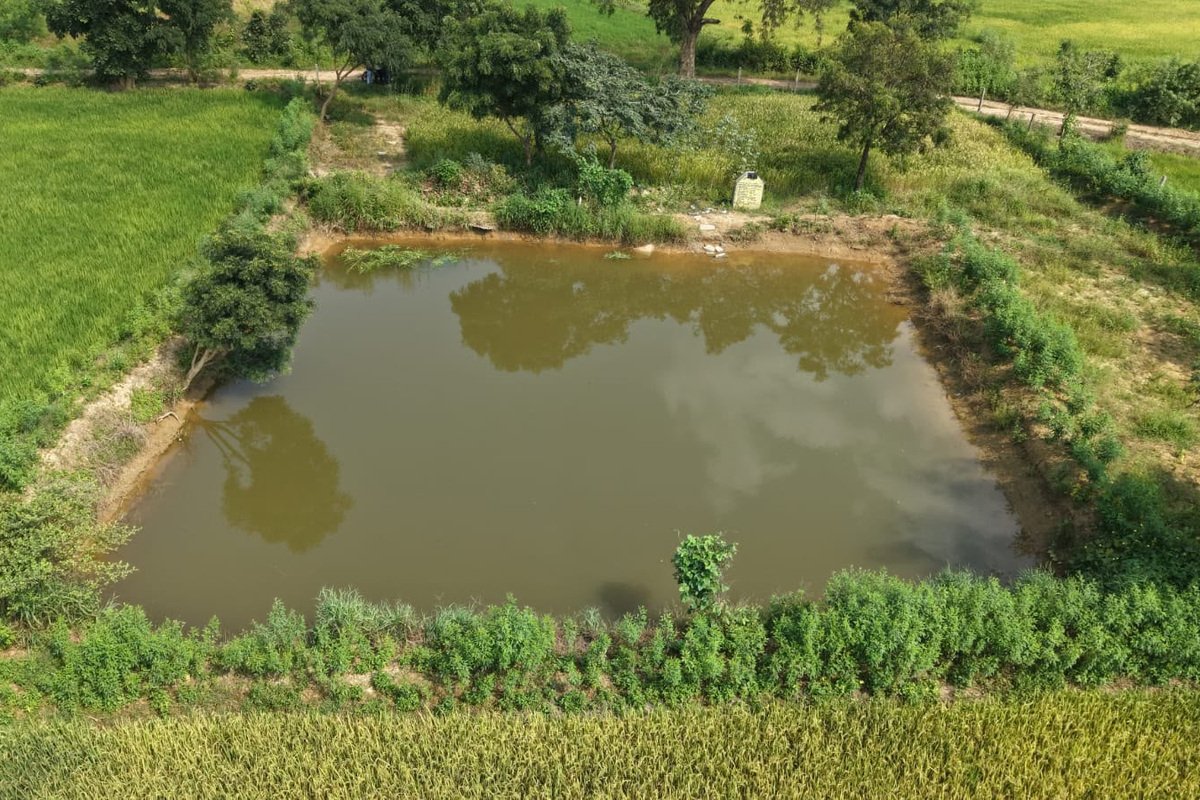
An aerial view shows rainwater stored in a livelihood pond amid cultivated fields in rural Chhattisgarh. The ponds can supply water for irrigation and support fish farming. Photo: primelookindia.com via CG/PR
The state built 15,000 aajeevika dabris last year, 50 per cent above target. More than 23,000 have been approved this financial year, with priority for women and Particularly Vulnerable Tribal Group families.
Key Highlights
- Chhattisgarh completed 15,000 livelihood ponds against a target of 10,000 last year.
- More than 23,000 ponds have been approved this year against a target of 20,000, following requests and approvals by gram sabhas.
- The ponds store rainwater for irrigation and can support fish farming and vegetable cultivation. Their construction also provides work within villages.
- Women beneficiaries’ names appear on project signboards, and QR codes give residents access to information about completed ponds.
Raipur: Beside a farm pond in Chhattisgarh, a woman holds up two fish, one in each hand. The photograph shows what a small body of water can make possible. A pond that holds rainwater can also support fish farming, water a vegetable plot or help a family keep a crop growing through a dry spell.
That is the idea behind Chhattisgarh’s aajeevika dabri, or livelihood pond, campaign. Launched by Chief Minister Vishnu Deo Sai on 14 December 2025, the initiative builds small ponds on beneficiaries’ private land under the VB–G RAM G scheme. It gives priority to rural women, Scheduled Tribe households and families from Particularly Vulnerable Tribal Groups (PVTGs).
The programme has moved beyond its initial construction target. Chhattisgarh built 15,000 ponds last year against a target of 10,000. In the current financial year, gram sabha requests and approvals have led to the sanction of more than 23,000 ponds against a target of 20,000.
A home and a pond for a Baiga household
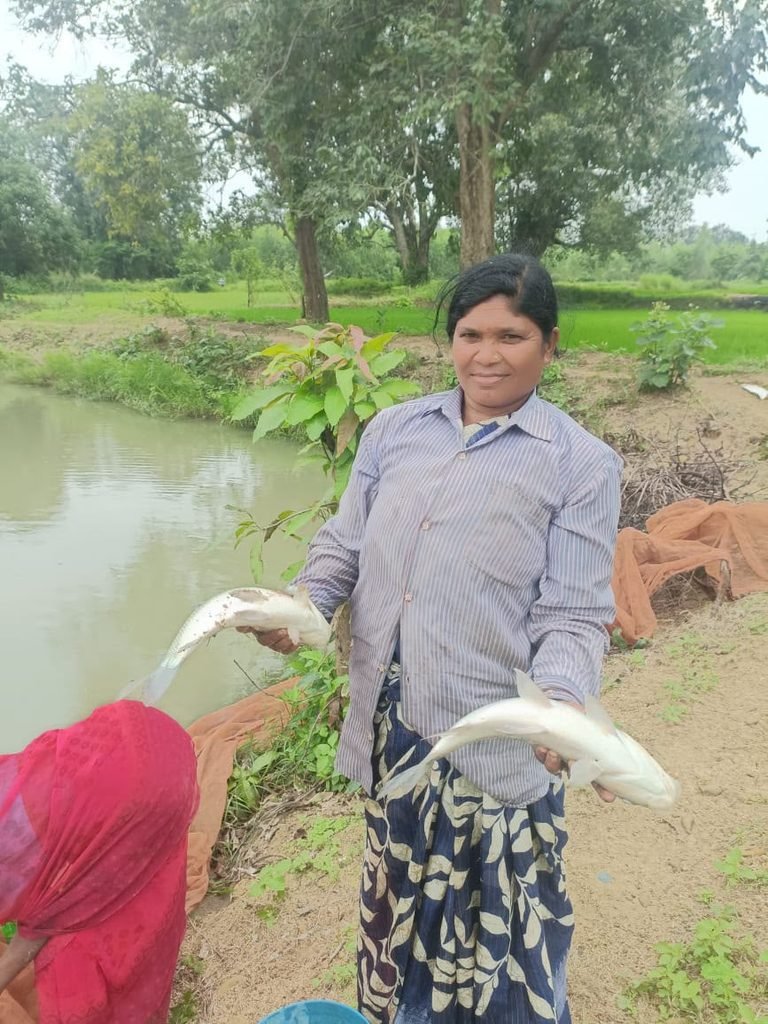
A woman holds up two fish beside a livelihood pond in rural Chhattisgarh, showing how farm ponds can support fish rearing alongside cultivation. Photo: primelookindia.com via CG/PR
In Kabirdham district, Adhururam Baiga received a house under PM-JANMAN and a livelihood pond through the campaign. The accompanying video shows him speaking beside cultivated fields and later standing outside his home. Aerial views show how a small pond sits within the surrounding farmland.
For a family that depends on cultivation, having water close to the field can influence what it chooses to grow. Stored rainwater can help irrigate vegetables or other crops when rainfall is uneven. Where conditions allow, the same pond can support fish farming, giving the family another product to sell.
The campaign has also reached Hiralal Baiga of Golardih gram panchayat in Khairagarh-Chhuikhadan-Gandai district, Rajni Bai in Jashpur, Pushpa Devi of Bangurkela gram panchayat in Balrampur, and Sonadai Poyam of Kachora gram panchayat in Kondagaon. Their ponds give them a resource they can put to use over successive seasons.
Women’s names on village assets
On ponds built for women beneficiaries, the project signboard carries the woman’s name. It publicly records who the work was sanctioned for. The practical significance comes once the pond fills. A woman who can draw on that water to grow vegetables or raise fish has more scope to decide how part of the family’s land is used and what it can produce.
For PVTG households, access to water near the farm can make horticulture and vegetable cultivation more feasible. Fish farming offers another option where the pond can hold enough water. The return will vary from household to household, depending on the water available and how the family uses it.
Village work now, water for the seasons ahead
The ponds provide employment to rural workers during construction. Once complete, they collect rainwater and give the beneficiary household a source of water for cultivation. The campaign also aims to support groundwater recharge and conserve local water resources.
The state government reports that Chhattisgarh now has no blocks classified as critical for groundwater and that the number of semi-critical blocks has fallen from 21 to 19. These are statewide figures.
Completed assets carry QR codes so villagers can look up project details. Residents are also shown how to access that information at the employment and housing days held on the seventh of each month.
The construction totals show how far the campaign has reached. The photograph of the woman with two fish shows what those numbers can mean on one farm: water held on the land long enough to produce something a family can use or sell.
Adhururam Baiga speaks beside his fields and is seen outside his PM-JANMAN home in Kabirdham district, Chhattisgarh. The video also shows the livelihood pond and surrounding farmland. Video: primelookindia.com via CG/PR

YOU MAY LIKE THIS