Reg No. - CHHBIL/2010/41479ISSN - 2582-919X

Tricycles and a chance to be heard at Sai’s Jan Darshan in Raipur
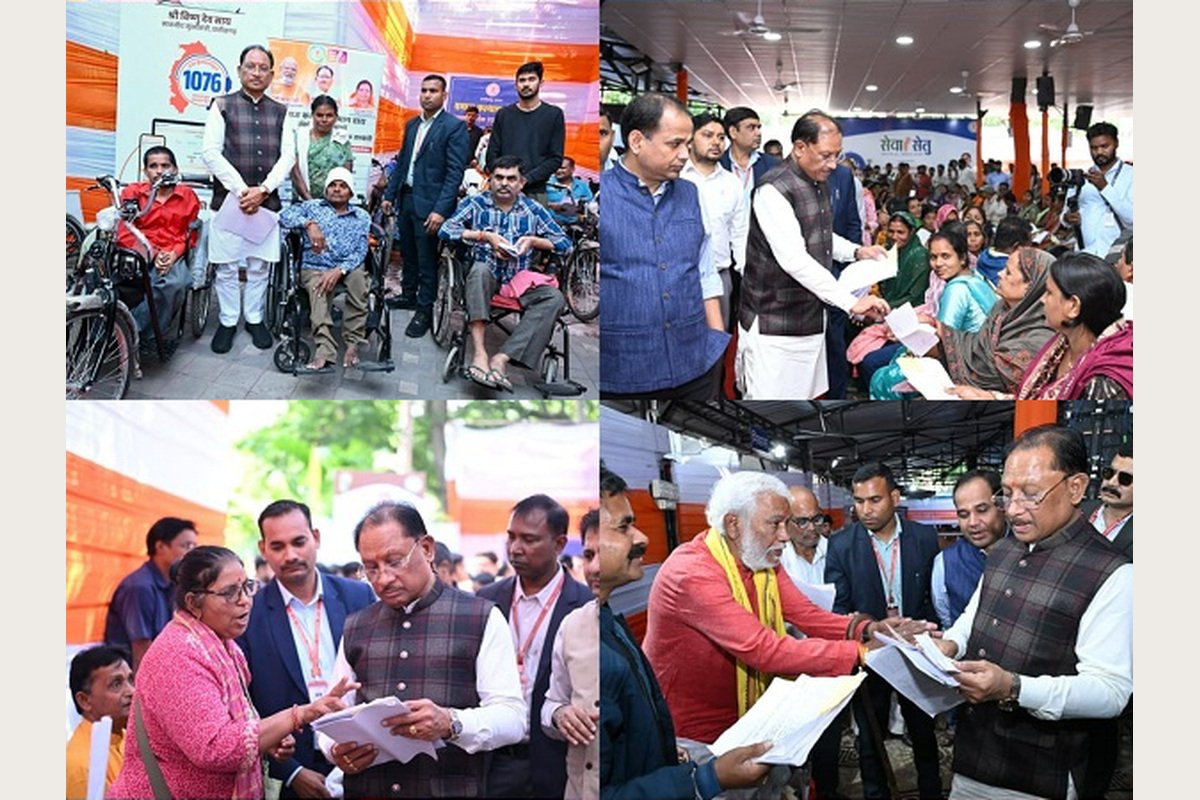
Chief Minister Vishnu Deo Sai stands with tricycle recipients, top left, and listens to residents who bring written applications to Jan Darshan at his official residence in Civil Lines, Raipur, on 26 November 2026. Photos: primelookindia.com via CG/PR
People from across Chhattisgarh brought their concerns directly to the Chief Minister, who met persons with disabilities on priority and heard requests for medical assistance.
Key Highlights
- Chief Minister Vishnu Deo Sai met residents at his official residence in Civil Lines, Raipur, on 26 November 2026.
- Tricycles were distributed to persons with disabilities who needed mobility support.
- Sai received written applications, including requests for medical assistance, and directed officials to address the concerns raised by persons with disabilities promptly.
Raipur: Some visitors approached Chief Minister Vishnu Deo Sai with applications in hand. Others spoke to him from their seats. At Thursday’s Jan Darshan at the Chief Minister’s residence in Civil Lines, people from different parts of Chhattisgarh had an opportunity to explain their concerns directly. For some visitors with disabilities, the session also brought practical assistance that day: tricycles to help them get around.
Sai met persons with disabilities on priority. He listened to the difficulties they raised and directed officials to act promptly on their requests. Senior officials were present as the Chief Minister spoke with visitors and received applications.
What a tricycle can mean in everyday life
A tricycle can make it easier to do things that many people take for granted: go to a nearby shop, visit a neighbour or reach a local office. The difference depends on the person and the roads they use. For someone who has to arrange help each time they leave home, however, having a way to make some of those trips independently can change how they plan their day.
One of the photographs from the gathering shows Sai standing beside visitors seated on tricycles. Elsewhere in the composite, a woman in pink speaks to him as he looks down at her papers, and an older man holds out his application. The scenes capture two parts of the same session: help delivered on the day and requests that still need to be acted on.
Families bring requests for medical help
People seeking medical assistance also came to Jan Darshan. Sai met visitors who had brought applications concerning health problems and help with treatment. For a family trying to arrange care, a conversation can make room for details that a form alone may leave out: how soon treatment is needed, what the family has already tried and where they are still waiting for help.
The applications reflected different needs, and the next step varied with each case. The tricycles were distributed at the venue. Requests for medical assistance and other grievances raised in person depend on follow-up by the officials responsible for handling them. That follow-up is where a visitor learns whether further documents are needed, whether assistance can be approved and when a decision can be expected.
A place to explain the concern behind the paperwork
Jan Darshan gives residents a way to put grievances, requests and suggestions directly before the Chief Minister. At Thursday’s session, Sai moved among visitors, including women seated together, and looked through papers handed to him. The presence of senior officials meant concerns could be raised in front of the administration while the people affected were there to explain them.
For those who arrived hoping to be heard, those few minutes were an opportunity to explain why a request mattered. For some who received a tricycle, the visit brought something they could use on the way home. For those whose applications were taken up at the session, its value will be measured by what happens after they leave the gathering.

YOU MAY LIKE THIS