Reg No. - CHHBIL/2010/41479ISSN - 2582-919X

India Calls for Immediate End to Attacks on Black Sea Shipping
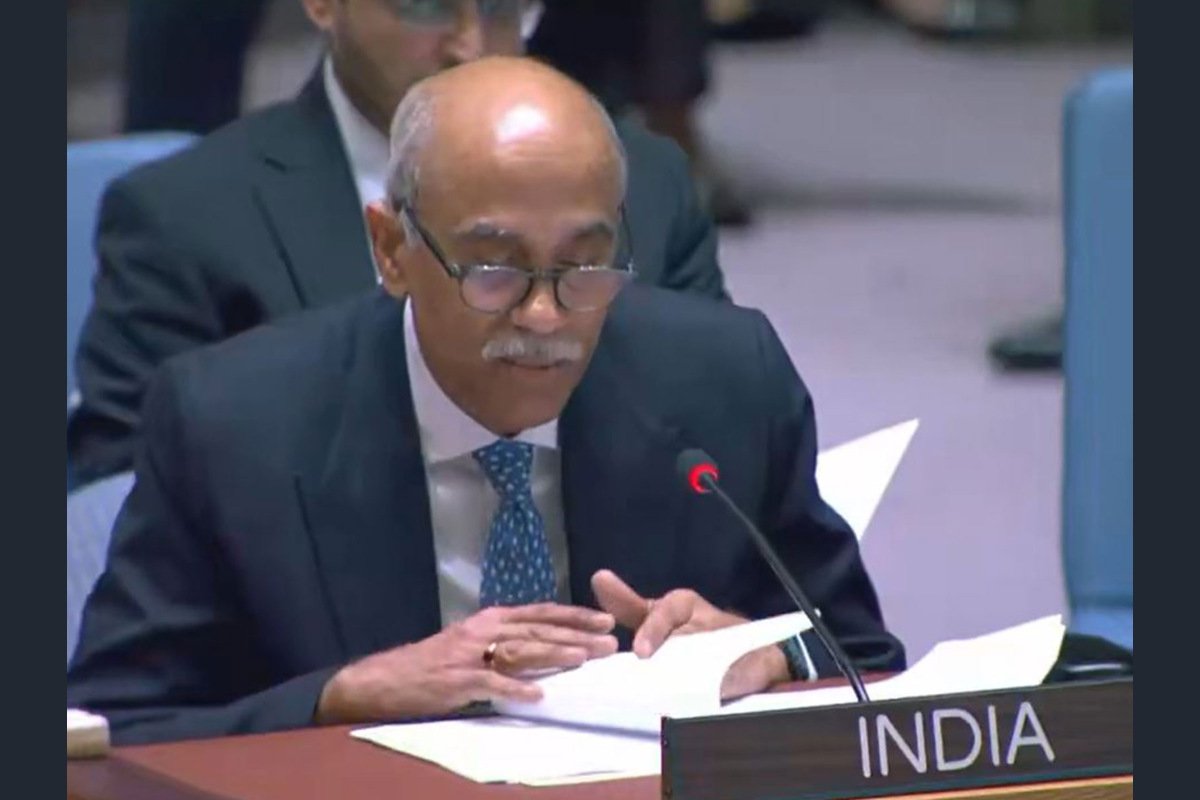
India’s Permanent Representative to the United Nations, Ambassador Parvathaneni Harish, speaks at the UN. At a Security Council briefing in New York on 23 November 2026, he called for an immediate end to attacks on commercial shipping and seafarers in the Black Sea. Photo Credit:ANI
At the UN Security Council, Ambassador Parvathaneni Harish cites the deaths and disappearances of Indian seafarers and says New Delhi is engaging Russia and Ukraine on crew safety and grain export routes.
New York: India has called for an immediate end to attacks on commercial ships and their crews in the Black Sea, urging the restoration of safe passage through international waterways. Addressing the UN Security Council on 23 November 2026, India’s Permanent Representative to the UN, Ambassador Parvathaneni Harish, cited attacks involving four merchant vessels and warned that disrupted shipping was putting seafarers at risk and threatening food supplies far beyond the war zone.
Key Highlights
- India urged the protection of merchant ships and seafarers and the swift restoration of safe navigation in the Black Sea.
- Harish said one Indian crew member died in the attack on the MV Omorfi. Attacks involving two other ships left four Indian seafarers dead and two missing.
- New Delhi is engaging both Russia and Ukraine on shipping safety and grain export corridors.
- The UN human rights office recorded reports of 164 attacks on commercial vessels in the Black Sea and parts of southern Ukraine between June and October. It had verified 15 of those attacks by the time of the briefing.
Indian seafarers at the centre of New Delhi’s appeal
Harish told the Council that an Indian crew member died when the MV Omorfi came under attack on 18 July. Three Indian nationals were aboard the MV Royad Mammadov when it was attacked in October. He also cited strikes involving the MV Golden Leo and the MV AGN Ragnar, which together left four Indian seafarers dead and two missing.
The envoy thanked partner countries for helping Indian crew members return home and for caring for those injured. He asked for “an end to the targeting of commercial shipping and seafarers” and called for safe navigation to be restored as soon as possible. For the families of crew members, the consequences of an attack can continue long after a vessel reaches port, particularly when someone is still missing.
Why the Black Sea matters to countries far from the war
Harish said Russia and Ukraine together account for nearly a quarter of global exports of wheat, maize and barley. He warned that disruptions to shipping and agricultural trade fall especially hard on countries of the Global South. India also stressed the need to keep food, fertiliser and energy supplies moving through international trade routes.
The World Food Programme brought a separate estimate to the briefing. Its Executive Director, Luke Lindberg, warned that roughly 10 million tonnes of Russian and Ukrainian wheat might fail to reach world markets this year, a quantity he said could feed 44 million people. His warning drew attention to a practical problem for food-importing countries. Grain can be available for export while attacks on shipping and port infrastructure prevent it from reaching the people who need it.
Harish invoked the Bengal famine of 1943 to illustrate how wartime decisions can inflict suffering far from the battlefield. His appeal linked the safety of a ship’s crew to what happens at its destination. An interrupted voyage can leave families waiting for news of seafarers and import-dependent countries waiting for food.
UN documents deaths and injuries aboard commercial vessels
UN Under-Secretary-General for Political and Peacebuilding Affairs Rosemary DiCarlo said the UN human rights office had recorded reports of 164 attacks on commercial vessels from June to October in the Black Sea and in Ukraine’s Odesa and Mykolaiv regions. The office had verified 15 attacks in which at least 21 vessel workers were killed and 43 injured.
DiCarlo said drone attacks continued to threaten civilian navigation and flagged incidents beyond Russian and Ukrainian territorial waters, including in Bulgaria’s exclusive economic zone and along Romania’s Black Sea coast. She called for civilian shipping and port infrastructure to be protected. The same briefing heard how attacks on Ukraine’s energy infrastructure were disrupting electricity, heating and water supplies as winter approached.
India is taking up shipping safety with both sides
Harish said New Delhi is speaking directly with Russia and Ukraine about protecting commercial vessels and crews and restoring grain export corridors. He also pointed to the Group of Friends on Safety and Security of Shipping and Seafarers, launched at the UN by India and Liberia. The voluntary group supports the work of the International Maritime Organization and the International Labour Organization on maritime and crew safety.
India reiterated its readiness to contribute to efforts towards a peaceful settlement through dialogue and diplomacy. Harish described what that would mean in practical terms for countries affected by the war: food reaching people who need it, cargo reaching port and seafarers returning home safely.

YOU MAY LIKE THIS