Reg No. - CHHBIL/2010/41479ISSN - 2582-919X

Nearly 50 crore Indians rose above poverty line in 12 years, Sai calls it a milestone and thanks Modi
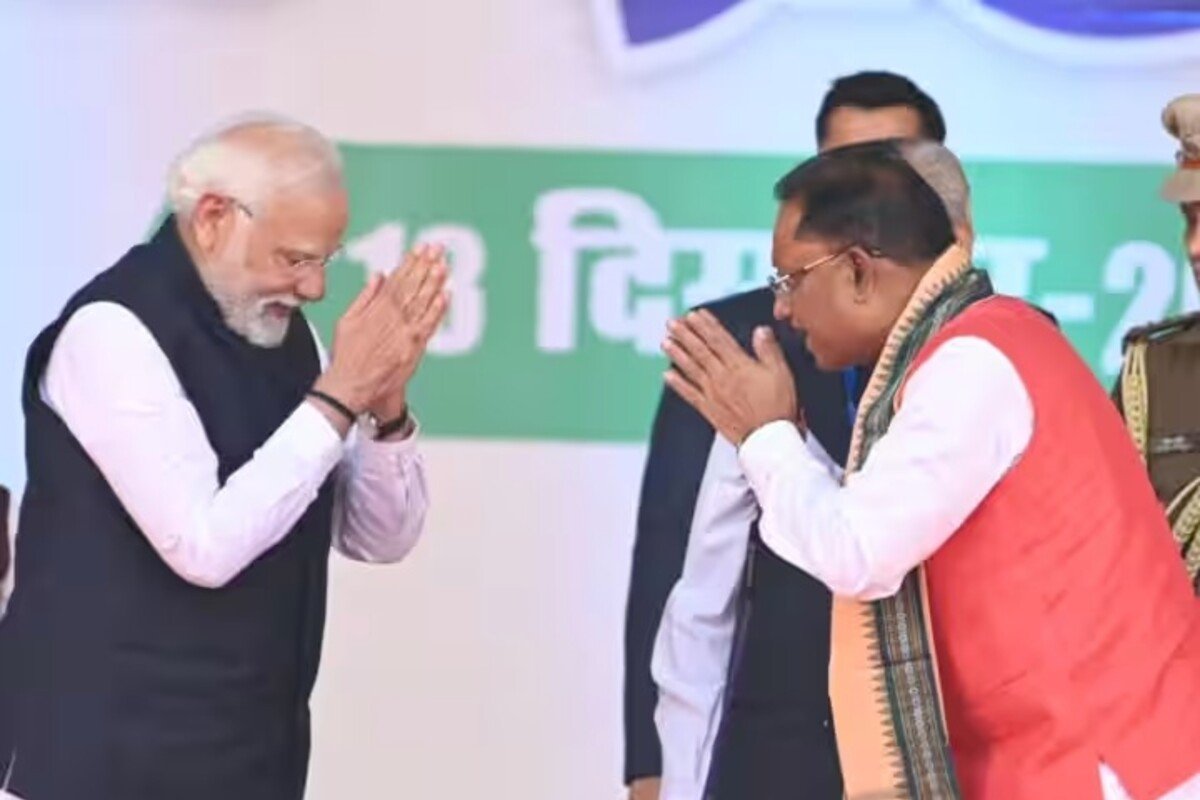
Prime Minister Narendra Modi (left) and Vishnu Deo Sai greet each other with folded hands moments after Sai takes oath as Chief Minister of Chhattisgarh at Science College Ground in Raipur on 13 December 2023. Photo: CG CMO.
The Chhattisgarh Chief Minister credits the Prime Minister’s focus on poorer households. The World Bank estimates that India’s poverty rate fell from 57.7 per cent to 16.1 per cent between 2011–12 and 2023–24 at its lower-middle-income benchmark.
Key Highlights
- Chief Minister Vishnu Deo Sai described the fall in poverty as a major achievement for India and thanked Prime Minister Narendra Modi for his efforts to improve living standards.
- The World Bank estimates that 49.6 crore fewer people were living below its $4.20-a-day poverty line in 2023–24 than in 2011–12.
- Over the same period, extreme poverty declined from 27.1 per cent to 2.6 per cent, measured at the Bank’s separate $3-a-day threshold.
- Sai had earlier linked his government’s first Cabinet decision on rural housing to Modi’s election pledge, calling it a “Modi guarantee”.
Raipur: Chhattisgarh Chief Minister Vishnu Deo Sai on Saturday described India’s decline in poverty as a major national achievement and thanked Prime Minister Narendra Modi for keeping the needs of poorer households in focus. Speaking to journalists on 21 November, Sai said nearly 50 crore people had risen above the poverty line over a 12-year period, citing a World Bank assessment.
Sai credited Modi’s leadership, resolve and commitment to improving the lives of people with limited means. He said sustained efforts had been made to raise living standards across the country and expressed gratitude to the Prime Minister. For a family living close to the poverty line, the stakes are familiar: whether there is enough for food, whether a child can stay in school and how much room there is in the budget when someone falls ill.
What the World Bank figures show
The World Bank’s October 2026 India Poverty and Equity Brief puts the decline at an estimated 496 million people, or 49.6 crore. Measured against its poverty line for lower-middle-income countries, the share of Indians living below the threshold fell from 57.7 per cent in 2011–12 to 16.1 per cent in 2023–24. The $4.20-a-day benchmark is expressed in 2021 purchasing-power terms, which allow for differences in what money buys across countries.
The Bank’s April 2026 India Development Update also estimated that extreme poverty, measured at $3 a day on the same purchasing-power basis, fell from 27.1 per cent to 2.6 per cent. About 3.5 crore people remained below that threshold in 2023–24. Sai’s remarks credited Modi’s leadership for the progress. The Bank’s figures describe the change across the full survey period, which began in 2011–12.
A promise of a home for 18 lakh rural families
A day after taking oath as Chief Minister, Vishnu Deo Sai made rural housing a priority at his first Cabinet meeting. On 14 December 2023, the Cabinet approved the sanctioning of 18 lakh homes under the Prime Minister’s housing scheme, a decision that brought the prospect of a home of their own closer for rural families across Chhattisgarh.
Speaking after the meeting, Sai recalled Narendra Modi’s campaign pledge that the incoming government would make the housing decision its first order of business. “We have kept our promise,” Sai said.

YOU MAY LIKE THIS