Reg No. - CHHBIL/2010/41479ISSN - 2582-919X

From Kosa silk to Chitrakote Falls, Chhattisgarh brings its heritage to Bharat Mandapam
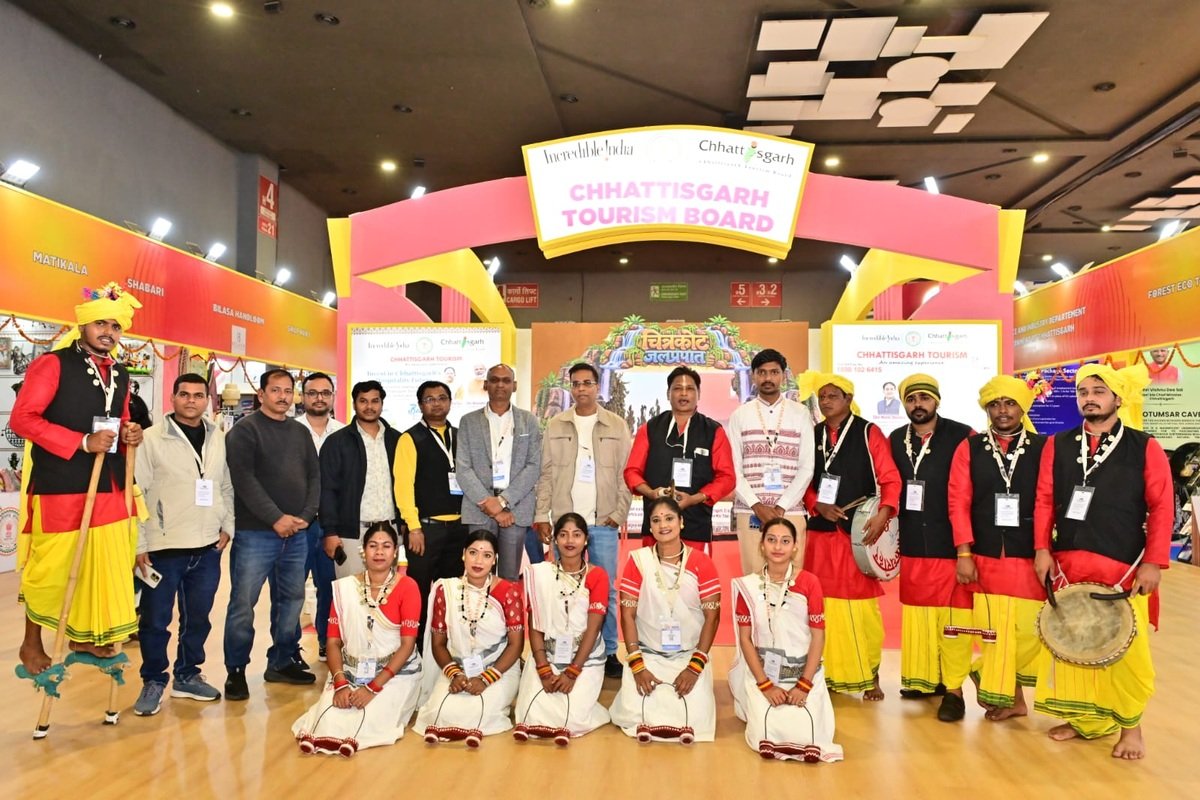
Folk performers in traditional attire gather beneath the Chhattisgarh Tourism Board arch, with drums and stilts adding colour to the state pavilion at the India International Trade Fair at Bharat Mandapam, New Delhi. Photo :primelookindia.com.
At the India International Trade Fair in New Delhi, the state pavilion puts traditional weaves, tribal art and handmade crafts before a wider audience, opening new possibilities for the artisans who keep these traditions alive.
Key Highlights
- Dr Sanjay Kannauje, Director of Chhattisgarh’s Department of Culture, toured the state pavilion at Bharat Mandapam.
- The exhibition brings together Kosa silk, traditional garments, handmade products and artworks inspired by tribal life.
- Kannauje said national and international fairs can widen recognition for Chhattisgarh’s crafts and create new opportunities for local artists and artisans.
Raipur: Kosa silk, tribal artworks and traditional dress are bringing Chhattisgarh’s cultural heritage to visitors at the India International Trade Fair in New Delhi. At the state pavilion in Bharat Mandapam, folk performers in traditional attire and a display inspired by Bastar’s Chitrakote Falls give visitors a first glimpse of the state. Inside, handwoven textiles and handmade objects tell a more detailed story about the communities that make them.
Dr Sanjay Kannauje, Director of Chhattisgarh’s Department of Culture, toured the pavilion and viewed its displays of artworks, traditional textiles, Kosa silk and tribal heritage. During the visit, he learnt about the techniques behind the handmade products and the skills that artisans have passed down through generations. He said folk art, tribal culture and traditional crafts were central to the state’s cultural identity, and that preserving them went hand in hand with bringing them to a wider audience.
What the pavilion tells visitors about Chhattisgarh
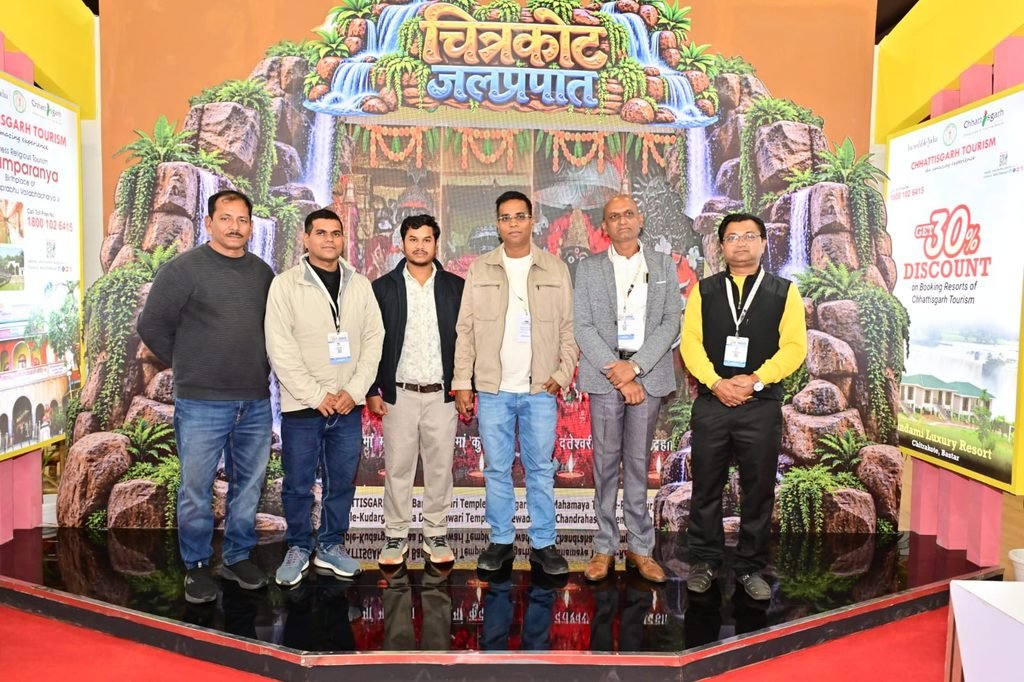
Bastar’s Chitrakote Falls provide the backdrop for a group photograph at the Chhattisgarh pavilion at the India International Trade Fair in New Delhi.Photo:primelookindia.com
Kosa silk is one of the pavilion’s signature exhibits. Its natural sheen and distinctive weave give the garments their character. Displayed alongside other traditional clothing, the silk offers visitors a closer look at the workmanship that gives Chhattisgarh’s textiles their identity.
The tribal artworks tell a different part of the same story. Drawing on everyday life, local beliefs and traditions, they reflect the close relationship between communities and their natural surroundings. Together, the textile and art displays show how cultural practices find expression in the clothes people wear, the objects they make and the designs they carry forward.
The state’s wider craft traditions include bell-metal work, Dhokra casting, ironwork, woodcraft and bamboo craft. Each draws on skills shaped by local materials and passed on through practice. Preserving those skills helps sustain the livelihoods of the families and communities that depend on them.
A trade fair audience for local artisans
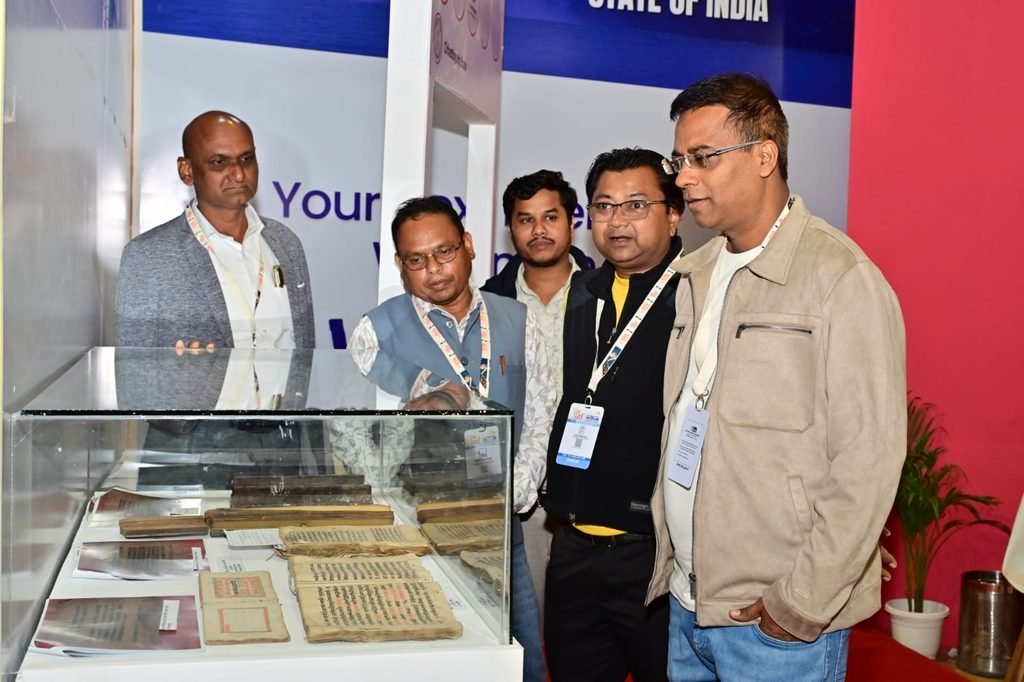
Visitors view manuscripts of the Ramayana and Ramcharitmanas, alongside regional retellings of the epic, at the Chhattisgarh pavilion during the India International Trade Fair at Bharat Mandapam, New Delhi. The exhibit showcases the state’s literary heritage alongside its textile and craft traditions.Photo:primelookindia.com
Kannauje said a fair such as the India International Trade Fair gives Chhattisgarh an opportunity to present its handloom products, handmade crafts and tribal art to audiences from India and abroad. That visibility can introduce artisans’ work to people who might otherwise have little opportunity to encounter it and help makers reach new markets.
He also stressed the importance of connecting younger generations with these traditions. The state’s heritage, he said, expresses values and ways of life that remain part of its communities today. Taking that work to national and international platforms can help younger people see how a skill learnt at home can find an audience far beyond it.
At Bharat Mandapam, a visitor can pause to study a Kosa weave, look closely at a manuscript display or discover Chitrakote through the tourism exhibit. Each offers a different way into Chhattisgarh’s heritage and draws attention to the people whose work gives it continuity.

YOU MAY LIKE THIS