Reg No. - CHHBIL/2010/41479ISSN - 2582-919X

Chhattisgarh to mark Janjatiya Gaurav Diwas in Dharamjaigarh, honour Birsa Munda’s legacy
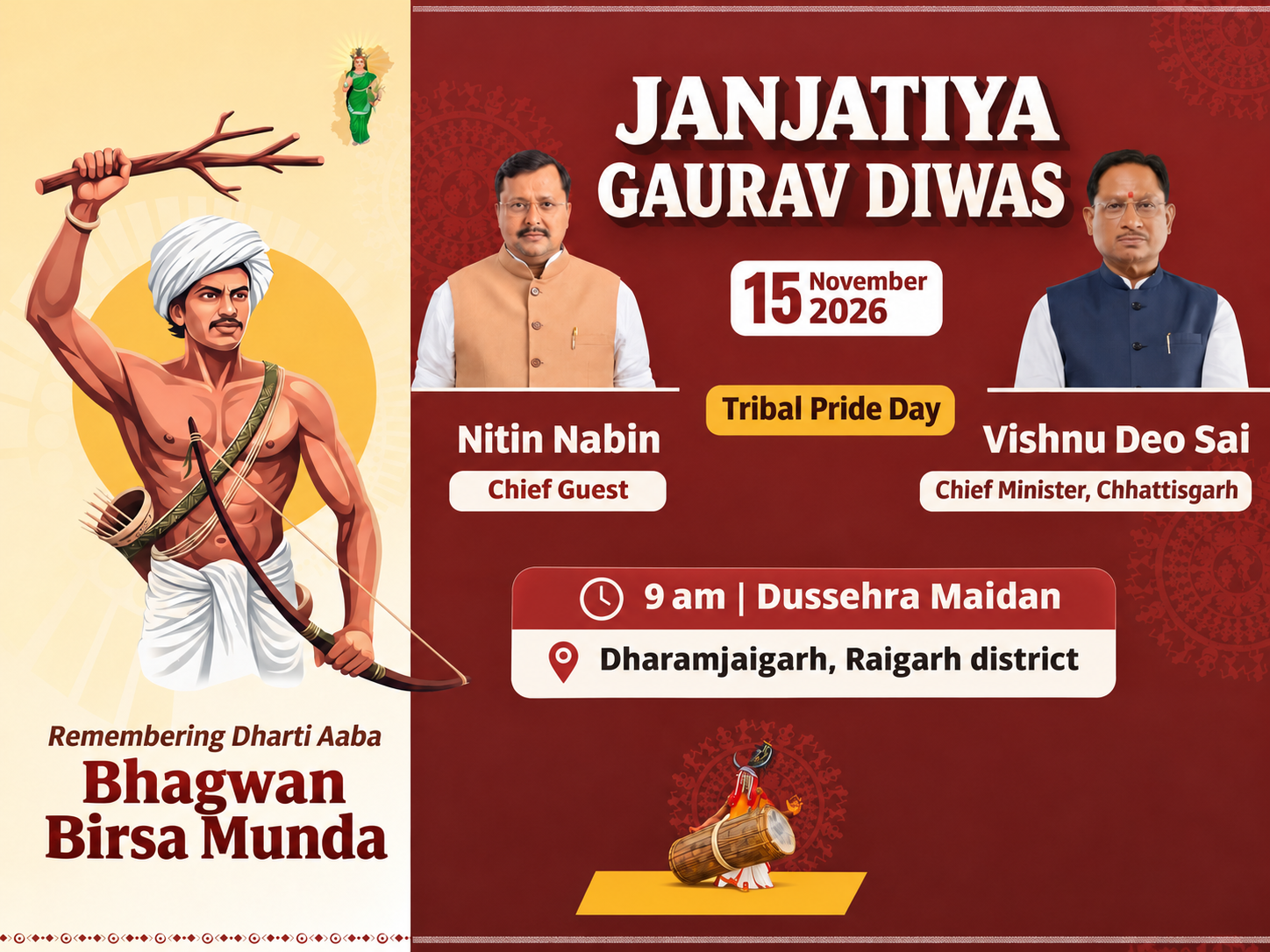
Chhattisgarh honours Bhagwan Birsa Munda and remembers its own tribal freedom fighters, including Shaheed Veer Narayan Singh and Veer Gundadhur, on Janjatiya Gaurav Diwas;Illustration:primelookindia.com
Nitin Nabin will be the chief guest at the state-level ceremony on Sunday. The observance recalls Birsa Munda’s fight for Adivasi land and dignity and brings Chhattisgarh’s own history of tribal resistance into focus.
Raipur: Chhattisgarh will mark Janjatiya Gaurav Diwas on Sunday, 15 November, with a state-level ceremony at Dussehra Maidan in Dharamjaigarh, Raigarh district. The programme is scheduled to begin at 9 am. Chief Minister Vishnu Deo Sai announced that BJP national president Nitin Nabin would attend as chief guest. The day marks the 151st birth anniversary of Bhagwan Birsa Munda.
Why 15 November is observed
The Union government declared 15 November Janjatiya Gaurav Diwas, or Tribal Pride Day, in 2021. It chose Birsa Munda’s birth anniversary to honour Adivasi freedom fighters and recognise the contributions of tribal communities to India’s history and cultural heritage. Birsa was born in 1875 in Ulihatu, in present-day Jharkhand. His followers revered him as Dharti Aaba, or Father of the Earth.
What Birsa Munda’s struggle meant for families
In the Chotanagpur region, the pressures of colonial rule were felt in everyday life. Forced labour and rising rents deepened agrarian unrest, and landlord intermediaries challenged customary claims to land. Birsa argued that the land belonged to the people who had cleared and cultivated it. For farming families, the dispute concerned who could stay on that land, who could collect rent and whether they could pass their fields on to their children.
Birsa was a spiritual leader and social reformer as well as an organiser. He urged people to unite and challenged practices such as addiction that harmed community life. His movement culminated in the Ulgulan, or Great Uprising, of 1899–1900. British authorities suppressed the uprising and imprisoned Birsa. He died in custody on 9 June 1900, aged 24. His call for dignity and self-governance continues to shape how the movement is remembered.

YOU MAY LIKE THIS