Reg No. - CHHBIL/2010/41479ISSN - 2582-919X

India Calls for UNSC Reforms, Equal Veto Powers for All Permanent Members
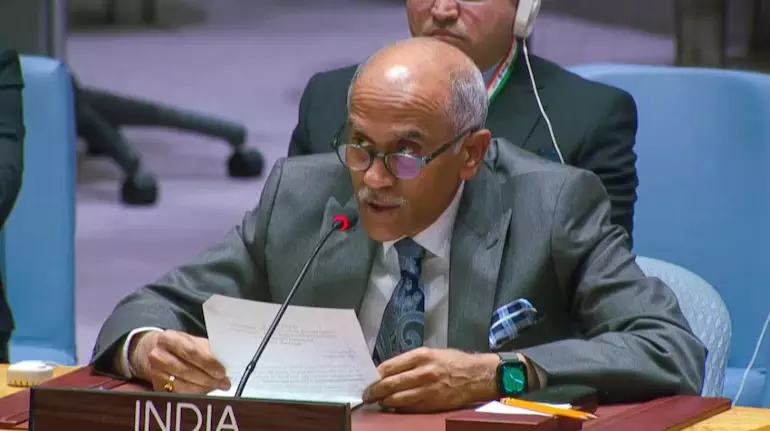
India’s Permanent Representative to the United Nations, Ambassador Parvathaneni Harish. (File photo)
Ambassador Parvathaneni Harish says veto power carries a responsibility to exercise restraint, particularly on matters of international peace and security
Key Highlights
- India has reiterated its call for comprehensive reform of the United Nations Security Council.
- New permanent members of a reformed Council should have the same veto rights as the existing five, India maintains.
- Ambassador Harish cautioned against using the veto to serve narrow political interests.
- India has called for expansion of both permanent and non-permanent membership.
New York: India has renewed its call for comprehensive reform of the United Nations Security Council (UNSC), arguing that all permanent members of a reformed Council should enjoy equal rights, including the power of veto.
India’s Permanent Representative to the United Nations, Ambassador Parvathaneni Harish, said the veto held by the Council’s five permanent members carries a responsibility that calls for restraint, particularly on questions concerning international peace and security.
He cautioned against allowing the veto to become an instrument of narrow political interests. India has argued that its uneven use by a small group of countries has raised questions about fairness and the Council’s credibility.
Equal rights in a reformed Council
India’s position is that, as long as the veto exists, it should be available to all permanent members of a reformed Council, including any new permanent members. The proposal concerns permanent members rather than every country in the United Nations.
The Security Council currently has 15 members. Five—China, France, Russia, the United Kingdom and the United States—hold permanent seats and veto power. The remaining 10 members are elected for two-year terms.
India has maintained that the Council’s composition should reflect contemporary global realities and provide more equitable representation. It has called for expansion in both the permanent and non-permanent categories.
In an earlier statement on the reform negotiations, Harish said that expanding only the non-permanent category would leave the existing decision-making structure largely unchanged. India has also sought greater transparency and accountability in the Council’s working methods.
India’s renewed intervention adds to the continuing debate over how the Security Council can become more representative and effective in responding to conflicts and international security challenges.

YOU MAY LIKE THIS