Reg No. - CHHBIL/2010/41479ISSN - 2582-919X

Paris Protest Turns Violent as More Than 400,000 Rally Across France Over Living Costs
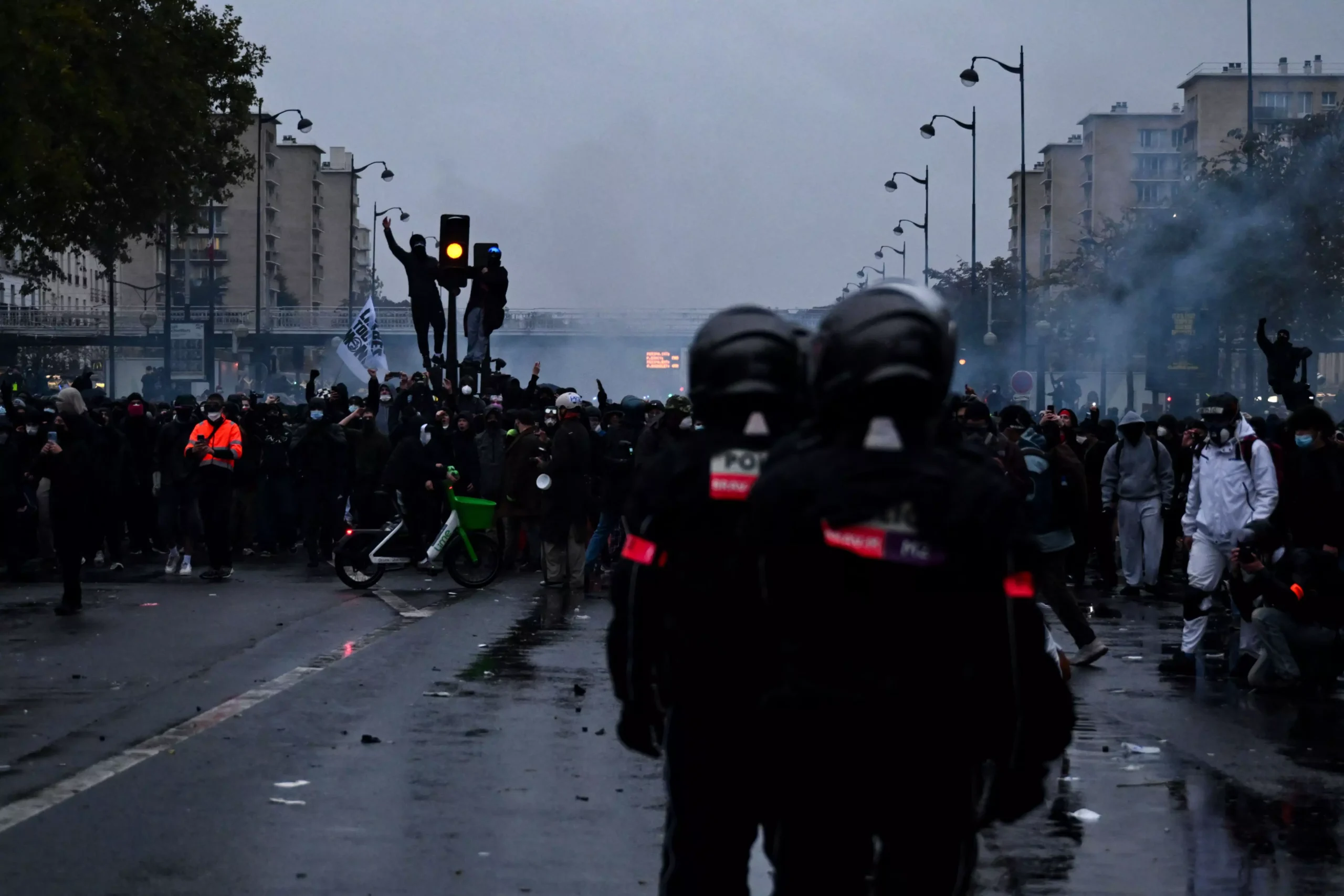
Protesters face officers from the BRAV police brigades near Porte de Vincennes during a demonstration for greater purchasing power, protection of public services, and fiscal and social justice in Paris on Saturday, 24 October 2026. Photo: Aris Messinis /AFP
Clashes near Porte de Vincennes follow a largely peaceful march as students, workers and trade unions demand better public services, stronger education funding and relief from economic pressures.
Key Highlights
- Interior Ministry puts nationwide turnout at 410,000; the CGT union estimates nearly 800,000.
- Around 110,000 people participate in Paris, according to authorities.
- Police use tear gas and water cannon after some protesters throw projectiles near Porte de Vincennes.
- Demonstrators raise concerns over living costs, inequality, school conditions and public services.
- Around 70,000 police officers and gendarmes deployed nationwide.
- Precautionary closures affect museums, businesses and transport in the capital.
Paris: A mass demonstration over rising living costs and deteriorating public services ended in clashes in the French capital on Saturday, 24 October 2026, as hundreds of thousands rallied across the country. France’s Interior Ministry estimated nationwide participation at 410,000, including approximately 110,000 in Paris, while the CGT trade union placed the national turnout at nearly 800,000.
The demonstrations brought economic grievances and demands for better education funding onto the streets, presenting another challenge to President Emmanuel Macron’s government. Although marches were largely peaceful, confrontations in Paris and other cities overshadowed parts of the mobilisation.
Peaceful Paris March Ends in Confrontation
The capital’s procession began peacefully, with trade unions leading demonstrators carrying flags and handmade placards through the rain.
Violence erupted towards the end of the march near Porte de Vincennes, where some protesters threw projectiles. Police responded with tear gas and water cannon as they sought to disperse the crowd.
Authorities had restricted the main march to the southeastern edge of Paris, keeping it away from central districts following the previous weekend’s unrest. The restrictions themselves became a point of contention for participants concerned about their ability to demonstrate.
Living Costs and Public Services Drive Anger
Protesters’ demands extended beyond household expenses to the protection of public services and greater fiscal and social justice.
Workers and students joined a mobilisation reflecting concerns about inequality, purchasing power and the resources available to schools. The demonstrations connected pressures on personal finances with dissatisfaction over the provision of essential public services.
For many participants, education and economic security formed part of the same concern: whether public institutions and government policies were adequately responding to everyday needs.
Students Seek More Teachers and Better Facilities
Education remained a central issue. Student organisations sought additional teachers, repairs to schools and universities, and expanded opportunities in higher education.
Their demands included 250,000 additional higher-education places, changes to the Parcoursup admissions system, an extra €200 a month in student grants and a freeze on rents in public student housing.
Macron met high-school representatives on Friday. According to their account, he promised changes to university admissions, but they wanted concrete measures before ending the protests.
Heavy Security Across France
Authorities mobilised approximately 70,000 police officers and gendarmes amid fears of renewed disorder.
The scale of the deployment reflected concern over a repetition of the previous weekend’s violence and looting. Security arrangements included measures to protect commercial areas, public buildings and major gathering points.
Despite those preparations, clashes were reported in several cities as the day progressed.
Museums Close and Shops Board Up
The heightened security environment disrupted cultural and commercial activity in Paris.
Major museums, including the Louvre, Musée d’Orsay, Picasso Museum and Grand Palais, closed on Saturday. Shopkeepers protected storefronts with boarding, while security personnel guarded prominent locations.
Art Basel’s organisers also cancelled its weekend programme because of the threat of unrest, illustrating how concerns over public order extended beyond the demonstration route.
Transport Restrictions Affect the Capital
Transport closures added to the disruption. Reports described the shutdown of 24 Paris metro stations as authorities attempted to manage movement and prevent further disorder.
The demonstrations marked another weekend of mobilisation, with students’ demands for better learning conditions combining with wider calls for affordable living and improved public services.
Clashes Reported Beyond Paris
The unrest was not confined to the capital. Police used tear gas in Lyon, Clermont-Ferrand and Strasbourg, while water cannon were deployed in Nice and Nantes, according to reports.
In Marseille, confrontations involving several dozen people broke out near the endpoint of the march. These incidents occurred alongside demonstrations that, in many places, remained peaceful.
Nearly 1,000 people were arrested nationwide, according to reports tracking the day’s events.
Serious injuries were also reported, including that of a 20-year-old man who lost fingers in Toulouse. The incidents intensified concerns about safety as authorities and organisers faced the prospect of continuing demonstrations.
Further Mobilisation Planned
Organisers associated with the Yellow Vest movement called for another day of rallies on 31 October in defence of the right to demonstrate.
Trade unions criticised restrictions on protests, while authorities defended measures intended to protect businesses, public buildings and city centres. The competing concerns left the government facing pressure both to maintain public order and to respond to the grievances bringing people onto the streets.

YOU MAY LIKE THIS