Reg No. - CHHBIL/2010/41479ISSN - 2582-919X

American Singer Mary Millben and CJP Founder Abhijeet Dipke Clash Over Alleged US Funding and Foreign Interference in Indian Politics
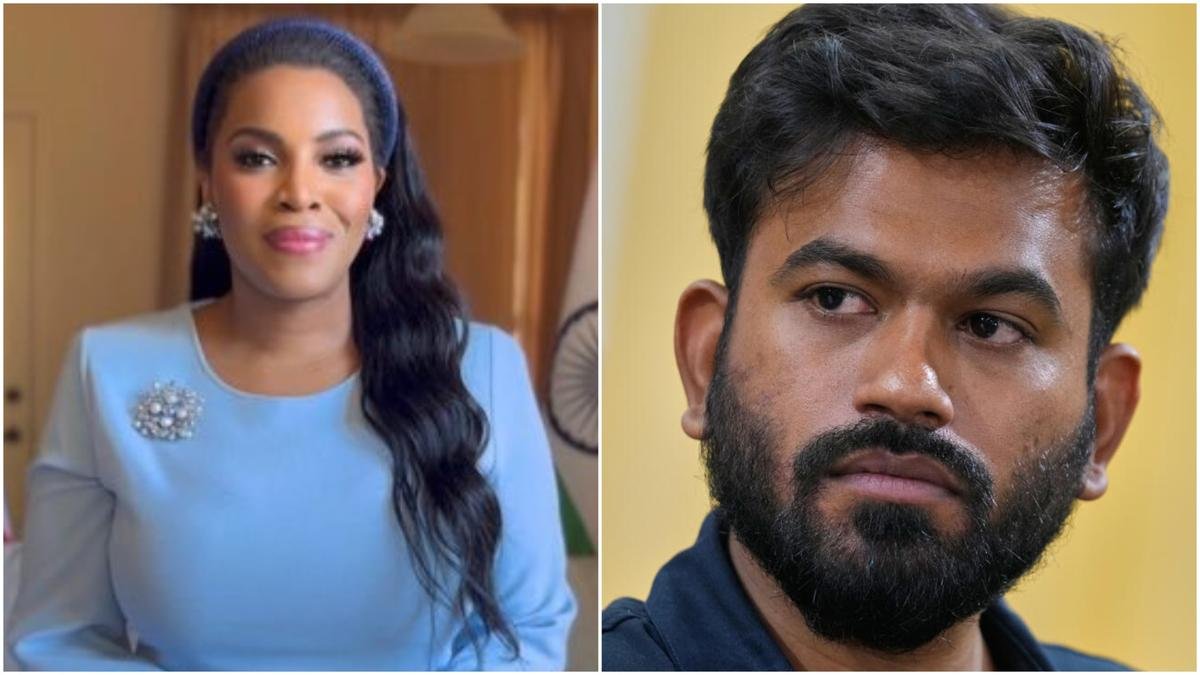
American singer Mary Millben (left) and Cockroach Janata Party founder Abhijeet Dipke (right), who exchanged sharp remarks on social media platform X on Wednesday, October 14, 2026, over allegations of US-based funding and foreign interference in India’s domestic politics amid protests concerning the revision of electoral rolls. Combination image of U.S. singer Mary Millben and CJP founder Abhijeet Dipke | Photo Credit: X, AP
Heated exchange on X unfolds amid protests demanding Chief Election Commissioner Gyanesh Kumar’s resignation, with Millben alleging foreign financial backing and Dipke questioning the involvement of American nationals in India’s domestic affairs.
Key Highlights
- American singer Mary Millben alleges that the Cockroach Janata Party receives financial support from US-based donors opposed to Prime Minister Narendra Modi.
- CJP founder Abhijeet Dipke challenges Millben’s intervention and questions the role of foreign nationals in India’s internal political affairs.
- Millben calls upon young Indians to organise peaceful opposition to what she describes as disruptive political activities.
- The confrontation comes amid protests over alleged irregularities in the Special Intensive Revision of electoral rolls.
- Neither the allegations of foreign funding nor the wider claims about organised political interference are substantiated by evidence in the reported exchange.
New Delhi: A political confrontation involving American singer Mary Millben and Cockroach Janata Party (CJP) founder Abhijeet Dipke has brought questions of alleged foreign funding, political sovereignty and electoral accountability into sharp focus. The two exchanged strongly worded messages on social media platform X on Wednesday, October 14, 2026, after Millben accused the protest-oriented political outfit of receiving financial support from American donors opposed to Prime Minister Narendra Modi. Dipke rejected the legitimacy of foreign intervention in India’s domestic political affairs and questioned why an American public figure was attempting to discredit an Indian political movement.
Millben Alleges American Donors Are Supporting Political Disruption
The controversy began when Mary Millben publicly alleged that the Cockroach Janata Party was being financed by individuals in the United States who opposed Prime Minister Narendra Modi and his political leadership.
In a series of statements on X, the American singer claimed that certain foreign donors were attempting to influence political developments in India by supporting organisations critical of the government.
Millben alleged that these activities formed part of a broader international pattern in which politically motivated financial backers sought to challenge conservative leaders in different countries.
She claimed that such networks identified individuals educated in the United States, encouraged them to return to their home countries and supported their political activities.
However, the statements provided no independently verifiable financial records, donor identities or documentary evidence establishing that CJP had received the alleged funding.
The allegations therefore remain claims made by Millben rather than established findings.
Dipke Questions Foreign Interference in India’s Internal Affairs
CJP founder Abhijeet Dipke responded sharply, challenging Millben’s authority to intervene in India’s political disputes.
He argued that India’s domestic political questions should be addressed by Indian citizens without outside interference.
Questioning the singer’s intervention, Dipke stated:
“Who gave foreign nationals the right to interfere in India’s internal affairs? We are more than capable of dealing with our own issues. We don’t need outsiders interfering in our country’s affairs.”
Dipke also questioned why Prime Minister Narendra Modi would require support from Americans to challenge the credibility of Indian political activists.
His response shifted the discussion from allegations of political funding to the wider question of whether foreign public figures should seek to influence political debates within another sovereign country.
The exchange reflected competing interpretations of political legitimacy, national sovereignty and the right to participate in public debate across international boundaries.
Millben Defends Modi’s Political Standing
Unmoved by Dipke’s criticism, Millben responded that Prime Minister Modi did not depend upon American support to sustain his political position.
She referred to his electoral record and continued leadership, arguing that his political authority came from Indian voters rather than foreign supporters.
In her response, Millben declared:
“And the PM doesn’t need American support. He has 1.5 billion beautiful Indian citizens who support him and have for 25 years, 12 years as PM, three consecutive terms. And will again in 2029. That’s the truth.”
Her statement combined praise for Modi’s political career with a prediction about the outcome of the next general election.
The reference to 1.5 billion Indians supporting Modi was a rhetorical assertion rather than a verified measure of public support. Similarly, her prediction about the 2029 election represents a political opinion, not an established outcome.
Millben also warned Dipke that his alleged American financial supporters would withdraw their backing if his political efforts failed.
She stated:
“And you won’t, because lawlessness never wins. Instead, take your US education, talent, and use it for good.”
She urged him to engage constructively with the Prime Minister and contribute positively to India’s development.
Electoral Roll Revision Protests Form the Political Backdrop
The social media confrontation unfolded against the backdrop of protests in New Delhi involving opposition parties and the Cockroach Janata Party.
The demonstrators have demanded the resignation of Chief Election Commissioner Gyanesh Kumar, raising allegations concerning the Special Intensive Revision (SIR) of electoral rolls.
The revision exercise has become a subject of political disagreement, with critics questioning aspects of the process and its potential implications for electoral participation.
Electoral roll accuracy is a fundamental element of democratic administration. While the Election Commission is responsible for maintaining and revising voter lists in accordance with applicable laws and procedures, political parties and citizens are entitled to raise questions about transparency, inclusion and accountability.
Allegations concerning irregularities, however, require examination through evidence and the appropriate institutional or judicial mechanisms.
The reported exchange between Millben and Dipke did not establish any direct connection between the electoral roll controversy and the alleged foreign funding.
Singer Calls for Peaceful Counter-Protests
Millben appealed to young Indians to oppose what she characterised as disruptive political activities through peaceful democratic mobilisation.
She argued that political movements should be challenged through lawful civic participation rather than intimidation or disorder.
In one of her statements, she urged:
“Rise up, young patriots! Rise up!”
She also called for an Indian-led counter-movement that would defend democratic institutions and resist what she alleged were externally supported efforts to create political instability.
Her appeal emphasised peaceful protest, although the accusations accompanying it remained unverified.
The exchange also highlighted an important democratic principle: peaceful protest is a legitimate form of political expression, whether directed against the government or in support of it, provided it remains within the law.
Foreign Funding Allegations Raise Questions Requiring Evidence
Claims that political organisations receive financial support from overseas sources are particularly sensitive in India because foreign contributions to political activities are subject to statutory restrictions.
The Foreign Contribution (Regulation) Act and other applicable legal provisions govern the receipt and use of foreign contributions by specified persons, organisations and political entities.
Any allegation that an Indian political organisation has received prohibited foreign funding would require credible documentary evidence and examination by the competent authorities.
Social media statements alone cannot establish that an organisation has violated financial or electoral laws.
Equally, a political movement’s criticism of the government does not, by itself, demonstrate foreign influence or unlawful conduct.
The controversy therefore raises two distinct questions: whether any prohibited financial transactions occurred and whether foreign public figures should attempt to shape India’s domestic political debate.
Both issues require careful consideration without treating unverified accusations as established facts.
Mary Millben’s Previous Association with India
Mary Millben is known among Indian audiences for her performances of Indian patriotic and devotional music.
The American singer and actress attracted attention for her rendition of India’s national anthem, Jana Gana Mana, during an event in the United States associated with Prime Minister Narendra Modi’s 2023 visit.
She has also performed the devotional hymn Om Jai Jagdish Hare, contributing to her recognition among Indian audiences.
Her public expressions of admiration for Modi have made her a visible international supporter of his leadership.
The latest confrontation, however, moves beyond cultural appreciation into direct commentary on an ongoing political dispute within India.
A Debate Over Sovereignty, Democratic Rights and Political Accountability
The exchange between Millben and Dipke illustrates how India’s domestic political controversies can become subjects of international commentary through social media.
For Millben, the central issue is what she alleges to be foreign-backed political disruption directed against an elected government.
For Dipke, the question is whether an American national should seek to influence how Indians organise, protest or challenge their political leadership.
Both arguments touch upon larger democratic questions.
India’s sovereignty and electoral institutions must be protected from unlawful external interference. At the same time, citizens and political organisations retain the right to criticise public authorities, question electoral procedures and participate in peaceful demonstrations.
Foreign commentary is not automatically evidence of interference, just as political dissent is not automatically evidence of foreign sponsorship.
The distinction between allegation, evidence and political opinion remains essential.
As the dispute continues to attract attention, the most consequential unanswered question is whether the claims of overseas financial support can be substantiated through credible records and lawful investigation.
Until such evidence emerges, the confrontation remains a political and rhetorical dispute rather than proof of illegal foreign funding.
For India’s democratic institutions, the broader principle is clear: political disagreements must be addressed through transparent processes, constitutional safeguards and evidence-based accountability rather than unverified accusations circulating on social media.

YOU MAY LIKE THIS