Reg No. - CHHBIL/2010/41479ISSN - 2582-919X

Bastar Dussehra Reflects the Soul of Tribal Culture and Collective Faith: CM Vishnu Deo Sai
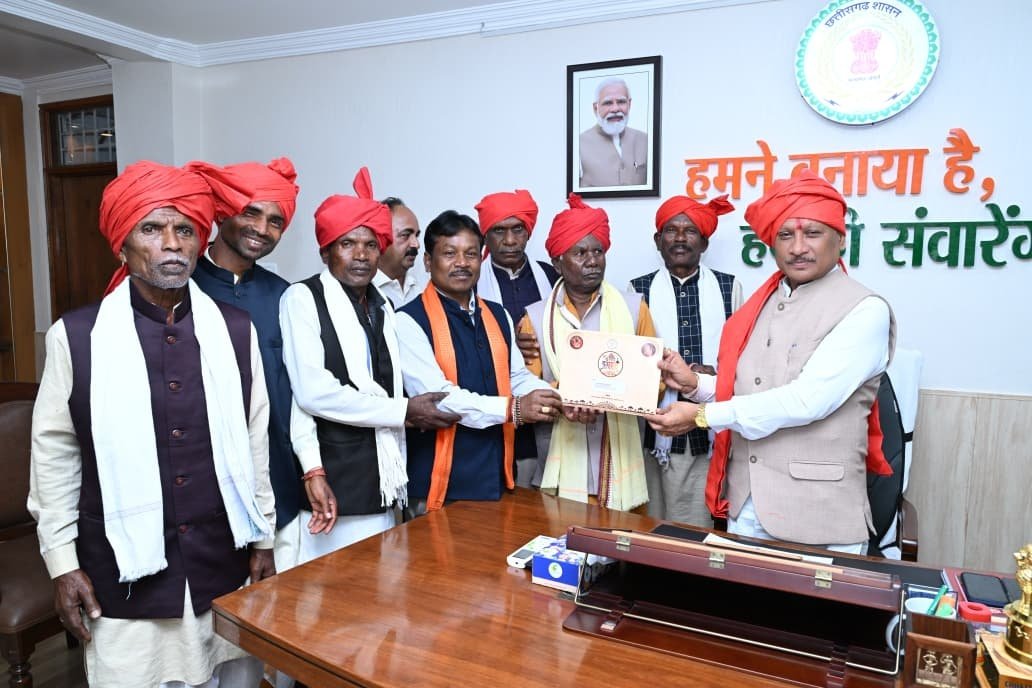
Chief Minister Vishnu Deo Sai, wearing the traditional red Paga, receives an invitation to Bastar Dussehra 2026 from a delegation of the Bastar Dussehra Committee led by Bastar MP Mahesh Kashyap at the Chief Minister’s residence office. Traditional representatives, including Manjhis and Chalkis, attended the meeting and briefed Sai on the festival’s preparations and cultural significance on Thursday, October 8, 2026 . Photo: primelookindia.com via CMO.
Bastar Dussehra Committee, led by MP Mahesh Kashyap, invites Chief Minister Vishnu Deo Sai to the world-famous festival; Sai reaffirms his government’s commitment to preserving the region’s centuries-old traditions, cultural identity and community participation.
Key Highlights
- Bastar Dussehra Committee delegation meets Chief Minister Vishnu Deo Sai at his official residence in Raipur.
- Bastar MP Mahesh Kashyap leads the delegation and extends a formal invitation to the Chief Minister.
- Traditional Paga headgear presented to Sai as a mark of respect and Bastar’s cultural heritage.
- The approximately 75-day festival celebrates Goddess Danteshwari and the region’s distinctive tribal traditions.
- Important forthcoming ceremonies include Kachhangadi Puja on October 10, Bel Puja on October 18 and Muria Darbar on October 23.
- Sai reiterates the government’s commitment to safeguarding Bastar’s cultural heritage and promoting its traditions internationally.
Bastar Dussehra Is More Than a Festival, Says Chief Minister
Raipur : Chhattisgarh Chief Minister Vishnu Deo Sai has described the world-famous Bastar Dussehra as an extraordinary expression of tribal faith, cultural continuity and collective participation, emphasising that its centuries-old traditions represent an invaluable part of the state’s heritage.
The Chief Minister made these remarks while meeting a delegation of the Bastar Dussehra Committee, Jagdalpur, led by Bastar Lok Sabha MP Mahesh Kashyap, at his official residence in Raipur on Thursday evening, October 8, 2026.
The delegation formally invited Sai to participate in this year’s Bastar Dussehra celebrations and honoured him by presenting the traditional red Paga, a ceremonial headgear symbolising respect and cultural identity.
Accepting the invitation, Sai thanked the representatives and conveyed his best wishes for the successful organisation of the historic festival.
“Bastar Dussehra is not merely a festival. It is an unparalleled heritage of Bastar’s centuries-old faith, rich tribal culture, traditions and collective participation,” the Chief Minister said.
He observed that the festival beautifully reflected Bastar’s cultural spirit and social harmony, bringing together communities whose traditional responsibilities have been preserved across generations.
“Our government is committed to protecting and promoting Bastar’s rich cultural heritage and tribal traditions,” Sai added.
A Remarkable Festival Spanning Nearly 75 Days
Unlike conventional Dussehra celebrations elsewhere in India, Bastar Dussehra is an elaborate series of religious ceremonies, community rituals and cultural observances extending over approximately 75 days.
The festival traditionally begins around Hareli Amavasya and continues through successive ceremonies associated with the worship of Goddess Danteshwari, the revered deity of Bastar.
According to the programme shared with the Chief Minister, this year’s celebrations commenced with the Patjatra ceremony on August 12.
The forthcoming schedule includes Kachhangadi Puja on October 10, Bel Puja on October 18 and the Muria Darbar on October 23.
Each ceremony has its own religious and cultural significance, with different communities participating according to responsibilities established through generations of customary practice.
The delegation briefed Sai on the historical background of the festival, its religious observances and preparations for this year’s celebrations.
Goddess Danteshwari at the Heart of Bastar Dussehra
One of the most distinctive aspects of Bastar Dussehra is that it does not commemorate Lord Rama’s victory over Ravana, as is customary in many other parts of India.
Instead, the festival centres on the worship of Goddess Danteshwari, regarded as the presiding deity of the Bastar region.
The celebrations reflect the region’s deeply rooted spiritual traditions, in which tribal beliefs, local customs and established religious practices have evolved into a unique cultural identity.
The festival’s historical origins are also associated with the reign of Chalukya ruler Purushottam Dev.
According to local tradition, the ruler travelled to the Jagannath Temple in Puri, where he received the title of Rathapati. This historical association is believed to have contributed to the importance of ceremonial chariots in Bastar Dussehra.
The construction and ceremonial movement of these massive wooden chariots remain among the most recognisable features of the festival.
Tribal Communities Preserve Centuries-Old Responsibilities
Bastar Dussehra is distinguished not only by its duration and elaborate rituals but also by the participation of numerous tribal and local communities.
Traditional representatives, including Manjhis, Chalkis and Member-Memberins, perform responsibilities that have been passed down through generations.
Their duties extend from religious ceremonies and the preparation of ritual materials to chariot construction and arrangements associated with the celebrations.
These responsibilities are not merely organisational. They represent an enduring system of collective ownership and cultural participation.
The involvement of different communities has helped preserve Bastar Dussehra as a living tradition rather than a ceremonial event confined to religious institutions.
The festival therefore represents a remarkable example of how cultural heritage can strengthen social relationships and sustain a shared regional identity.
Bastar’s Cultural Identity Draws International Attention
Over the years, Bastar Dussehra has emerged as one of Chhattisgarh’s most prominent cultural attractions.
Its magnificent chariot processions, distinctive rituals, traditional attire and tribal customs attract devotees, researchers, photographers and tourists from India and abroad.
For visitors, the festival offers an opportunity to experience a cultural tradition that has survived changing political, social and economic circumstances.
Beyond its religious importance, Bastar Dussehra also supports the promotion of local handicrafts, traditional arts, cultural tourism and community-based economic activities.
The festival has become an important means of introducing younger generations to their ancestral customs while bringing Bastar’s cultural richness to a wider audience.
Preserving Heritage Is a Collective Responsibility: Sai
During the interaction, Chief Minister Sai emphasised that protecting traditional festivals was essential to maintaining the cultural identity of Chhattisgarh.
He said Bastar’s customs, beliefs and collective celebrations formed an invaluable part of the state’s historical and social heritage.
“Traditions such as Bastar Dussehra connect us with our roots and introduce the younger generation to our rich cultural heritage. Protecting these traditions and taking them to the world is our collective responsibility,” Sai said.
The Chief Minister expressed confidence that the celebrations would continue to strengthen community participation and promote Bastar’s distinctive cultural identity.
He also conveyed his appreciation to the organising committee and the traditional representatives associated with the festival.
Bastar Delegation Extends Formal Invitation
The delegation accompanying Bastar MP Mahesh Kashyap included Manglu Manjhi of Pargana Karekote, Balram Manjhi, Padam Chalki, Samaru Chalki, Damru Chalki and Laxman Manjhi, along with several other Manjhis, Chalkis, Member-Memberins and representatives of the Bastar Dussehra Committee.
The meeting reflected the close relationship between traditional community institutions and the state administration in preserving one of India’s most distinctive cultural festivals.
As preparations gather momentum for the forthcoming ceremonies, Bastar Dussehra once again stands as a reminder that cultural heritage survives not simply through historical records, but through the continued faith, participation and commitment of the communities that sustain it.

YOU MAY LIKE THIS