Reg No. - CHHBIL/2010/41479ISSN - 2582-919X

From 2001 to 2047: Narendra Modi’s 25-Year Journey and the India He Envisions-By Kumar Bahukhandi
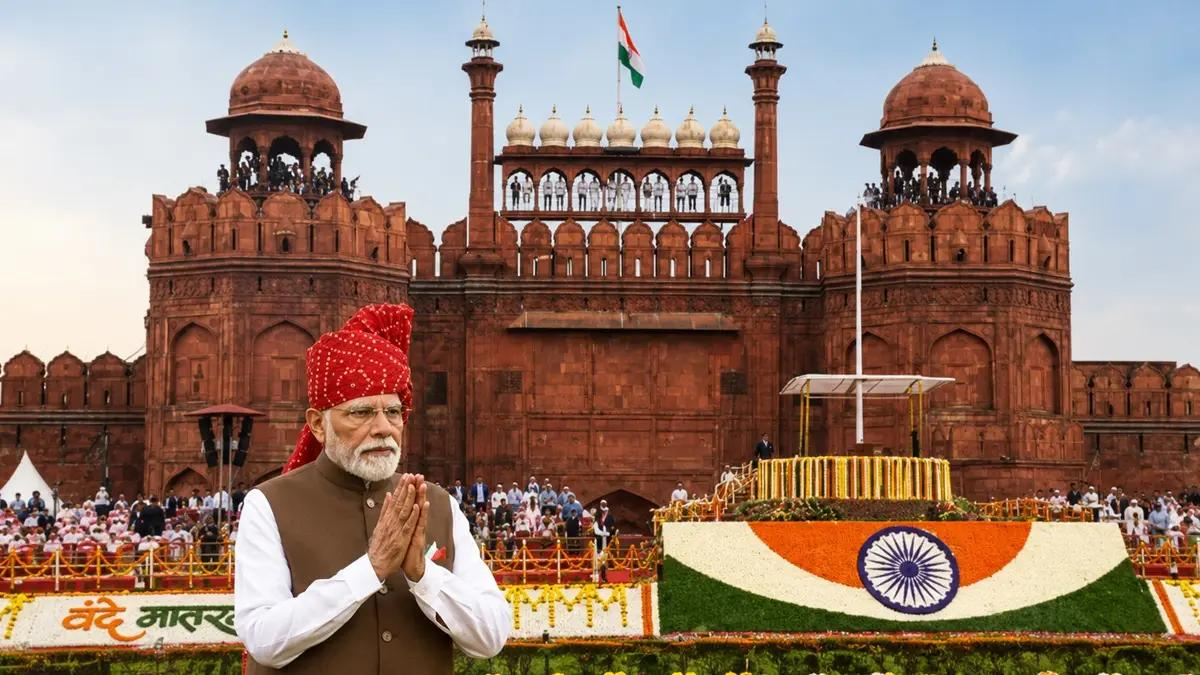
Prime Minister Narendra Modi, who completed 25 continuous years as a head of government on October 7, 2026, has placed the goal of Viksit Bharat 2047 at the centre of India’s development agenda. His journey in executive office began as Gujarat Chief Minister on October 7, 2001, before he became Prime Minister in 2014. Photo: PIB
From taking charge of Gujarat in the aftermath of a devastating earthquake to serving a third consecutive term as Prime Minister, Narendra Modi completes 25 continuous years as a head of government. The milestone offers an opportunity to look beyond the anniversary—to the policies that have defined his years in office, the debates that have accompanied them, and the ambitious Viksit Bharat vision he has placed before India for 2047.
October 7, 2001, and August 15, 2047, stand almost half a century apart. Yet, in Narendra Modi’s political narrative, the two dates have increasingly become connected.
The first was the day he took oath as Chief Minister of Gujarat. The second will mark 100 years of India’s Independence—and has become the destination for what Modi calls Viksit Bharat, his vision of India as a developed nation.
On October 7, 2026, Modi completes 25 uninterrupted years as a head of government: first as Chief Minister of Gujarat and, since May 2014, as Prime Minister of India.
A quarter-century in executive office is long enough to invite more than celebration. It invites examination.
What changed during these years? What ideas travelled with Modi from Gandhinagar to New Delhi? Which programmes became defining features of his governments? And, perhaps more importantly, what remains to be accomplished if India is to reach the destination he has set for 2047?
The story begins not in Delhi but in a Gujarat struggling to recover from disaster.
The Unexpected Beginning
When Modi became Gujarat Chief Minister in October 2001, he had never previously held elected executive office.
The circumstances were difficult. Gujarat was still recovering from the catastrophic Bhuj earthquake of January 2001. The state had also experienced droughts, a cyclone and political instability.
Looking back on those years, Modi has recalled something strikingly personal. Before he assumed office, his mother gave him two pieces of advice: work for the poor and never take a bribe.
That recollection has subsequently become part of Modi’s own explanation of his approach to governance.
The Gujarat years would also establish themes that later became familiar nationally: close monitoring of government programmes, infrastructure, investment promotion, technology in administration, electricity reforms and direct interaction between government and citizens.
The SWAGAT grievance-redressal initiative, for instance, used technology to connect citizens with the administration and received a United Nations Public Service Award in 2010. The Gujarat Jyotigram initiative focused on electricity supply and separate feeders for agriculture. The biennial Vibrant Gujarat summits attempted to position the state as an investment destination.
The Gujarat period, however, cannot be reduced to development programmes alone. It was also marked by intense political controversy, most notably over the 2002 communal violence. Modi’s supporters and critics developed sharply different assessments of his leadership, and those arguments followed him long after he left Gandhinagar.
By 2013, however, his political trajectory had moved decisively towards Delhi.
From Gujarat to Delhi
When the BJP named Modi its prime ministerial candidate ahead of the 2014 general election, his campaign was built heavily around development, governance and aspiration.
The BJP won a parliamentary majority in 2014, and Modi became Prime Minister on May 26 that year. He returned after the 2019 election and began a third consecutive term in 2024.
The transition from Gujarat to Delhi brought an obvious change of scale. A state-level administrative approach now had to operate across a country of more than a billion people.
Some of Modi’s earliest national initiatives signalled the direction.
Jan Dhan Yojana sought to bring people outside formal banking into the financial system. Swachh Bharat turned sanitation and toilet construction into a mass campaign. Ujjwala sought to provide cleaner cooking fuel to poorer households. Housing, electricity, tap-water connections and health insurance subsequently became important components of the welfare architecture.
The Union Cabinet, in its resolution marking Modi’s 25 years in government, said Jan Dhan accounts had approached 60 crore and more than four crore houses had been delivered through government housing programmes. These are government figures and form part of the administration’s own assessment of its record.
What distinguished this welfare model was its combination with technology.
The Smartphone Became Part of Governance
Perhaps one of the most visible changes in India during the Modi years has occurred not inside government offices but in people’s hands.
The combination of **Jan Dhan bank accounts, Aadhaar identification and mobile connectivity—the JAM architecture—**expanded the government’s ability to transfer benefits directly to beneficiaries.
Then came UPI.
Digital payments moved rapidly from an urban convenience to an everyday method of transaction—from shopping centres and restaurants to neighbourhood stores and street vendors.
The larger significance was not simply technological. It represented an attempt to create public digital infrastructure at population scale.
The Modi government also pushed Digital India, online public services and technology-based welfare delivery. In parallel, India expanded its ambitions in electronics manufacturing, semiconductors, artificial intelligence, quantum technology and space.
The Cabinet’s 2026 assessment says electronics production rose from roughly ₹2 lakh crore to more than ₹13 lakh crore during the period it reviewed.
Technology, in this model, was expected to perform two roles: make the state more accessible and make the economy more competitive.
Infrastructure Became Visible Politics
Highways, expressways, airports, railway stations, metro systems, freight corridors and other large infrastructure projects became another defining feature of the Modi era.
Government capital expenditure rose sharply. The Union Cabinet’s 25-year resolution notes an increase in public capital expenditure from around ₹2 lakh crore to more than ₹12 lakh crore.
Railway electrification accelerated, while Vande Bharat trains became the most visible symbol of railway modernisation. The redevelopment of stations through the Amrit Bharat Station Scheme extended the infrastructure narrative beyond trains themselves.
There was a political dimension to this emphasis as well.
A bridge, highway, railway station or airport is immediately visible. Unlike many administrative reforms, infrastructure can be seen and experienced. Development consequently became something governments increasingly sought to demonstrate physically.
But infrastructure also poses the next question for 2047: not simply how much India can build, but how efficiently it can maintain, integrate and use what it builds.
From Make in India to Atmanirbhar Bharat
When Make in India was launched in 2014, its central proposition was straightforward: India needed to manufacture more.
The ambition subsequently expanded into Atmanirbhar Bharat, particularly after the COVID-19 pandemic exposed vulnerabilities in global supply chains.
Electronics, mobile-phone production, defence manufacturing, renewable energy and, more recently, semiconductor fabrication have become prominent areas of policy attention.
The government’s current argument is that self-reliance does not mean economic isolation. Rather, India should possess sufficient domestic capability in strategically important sectors while remaining connected with international trade and investment.
That distinction will become increasingly important on the road to 2047.
India cannot become a developed economy simply by consuming what the world produces. Nor can an economy of India’s size prosper by turning inward. The challenge is to manufacture competitively, innovate domestically and export globally.
Modi captured part of that challenge in his 2026 Independence Day address through three words: cost, quality and scale. PM India
Farmers, Women and the Politics of Direct Delivery
The Modi years have also seen welfare programmes increasingly directed towards clearly identified social groups.
Under PM-KISAN, money is transferred directly to eligible farming households. The government’s 2026 assessment says cumulative transfers had crossed ₹4 lakh crore.
For women, policy has ranged from Ujjwala cooking-gas connections and sanitation to bank accounts, self-help groups and the Lakhpati Didi initiative.
The Nari Shakti Vandan Adhiniyam, providing for reservation of one-third of seats for women in the Lok Sabha and state legislative assemblies once the constitutional prerequisites for implementation are completed, added a political representation dimension to this agenda.
Yet the 2047 test will go considerably further.
Women’s participation in the labour force, quality employment, safety, entrepreneurship, access to capital and representation in decision-making will matter as much as the number of schemes carrying women as beneficiaries.
The same distinction applies to young Indians.
India’s demographic advantage is frequently celebrated. But a young population becomes an advantage only when education, skills and economic opportunities keep pace with expectations.
An India That Builds—and an India That Innovates
Few moments captured India’s technological aspirations as dramatically as Chandrayaan-3’s landing near the Moon’s south polar region in 2023.
The achievement belonged first to India’s scientists and decades of institutional development at ISRO. Politically, however, it fitted neatly into Modi’s larger narrative of an India increasingly confident about attempting projects once considered beyond its reach.
The opening of the space sector to greater private participation, growth of India’s startup ecosystem and investment in emerging fields such as semiconductors, artificial intelligence, quantum technology and biotechnology reflect the same aspiration.
For 2047, this may be one of the most consequential transitions.
A developed India cannot depend indefinitely on low-cost labour or imported technology. It will need universities that generate knowledge, companies that create intellectual property, laboratories capable of fundamental research and an education system that rewards curiosity rather than merely examination performance.
The next phase, therefore, cannot be only Make in India.
It will increasingly have to become Invent in India.
National Security and a More Assertive State
National security has occupied a central position in Modi’s political identity.
The 2016 surgical strikes following the Uri attack and the 2019 Balakot air strikes after the Pulwama terror attack were presented by the government as evidence of a changed response to cross-border terrorism.
The government also created the post of Chief of Defence Staff, pursued greater domestic defence manufacturing and implemented One Rank One Pension.
In August 2019, the government removed the special constitutional status previously enjoyed by Jammu and Kashmir under Article 370 and reorganised the former state into Union Territories—a decision celebrated by supporters as long-delayed integration and strongly opposed by critics who questioned both the political process and its consequences.
These episodes illustrate a broader characteristic of Modi’s governing style: a preference for large decisions, often accompanied by equally large political arguments.
India and the World
Foreign policy under Modi has combined strategic continuity with highly personalised diplomacy.
India has deepened engagement with the United States while maintaining its longstanding relationship with Russia; expanded cooperation through the Quad; remained active in BRICS and the G20; strengthened ties with Gulf countries; and increasingly presented itself as a voice for the Global South.
India’s 2023 G20 presidency produced a consensus declaration despite geopolitical divisions, while the African Union became a permanent member of the G20 during the New Delhi summit.
International Solar Alliance, International Yoga Day and India’s advocacy of digital public infrastructure have provided additional platforms for Indian diplomacy.
Yet India’s global ambitions are inseparable from its domestic strength.
Diplomatic visibility can amplify economic and strategic power; it cannot substitute for it.
A country aspiring to greater influence by 2047 will need sustained economic growth, technological capability, military preparedness, energy security and strong institutions at home.
Development and Heritage
Another distinctive element of the Modi years has been the attempt to place modernisation alongside cultural identity.
The redevelopment of Kashi Vishwanath Dham, construction and consecration of the Ram temple in Ayodhya, promotion of Yoga internationally, emphasis on India’s civilisational traditions, redevelopment of heritage sites, the new Parliament building and Kartavya Path have all formed part of this approach.
The government describes this combination as “Vikas bhi, Virasat bhi” — development as well as heritage.
Supporters see cultural confidence as an important part of India’s emergence. Critics have raised concerns about majoritarian politics and the place of minorities in this evolving national narrative.
Those disagreements are not peripheral to the story of contemporary India. They are part of it.
A developed India in 2047 will ultimately be judged not only by the size of its economy or sophistication of its infrastructure but also by the strength of its constitutional institutions, social cohesion and ability to accommodate disagreement.
The Decisions That Divided Opinion
Twenty-five years of governance cannot credibly be written as an uninterrupted sequence of achievements.
The Modi era has produced some of India’s most consequential—and contested—policy decisions.
Demonetisation in 2016 sought to attack undeclared wealth and counterfeit currency while accelerating formalisation and digital payments, but it also produced severe short-term disruption and continues to be debated over its economic effectiveness.
The introduction of the Goods and Services Tax created a national indirect-tax framework, but its rollout brought compliance difficulties, particularly for smaller businesses, before the system matured.
The government’s agricultural reform laws triggered a prolonged farmers’ protest and were ultimately repealed.
Questions surrounding unemployment, inequality, social polarisation, media freedom, federal relations, institutional independence and the space available for dissent have also formed part of public and political debate during Modi’s premiership.
These questions cannot simply be edited out of an assessment because they complicate the narrative.
They are precisely what makes the 25-year story worth examining rather than merely commemorating.
The Pandemic Test
COVID-19 presented a challenge unlike anything India—or most governments around the world—had confronted in generations.
The nationwide lockdown in 2020 sought to slow transmission but also exposed the vulnerability of migrant workers and the informal economy. The devastating second wave in 2021 placed enormous pressure on hospitals, oxygen supplies and families across the country.
At the same time, India subsequently conducted one of the world’s largest vaccination programmes, while domestically manufactured vaccines became central to the response.
The pandemic reinforced another lesson relevant to 2047: national capability is ultimately measured by the resilience of systems—healthcare, science, supply chains, public administration and social protection—when they are placed under extreme pressure.
2047: The Destination Beyond the Anniversary
This is where Modi’s 25-year milestone becomes more interesting than the anniversary itself.
He has increasingly framed his third term not merely around the next election cycle but around India’s centenary of Independence.
NITI Aayog describes Viksit Bharat as a long-term objective of sustainable and equitable development that seeks to harness the creativity and potential of more than 1.4 billion people, with the Sustainable Development Goals of 2030 forming an important milestone on the road to 2047.
In his Independence Day address in August 2026, Modi again placed self-reliance, innovation, manufacturing competitiveness, technology and citizen participation at the centre of that vision.
But Viksit Bharat cannot ultimately be a slogan.
It has to be measurable in people’s lives.
It will mean whether a child born in a remote tribal village has access to education comparable with a child in a major city.
Whether a farmer can earn sustainably rather than merely survive from one crop cycle to another.
Whether an educated young person can find meaningful work.
Whether Indian universities become destinations for global talent rather than predominantly suppliers of talent to universities abroad.
Whether women participate equally in economic and political life.
Whether Indian companies create technologies rather than merely assemble them.
Whether cities become cleaner and more liveable even as they become larger.
Whether economic growth can coexist with clean air, adequate water and environmental responsibility.
And whether institutions remain strong enough to protect both stability and liberty.
That is a considerably harder project than building roads or announcing targets.
From the First 25 Years to the Next 21
There is a striking difference between Narendra Modi’s starting point in 2001 and the destination he now describes for 2047.
In Gujarat, the immediate task was reconstruction, administration and economic revival.
At the national level, the scale expanded: financial inclusion, sanitation, welfare delivery, infrastructure, digitalisation, manufacturing, national security, diplomacy and technological ambition.
Now the horizon has moved again.
The question is no longer simply whether India can grow.
It is what kind of country India wants to become as it grows.
Modi has supplied his answer in two words: Viksit Bharat.
Twenty-five years in government have given him an unusually long period in which to shape policy, institutions and political vocabulary. They have also ensured that assessments of his legacy are sharply contested. Admirers point to infrastructure, welfare delivery, digital transformation, India’s global profile and a more assertive national identity. Critics point to economic disruptions, unemployment concerns, social tensions and questions about democratic and institutional checks.
History will eventually weigh those arguments with the distance that contemporary politics rarely permits.
But 2047 cannot wait for history.
India has only 21 years between today’s 25-year milestone and the centenary of Independence.
Perhaps that is the more meaningful way to view October 7, 2026.
It is not merely the end of Narendra Modi’s first quarter-century in government. It is the beginning of the much shorter countdown to the India of 2047.
And the success of that journey will not finally be measured by one leader, one government or one political party.
It will be measured by the country India becomes.

YOU MAY LIKE THIS