Reg No. - CHHBIL/2010/41479ISSN - 2582-919X

CJP Splits as Manish Brahmbhatt Launches CJP-Democratic, Accuses Dipke-Led Group of AAP Tilt
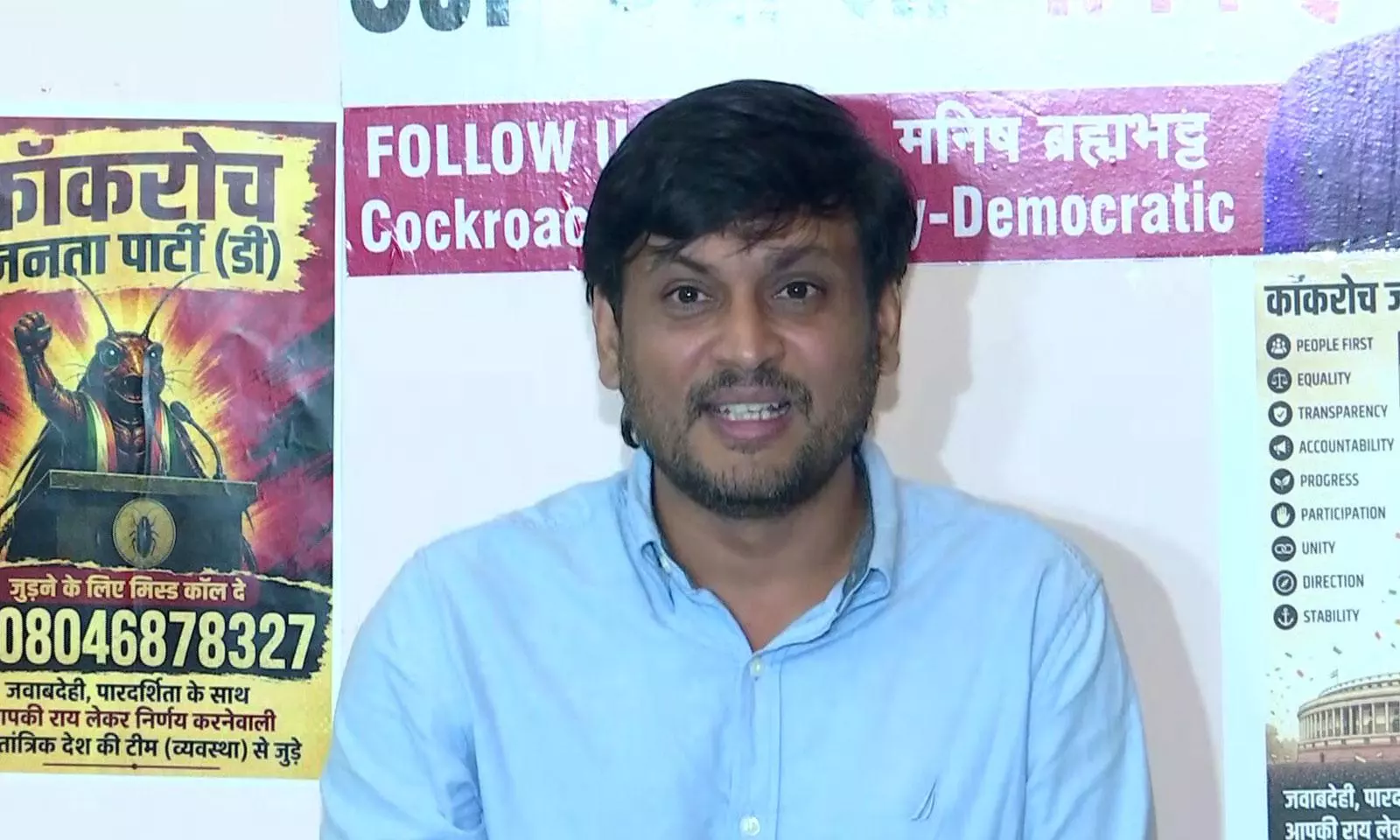
Activist Manish Brahmbhatt announces the launch of the Cockroach Janta Party-Democratic (CJP-D), positioning the new platform as an alternative to the Abhijeet Dipke-led CJP. Photo: Social media
Brahmbhatt alleges the newly constituted CJP leadership fails to represent grassroots volunteers and protesters who formed the backbone of the student-led movement
Key Highlights
- Manish Brahmbhatt announces formation of Cockroach Janta Party-Democratic (CJP-D)
- Accuses Abhijeet Dipke-led CJP of becoming a “handpicked” organisation
- Alleges disproportionate representation of people associated with AAP
- Questions representation of students, women, Muslims, Sikhs and grassroots volunteers
- Says CJP-D will constitute its national leadership through a democratic process
- Dispute follows earlier protests over the composition of CJP’s national working committee
New Delhi: A split has emerged within the movement associated with the Cockroach Janta Party (CJP), with activist Manish Brahmbhatt announcing the formation of the Cockroach Janta Party-Democratic (CJP-D) and accusing the Abhijeet Dipke-led organisation of departing from the student-centred movement from which it emerged.
Brahmbhatt, who had earlier objected to the composition of the CJP’s national working committee, alleged that its new leadership had become a “handpicked team” with an excessive presence of people associated with the Aam Aadmi Party (AAP). He claimed that volunteers and protesters who participated in the movement had not received adequate representation.
“Today, we are launching the Cockroach Janta Party-Democratic,” Brahmbhatt said, adding that the new platform would seek to bring together people who had contributed to the movement and harness their “collective strength”.
CJP initially emerged as an online satirical platform before becoming associated with student-led protests in Delhi over examination paper leaks and other education-related issues. The organisation subsequently announced plans to expand its activities nationally under founder Abhijeet Dipke.
Questions Raised Over CJP Leadership
Brahmbhatt alleged that the composition of CJP’s newly constituted leadership did not reflect the diversity of people who participated in the agitation.
“Why are eight people involved exclusively from the Aam Aadmi Party?” he asked, alleging that volunteers associated with several political parties — including the Shiv Sena, Samajwadi Party, RJD, BJP and Congress — had participated in the movement but were not similarly represented in the organisation’s new structure.
These are Brahmbhatt’s allegations, and they should not be treated as independently established facts unless supported by documentary evidence or a response from the CJP leadership.
Brahmbhatt also questioned the representation of women, Muslims, Sikhs and students within the leadership. He argued that students had been central to the agitation, particularly over allegations of examination paper leaks and their impact on deserving candidates.
“The core issue was the injustice faced by meritorious students due to paper leaks,” he said, accusing the current leadership of moving away from the movement’s original objectives.
The latest development follows an earlier protest by Brahmbhatt and fellow activist Rahul Pandey outside Dipke’s residence in Chhatrapati Sambhajinagar in August. They had alleged favouritism in the constitution of the CJP core committee and demanded greater representation for grassroots volunteers.
The protesters had claimed that around 450 coordinators associated with the Jantar Mantar agitation were not represented in the committee.
Brahmbhatt said CJP-D would seek to constitute its national team through a democratic process, with volunteers and protesters involved in decision-making.
“If you proceed solely based on Kejriwal’s agenda, without consulting volunteers or protesters, and fight against just one party, the country sees what is happening,” he said.
The formation of CJP-D introduces a new organisational challenge for the Dipke-led CJP as both groups seek to claim the legacy and support base of the movement. The political significance of the split, however, will depend on whether CJP-D succeeds in attracting substantial numbers of the volunteers and coordinators who participated in the earlier agitation.

YOU MAY LIKE THIS