Reg No. - CHHBIL/2010/41479ISSN - 2582-919X

Zelenskyy Urges India, 46 Other Nations to Stop Citizens Being Drawn Into Russia-Ukraine War
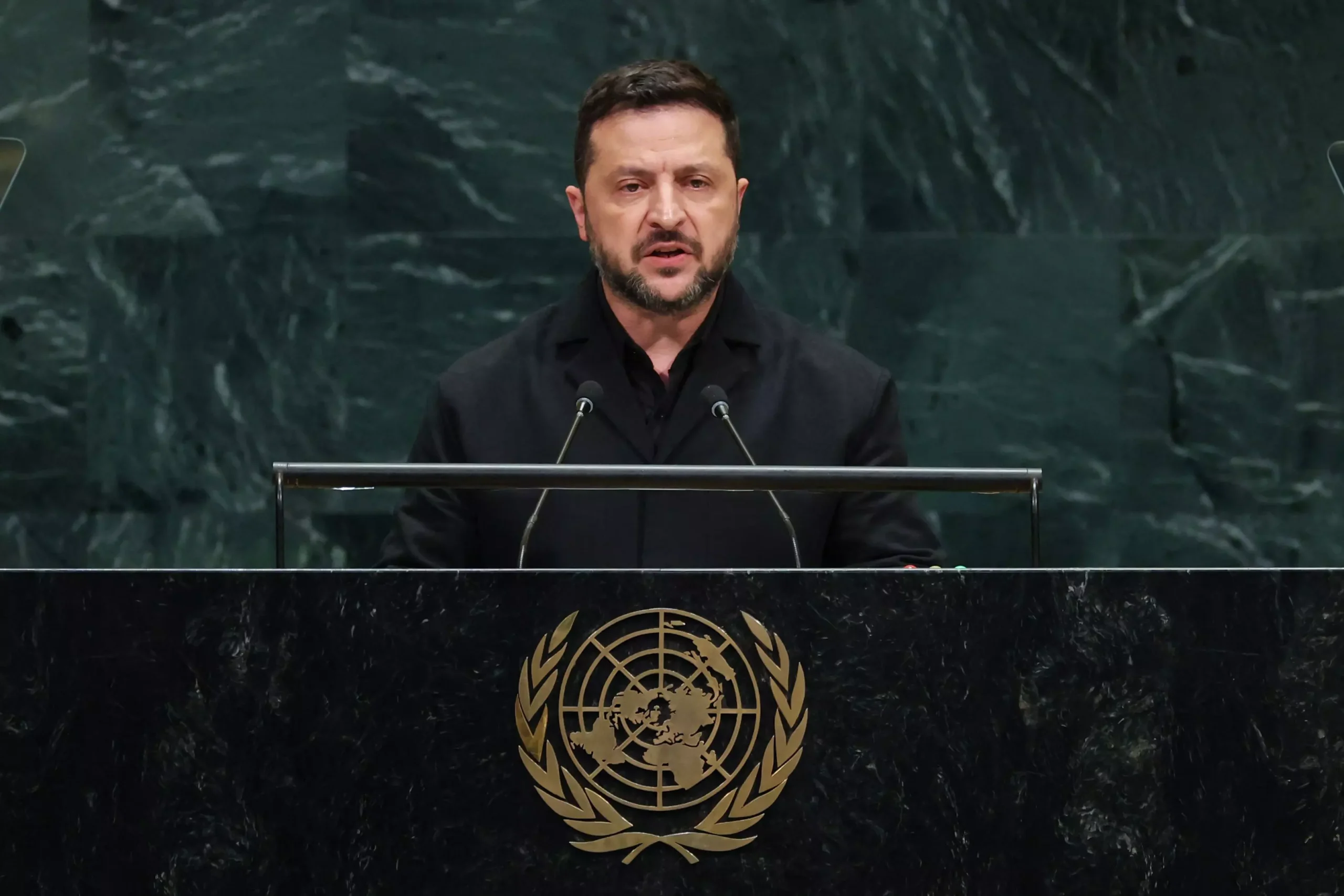
Ukrainian President Volodymyr Zelenskyy addresses the 81st United Nations General Assembly at UN Headquarters in New York on Wednesday, September 23, 2026. Zelenskyy appealed to India and other countries to prevent their citizens from being drawn into the Russia-Ukraine war, alleging that Russia was using nationals from 47 countries in the conflict. Photo: Timothy A. Clary/AFP.
Ukrainian President tells UN General Assembly that foreign nationals are reaching the battlefield through alleged “deception and tricks”; India among countries specifically named
Key Highlights
- Ukrainian President Volodymyr Zelenskyy told the 81st UN General Assembly that Russia was using citizens from 47 countries in its war against Ukraine.
- He specifically named India, Ghana, Nepal, Tajikistan, Yemen, Kenya, Zimbabwe, Cuba, Belarus, Sudan and South Africa, among others.
- Zelenskyy alleged that some foreign nationals had reached Russia through “deception and tricks” before ending up on the battlefield.
- He appealed directly to governments to protect their citizens from being drawn into the conflict.
- India has separately been working with Moscow over Indian nationals recruited into the Russian armed forces. According to figures cited from Indian Foreign Secretary Vikram Misri earlier this month, 227 Indians had been recruited, 139 discharged and 51 had died.
- Zelenskyy also used his UN address to call for greater international pressure on Russia’s capacity to finance and sustain the war.
New York: Ukrainian President Volodymyr Zelenskyy has appealed to India and dozens of other countries to prevent their citizens from being drawn into the Russia-Ukraine war, alleging that Moscow is using foreign nationals on the battlefield.
Addressing the 81st United Nations General Assembly in New York on Wednesday, September 23, 2026 Zelenskyy said citizens of 47 countries were being used in the conflict and specifically included India among the nations he named.
“We know that Russia uses citizens of 47 countries in its war,” Zelenskyy said, before naming Ghana, Nepal, Tajikistan, India, Yemen, Kenya, Zimbabwe, Cuba, Belarus, Sudan and South Africa among them.
He alleged that foreign nationals were dying on the battlefield after reaching Russia through what he described as “deception and tricks.”
Direct Appeal to India and Other Countries
Zelenskyy addressed representatives of the countries concerned directly, asking governments to protect their nationals from becoming involved in the conflict.
“They’re your citizens. Take care of them and do not let them end up on another front,” he said.
His remarks put renewed international attention on the recruitment of foreign nationals for the war, an issue that has also affected Indian families.
According to figures attributed to Foreign Secretary Vikram Misri earlier this month, 227 Indian nationals had been recruited into the Russian armed forces. Of them, 139 had been discharged while 51 had died. New Delhi remained engaged with Moscow regarding the release and repatriation of Indians who remained there.
The Indian government has previously raised cases involving nationals who said they were misled about the nature of employment offered to them in Russia.
Wider Message on War and Its Financing
Zelenskyy’s address went beyond the recruitment issue. He also urged countries to restrict Russia’s capacity to finance and prolong the conflict.
The Ukrainian President argued that revenues generated through international trade helped Moscow sustain its military operations. His remarks formed part of Kyiv’s continuing diplomatic campaign for greater economic pressure on Russia.
He also referred to Russia’s military relationship with North Korea, saying two North Korean prisoners of war had recently been transferred by Ukraine to South Korea.
The Russia-Ukraine war, now in its fifth year, remains one of the major issues before world leaders gathering in New York for the UN General Assembly, alongside conflicts in the Middle East and other international security challenges.

YOU MAY LIKE THIS