Reg No. - CHHBIL/2010/41479ISSN - 2582-919X

Trump Announces Russian Sanctions Waiver, Raising Prospect of Relief for India’s Energy Trade
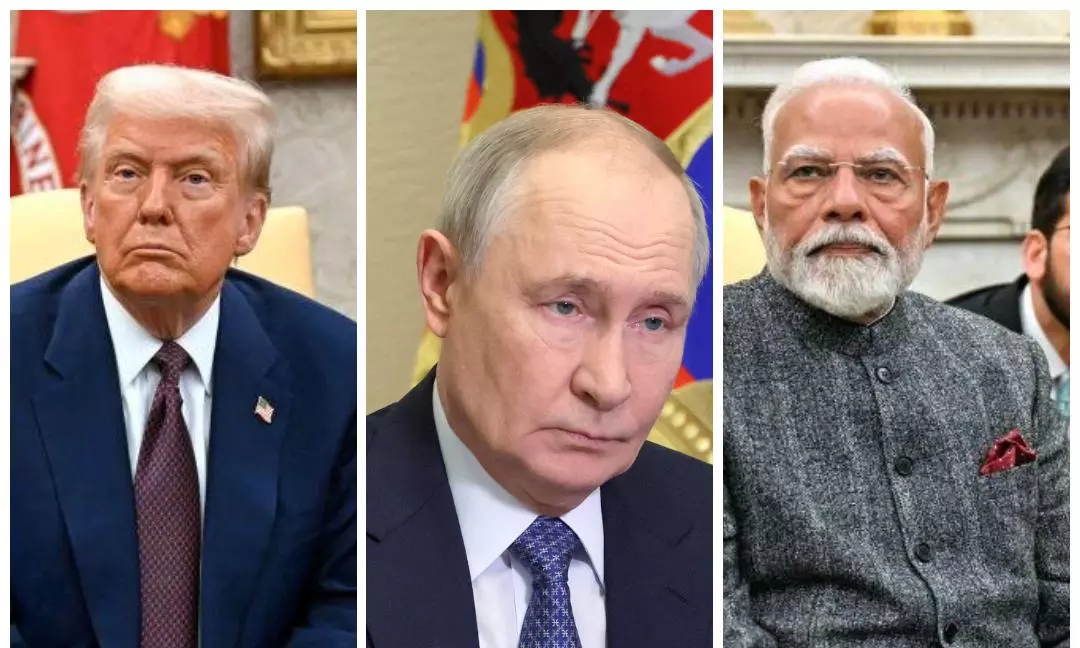
US President Donald Trump, Russian President Vladimir Putin and Indian Prime Minister Narendra Modi in a composite photograph. Trump’s October 16, 2026, executive order waiving specified sanctions and tariffs under the Lindsey O. Graham Sanctioning Russia and Iran Act could ease immediate pressure on India over its purchases of Russian energy, although Washington retains the authority to reconsider the exemptions.(File Image)
US President Donald Trump invokes national interest to waive specified sanctions, restrictions and duties under a Russia-related legislative framework, potentially easing pressure on India’s Russian oil purchases as Washington balances strategic diplomacy with its sanctions policy.
Key Highlights
- President Donald Trump announces a waiver of specified sanctions, restrictions and duties linked to Russia and Iran.
- Trump says the decision is in the national interest of the United States.
- The President states that he has submitted the required certification to the US Congress.
- The move could have implications for India’s Russian crude oil imports, depending on the precise scope of the waiver.
- The development draws attention to Washington’s relations with New Delhi and Moscow amid continuing geopolitical tensions.
Washington: US President Donald Trump has announced a waiver of certain sanctions, restrictions and duties under legislation described in the initial report as the Sanctioning Russia and Iran Act, citing the national interest of the United States. The decision, reportedly contained in an executive order issued on Friday night, could offer relief to India in its energy trade with Russia, although the precise legal scope and practical implications of the waiver require clarification.
According to the information provided, Trump said he had submitted a certification to Congress explaining why granting the waiver at this stage served American national interests.
The President was quoted as saying:
“I am hereby waiving the application of such sanctions, restrictions, and duties provided for in the Graham Act.”
The statement signals an exercise of presidential waiver authority rather than necessarily a complete removal of sanctions against Russia.
Waiver Comes Ahead of New Sanctions Taking Effect
The executive order, dated October 16, implements provisions of the Lindsey O. Graham Sanctioning Russia and Iran Act of 2026, signed into law on September 18.
The legislation provides for substantial economic penalties targeting Russia and certain countries involved in purchasing Russian energy or facilitating sanctions evasion.
Under the order, goods from the five largest importers of Russian crude oil and natural gas could face additional US tariffs of 100 per cent if the relevant purchasing conditions were met.
However, Trump simultaneously exercised the waiver authority provided under Section 115 of the Act, preventing specified duties and sanctions from taking effect for now.
Why the Decision Matters for India
India is among the major international purchasers of Russian crude oil. Consequently, the possibility of punitive US tariffs on countries importing Russian energy had raised concerns about the implications for India’s trade and energy security.
The waiver reduces the immediate threat of additional duties under the Graham Act and could help prevent a new source of friction in India–US economic relations.
For Indian refiners and energy importers, the decision may provide greater short-term policy certainty. However, the waiver does not guarantee uninterrupted oil supplies, lower crude prices or immunity from other existing sanctions.
The distinction is significant: Washington has suspended specified measures under the new legislation, not abandoned its entire Russia sanctions framework.
Washington Retains the Power to Reimpose Restrictions
The White House order makes clear that the waivers will remain effective until the President or designated senior officials determine that further action is appropriate.
It also directs the US Trade Representative, working with the State, Treasury and Energy departments, to monitor Russian oil and gas purchases and activities connected with sanctions evasion.
This means countries importing Russian energy may receive immediate relief while continuing to face scrutiny over their transactions.
The order expressly preserves existing measures imposed under earlier executive orders addressing Russian activities.
Energy Security and Diplomacy Shape the Debate
The decision comes against the backdrop of the continuing Russia–Ukraine conflict and international disagreements over the effectiveness and economic consequences of sanctions.
Supporters of tougher restrictions argue that limiting Russian energy revenue is necessary to increase pressure on Moscow.
Others have raised concerns about the potential effects of sweeping penalties on global energy supplies, fuel prices and relations with major trading partners.
Trump’s decision has therefore attracted attention not only for its implications for Russia but also for the wider balance between economic sanctions, energy security and diplomatic interests.
The waiver has also drawn criticism from American lawmakers who believe stronger economic pressure on Russia should be maintained.
India Gains Breathing Space, but Long-Term Uncertainty Remains
For New Delhi, the immediate significance of the waiver lies in the reduced risk of additional US tariffs linked to purchases of Russian energy.
India has consistently placed importance on securing adequate energy supplies for its economy, while maintaining economic and diplomatic relations with multiple international partners.
The latest American decision could give Indian policymakers and energy companies greater room to assess their options without the immediate threat of the new Graham Act penalties.
Nevertheless, the waiver remains subject to future US policy decisions, and its wider effects will depend on developments in Washington, Moscow and global energy markets.
The central message is that Trump’s decision offers India important immediate relief, but it should not be mistaken for a permanent lifting of all Russia-related sanctions or a guarantee against future trade restrictions.

YOU MAY LIKE THIS