Reg No. - CHHBIL/2010/41479ISSN - 2582-919X

The Irony of Communication: When a Teacher of Communication Struggles to Express Himself-By Kumar Bahukhandi
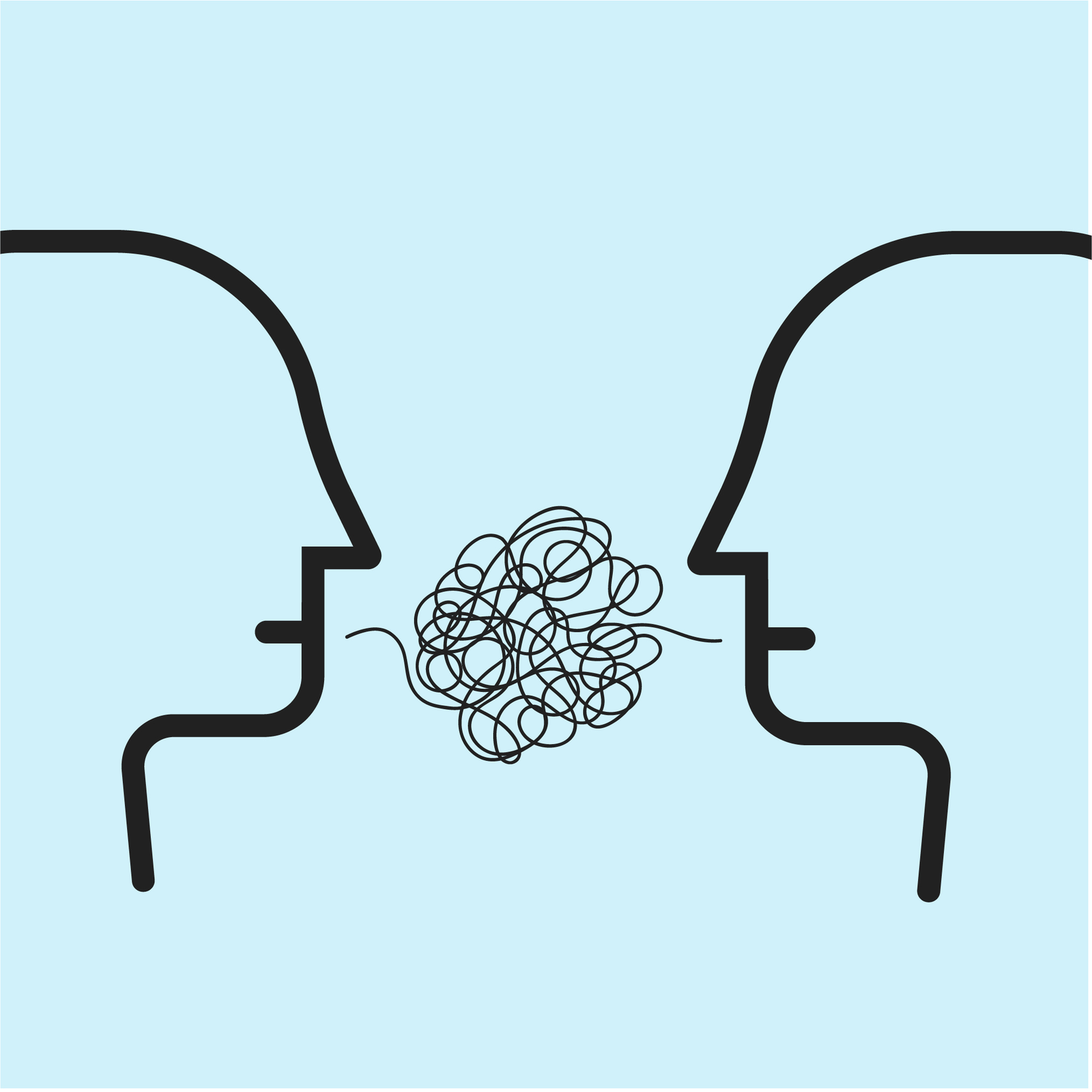
After nearly two decades of teaching journalism and mass communication, I have discovered that talent, confidence and the ability to express oneself are not always found in the same person. And sometimes, the greatest irony is that the person teaching communication is still learning about his own ways of expressing ideas.
When Academic Excellence Meets the Real World
Why do talented students fail interviews despite possessing excellent academic records, strong subject knowledge and impressive qualifications?
I have often reflected on this question during my nearly 20 years of teaching Journalism and Mass Communication.
In classrooms, I have encountered students whose understanding of a subject was so remarkable that they could probably write an entire book about it. Yet, when asked to explain the same subject verbally, they would struggle to put together a few sentences.
I have also witnessed the opposite.
Students who were academically average, sometimes even among the weakest performers in the classroom, went on to become confident television news presenters. I have watched former students reading news during prime-time broadcasts, addressing audiences with an ease that their academic performance had never suggested.
Meanwhile, some of my most gifted writers were still struggling to establish themselves in print journalism.
I remember a particularly talented student who could write exceptionally well but was still trying to find a secure position in a newspaper organisation. He would spend his days searching for stories, uncertain whether he would still have the same professional position the following morning.
Was one student more talented than the other?
Not necessarily.
They simply possessed different abilities, and the professional world rewarded those abilities differently.
The Difference Between Knowing and Expressing
An interview does not always measure the depth of a person’s knowledge. Often, it measures how effectively that knowledge can be presented within a limited period, under unfamiliar circumstances and before people who may have already formed expectations.
A student may understand a subject thoroughly but struggle to explain it under pressure.
Another may possess only a reasonable understanding yet communicate with such confidence that the interview panel is immediately impressed.
This raises an uncomfortable question.
Are we selecting the most capable person, or the person most capable of convincing us that they are capable?
Certainly, communication skills matter. Confidence matters. Practical knowledge, professional grooming and industry exposure matter.
But should the absence of verbal confidence automatically disqualify an otherwise brilliant mind?
I do not believe so.
Communication is not a single ability. It takes many forms: speaking, writing, listening, observing, interpreting and understanding.
A brilliant writer may not be an impressive speaker. An outstanding television presenter may struggle to produce a thoughtful editorial. An excellent researcher may find it difficult to defend an argument spontaneously before an interview panel.
And someone who speaks very little may have a great deal to say.
And Then Comes My Own Story
Perhaps the most interesting example I can offer is myself.
I have spent nearly two decades teaching students how to communicate, how to present themselves, how to speak with confidence and how to express their ideas effectively.
Yet I have never considered myself a particularly impressive speaker.
I chose print journalism because writing gives me the freedom to express thoughts that I sometimes find difficult to communicate verbally.
When I write, I can organise my ideas, examine my arguments and give shape to feelings that might otherwise remain unspoken.
People read my articles. Some appreciate my thoughts. Others disagree with me, which is perfectly natural and often intellectually rewarding.
But I do not particularly enjoy listening to myself speak.
Teaching communication does not mean being equally comfortable with every form of expression. My own experience has helped me appreciate why a student may write beautifully yet hesitate when speaking before an unfamiliar audience.
Does that make me a poor communicator?
Or does it demonstrate that even communication teachers are human beings, with their own strengths, limitations and contradictions?
When Interviews Become a Test of Performance
I have never believed that academic marks alone determine professional success.
But neither do I believe that a confident interview performance is necessarily proof of superior ability.
An interview is a moment. A career is a journey.
A person who hesitates during a 20-minute conversation may demonstrate exceptional competence over 20 years of professional work.
Some individuals need time to think before answering. Others are naturally spontaneous.
Some perform best before an audience. Others produce their finest work in solitude.
The challenge for educational institutions and employers is to recognise these differences.
We should certainly prepare students for interviews, group discussions, presentations and professional interactions. But we should also encourage organisations to assess candidates through practical assignments, writing samples, portfolios and demonstrations of actual ability wherever appropriate.
Talent should not become invisible merely because it is unable to introduce itself confidently.
The Commercialisation of Communication: Another Irony
Recently, while attempting to share these experiences on a professional networking platform, I encountered another peculiar contradiction.
I wanted to communicate a thought, not apply for a job.
I was not seeking employment, professional advancement or commercial promotion. I simply wished to share an observation drawn from my years as a teacher and journalist.
Yet the platform’s character restrictions prevented me from expressing the entire thought in the form I had chosen.
The obvious alternative was to shorten my reflections or publish them in another format.
And that made me think about the larger digital environment in which we now communicate.
Everywhere we turn, digital platforms and professional tools offer new possibilities. Many provide useful services without charge, while others reserve additional capabilities for paying subscribers.
There is nothing inherently wrong with businesses charging for services. Technology requires investment, maintenance and innovation.
But there is something worth examining about a society in which communication is celebrated as a universal necessity while increasingly being organised around subscriptions, premium features, visibility mechanisms and platform-specific restrictions.
We are encouraged to express ourselves, build professional networks, exchange knowledge and contribute to public conversations.
Yet the spaces in which we communicate are not entirely our own.
Their rules, formats, reach and limitations are determined by platforms.
We live in an age that celebrates freedom of expression, yet increasingly measures expression in characters, algorithms, subscriptions and visibility.
For someone who has spent much of his professional life teaching communication, this is a fascinating contradiction.
I am not arguing that every service must be free or that every platform must offer unlimited space.
I am asking something more fundamental.
When communication becomes dependent on the architecture and commercial priorities of digital platforms, how much control do ordinary people retain over the way their ideas reach others?
A Lesson for Teachers, Employers and Digital Platforms
These experiences have led me to three conclusions.
First, educators must recognise that students communicate differently. Our responsibility is not merely to make every student a confident speaker but to help each individual discover and strengthen the form of expression in which they can excel.
Second, employers should look beyond the immediate impression created during an interview. Confidence is valuable, but competence, integrity, creativity and the ability to deliver meaningful work are equally important.
Third, digital platforms should remember that not everyone who participates in a professional network is searching for employment, promoting a business or pursuing commercial opportunities.
Some people are there simply to exchange ideas.
Some wish to share experiences.
Others hope that a lesson drawn from their own lives might be useful to someone they have never met.
That, too, is communication.
And it deserves space.
The Greatest Irony of All
After nearly 20 years in journalism education, I am still learning about communication.
I have learned that speaking fluently does not necessarily mean thinking deeply.
I have learned that silence does not necessarily indicate ignorance.
I have learned that a gifted writer may struggle with a microphone, while an average student may discover extraordinary confidence before a television camera.
I have also learned that a teacher can explain the principles of effective communication to an entire classroom and still find some forms of expression more natural than others.
Perhaps that is what makes human behaviour so interesting.
We are not always consistent. Our strengths in one setting do not automatically translate into confidence in another. Our knowledge does not guarantee our ability to express it, and our eloquence does not necessarily establish our wisdom.
The world often rewards those who speak well. But we must never forget those who think deeply, write beautifully and contribute quietly.
As for me, I shall continue teaching communication, practising journalism and expressing myself through writing.
And I shall continue exploring why the written word feels so natural to some of us, while others find their confidence in conversation or before a camera.
That is not merely the irony of communication. It is the irony of being human.

YOU MAY LIKE THIS