Reg No. - CHHBIL/2010/41479ISSN - 2582-919X

Sirpur Moves Closer to UNESCO World Heritage Status as Ancient Chhattisgarh City Enters Tentative List
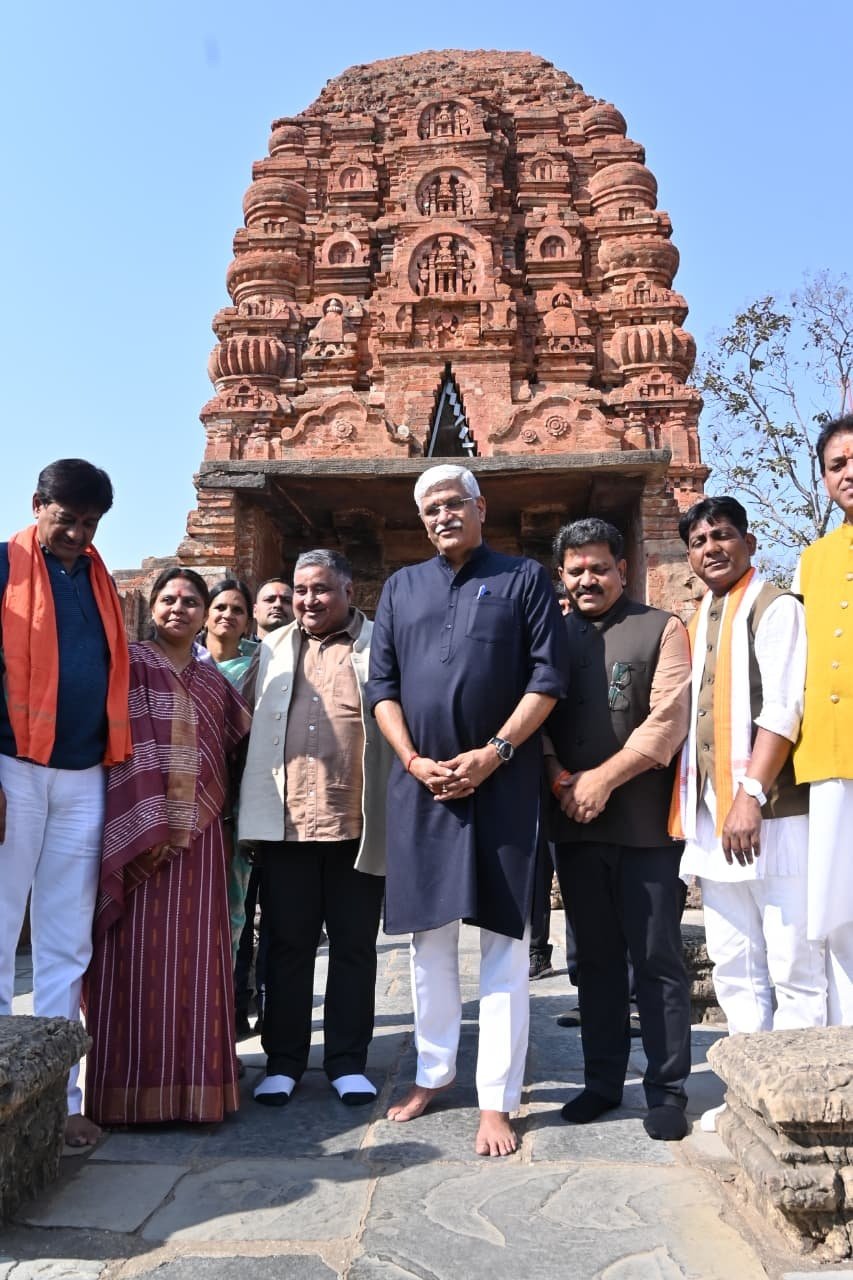
Union Tourism and Culture Minister Gajendra Singh Shekhawat, centre, accompanied by officials and other dignitaries, visits the historic Lakshman Temple complex at Sirpur in Chhattisgarh’s Mahasamund district on Thursday, January 1, 2026, to inspect the ancient archaeological monuments and review their conservation and heritage tourism potential. Photo: primelookindia.com via CG/DPR
The historic capital of Dakshina Kosala, renowned for its 1,500-year-old architectural heritage, Buddhist monasteries and remarkable religious harmony, takes a significant step towards international recognition under Chief Minister Vishnu Deo Sai’s leadership.
Key Highlights
- Ancient Sirpur in Chhattisgarh’s Mahasamund district has been included in UNESCO’s World Heritage Tentative List, according to the state government.
- Chief Minister Vishnu Deo Sai’s administration is prioritising the preservation and international promotion of the state’s archaeological and cultural heritage.
- Tourism and Culture Minister Rajesh Agrawal is spearheading initiatives to strengthen heritage conservation and cultural tourism.
- Union Tourism and Culture Minister Gajendra Singh Shekhawat inspected Sirpur’s archaeological monuments on January 1, 2026.
- The seventh-century Lakshman Temple represents one of India’s finest surviving examples of ancient brick temple architecture.
- Sirpur once served as the capital of Dakshina Kosala and an important centre of Hindu, Buddhist and Jain traditions.
- Archaeological excavations have uncovered more than 2,000 artefacts, including sculptures, coins, ornaments and architectural remains.
- International recognition is expected to strengthen tourism, research, local employment and heritage-based economic opportunities.
- Inclusion in the Tentative List is an initial step towards World Heritage inscription, not the granting of full UNESCO World Heritage status.
Raipur: Chhattisgarh’s ancient cultural and archaeological heritage has achieved a significant milestone on the international stage, with the historic city of Sirpur, situated along the banks of the Mahanadi River in Mahasamund district, securing a place on UNESCO’s World Heritage Tentative List, according to an announcement by the state government on Wednesday, October 21, 2026. Renowned for its magnificent temples, Buddhist monasteries, intricate sculptures and centuries-old tradition of religious coexistence, Sirpur is now moving towards potential recognition as a UNESCO World Heritage Site. The development represents an important achievement for the state’s heritage conservation efforts and opens new possibilities for international cultural tourism, archaeological research and sustainable economic development.
Chief Minister Vishnu Deo Sai’s Government Strengthens Heritage Conservation
Under the leadership of Chief Minister Vishnu Deo Sai, the Chhattisgarh Government has been undertaking initiatives to conserve historical monuments, strengthen archaeological preservation and establish the state’s cultural destinations on national and international tourism circuits.
The inclusion of Sirpur in UNESCO’s Tentative List is being regarded as an important outcome of these efforts.
Tourism and Culture Minister Rajesh Agrawal has been associated with initiatives aimed at strengthening the conservation, promotion and development of the state’s archaeological destinations.
The government believes that international recognition of Sirpur’s heritage can encourage greater interest among historians, researchers, archaeologists, cultural institutions and tourists from across the world.
The development is also expected to generate opportunities for local communities through tourism-related businesses, traditional handicrafts, hospitality services and heritage interpretation.
Union Minister Gajendra Singh Shekhawat Inspected Sirpur in January
Union Tourism and Culture Minister Gajendra Singh Shekhawat visited Sirpur on January 1, 2026, and inspected its historical and archaeological monuments.
During the visit, he appreciated the ancient city’s architectural richness and cultural significance.
He emphasised the importance of protecting its monuments, improving conservation measures and pursuing efforts towards UNESCO World Heritage recognition.
His visit brought renewed attention to Sirpur’s potential as an internationally significant heritage destination.
Sirpur: The Ancient Capital of Dakshina Kosala
Historically known as Shripura, Sirpur occupies an important position in the political, religious and cultural history of central India.
The city served as the capital of Dakshina Kosala during the rule of the Panduvanshi dynasty and developed into a prominent centre of administration, trade, religion and artistic activity.
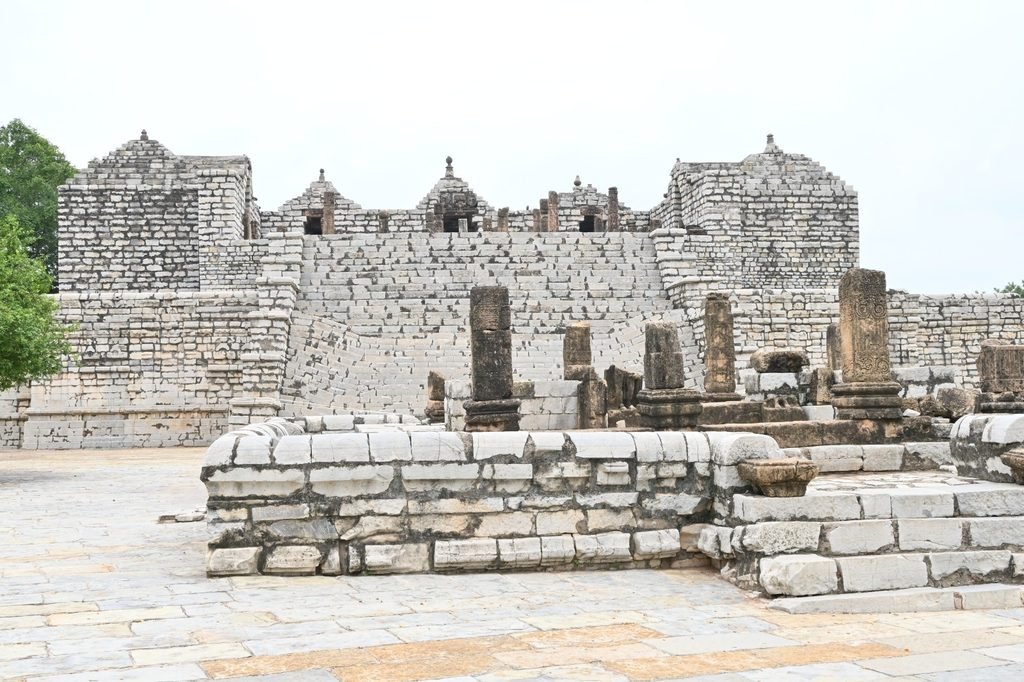
The magnificent stone staircase, ancient temple structures and archaeological remains of Surang Tila at Sirpur in Chhattisgarh’s Mahasamund district showcase the architectural excellence of ancient Dakshina Kosala, as the historic cultural destination gains renewed international attention following the state government’s announcement on Wednesday, October 21, 2026, of its inclusion in UNESCO’s World Heritage Tentative List. Photo: primelookindia.com via CG/DPR
Archaeological and inscriptional evidence, including copperplate records associated with the Sharabhapuriya rulers Pravararaja and Mahasudevaraja, provides valuable information about the region’s early history.
Sirpur witnessed remarkable architectural and cultural development during the reign of Mahashivagupta Balarjuna, whose rule is believed to have lasted approximately 57 years.
Numerous temples, Buddhist monasteries, water bodies and public structures were developed during this period, reflecting the prosperity and sophistication of the ancient settlement.
Chinese Traveller Xuanzang Documented the Region’s Buddhist Heritage
The celebrated Chinese Buddhist traveller Xuanzang, also known as Hiuen Tsang, visited the region during the seventh century.
His historical accounts describe a flourishing Buddhist tradition in the wider area, referring to approximately 100 Buddhist monasteries and around 10,000 monks associated with the Mahayana tradition.
These accounts underline the region’s importance as a centre of Buddhist learning, religious practice and intellectual exchange.
One of Sirpur’s most remarkable characteristics was the coexistence of Shaivism, Vaishnavism, Buddhism and Jainism.
Although Mahashivagupta Balarjuna followed Shaivism, historical evidence indicates that he also extended patronage to Buddhist establishments.
This tradition of religious accommodation gives Sirpur a distinctive place in India’s cultural history.
Lakshman Temple: A Masterpiece of Seventh-Century Brick Architecture
IMAGE 1 — LAKSHMAN TEMPLE AND HERITAGE VISIT
The magnificent Lakshman Temple is among Sirpur’s most celebrated archaeological monuments and one of the finest surviving examples of early Indian brick temple architecture.
Constructed around the seventh century, the temple demonstrates exceptional craftsmanship, structural sophistication and intricate decorative detailing.
Built on a stone platform approximately seven feet high, the temple follows the Panchratha architectural style and includes a sanctum, an intermediate chamber and a mandapa.
Its external walls display elaborate representations of chaitya arches, elephants, kirtimukhas, supporting figures and ornamental designs.
The temple entrance is particularly noteworthy for its intricate carvings depicting Lord Vishnu, episodes associated with Lord Krishna and other mythological subjects.
An image of Lord Vishnu reclining on Shesha adorns the upper portion of the entrance, while the sanctum houses a representation of Shesha.
Historical inscriptions attribute the construction of the temple to Queen Vasata, mother of Mahashivagupta Balarjuna, who commissioned it in memory of her deceased husband, King Harshagupta.
Queen Vasata was the daughter of King Suryavarman of Magadha.
The temple is generally dated to approximately 650 CE and continues to stand as an extraordinary testimony to the architectural accomplishments of ancient Dakshina Kosala.
Gandheshwar Mahadev Temple: Where Faith Meets History
Located on the banks of the Mahanadi River, Gandheshwar Mahadev Temple remains an important religious destination.
Historically associated with the name Gandharveshwar, the temple reflects the continuity of religious traditions across centuries.
Architectural fragments recovered from earlier temples and Buddhist establishments were incorporated into parts of the structure.
The temple complex preserves several sculptures and archaeological remains that provide insights into the region’s religious beliefs, artistic traditions and social life.
Buddhist Monasteries Reveal Sirpur’s Intellectual and Spiritual Prosperity
Sirpur was an important centre of Mahayana Buddhism in ancient India.
Archaeological excavations have revealed the remains of several monasteries equipped with residential quarters, meditation areas and spaces for religious instruction.
Among the prominent establishments are the Anandaprabhu Kuti Vihara and Swastika Vihara.
The Anandaprabhu Kuti Vihara is associated with a Buddhist monk named Anandaprabhu and dates to the reign of Mahashivagupta Balarjuna.
The two-storey monastery contained 14 residential chambers and a principal shrine housing a Buddha sculpture approximately six-and-a-half feet high in the Bhumisparsha Mudra.
Other sculptures, including representations of Avalokiteshvara, have also been recovered from the complex.
The nearby Swastika Vihara is recognised for its distinctive architectural plan and Buddhist sculptural remains.
Together, these monuments demonstrate Sirpur’s importance as a centre of learning, religious activity and artistic production.
Tivaradeva Mahavihara: An Extraordinary Buddhist Architectural Complex
Excavations conducted during 2002–03 under the direction of archaeologist Dr Arun Kumar Sharma revealed the extensive remains of Tivaradeva Mahavihara.
Spread across approximately 902 square metres, the monastery represents one of the significant Buddhist archaeological complexes of ancient Dakshina Kosala.
Situated roughly one kilometre east of Lakshman Temple along the Kasdol road, the structure is particularly notable for its elaborately decorated entrance.
The carvings include animal figures, scenes from social life and stories associated with the Panchatantra.
Among the representations are episodes involving a crocodile and a monkey, demonstrating the imaginative storytelling traditions of ancient sculptors.
Archaeologists also discovered underground stone drainage channels and systematically arranged chambers.
These features offer valuable evidence of the advanced construction techniques and planning practices employed in ancient Sirpur.
Surang Tila: An Architectural Landmark of Ancient Chhattisgarh
IMAGE 2 — SURANG TILA ARCHAEOLOGICAL COMPLEX
Surang Tila is another major archaeological landmark of Sirpur, distinguished by its imposing stone staircase, elevated temple platform and surviving architectural remains.
Its unusual structural arrangement provides valuable insights into the religious architecture and construction practices of the period.
The surviving remains reveal the architectural ambition of the ancient city and its importance as a centre of religious activity.
The ancient Ram Temple, situated east of Lakshman Temple, is another important brick-built monument.
Although its original tower has not survived, the remaining walls and distinctive star-shaped architectural plan provide evidence of sophisticated temple construction.
Archaeologists believe that the Lakshman Temple and Ram Temple were constructed within a few decades of each other.
More Than 2,000 Artefacts Unearthed During Archaeological Excavations
Archaeological investigations conducted across Sirpur have uncovered more than 2,000 artefacts, offering important evidence of the city’s social, economic, religious and cultural history.
The discoveries include metal sculptures, decorative panels, jewellery-making tools, iron utensils, locks, chains, lamps, ritual vessels, pottery, glass bangles, terracotta seals, toys and ancient coins.
Among the significant discoveries is a Chinese coin associated with the Kaiyuan period, suggesting historical commercial or cultural connections beyond the Indian subcontinent.
Coins attributed to the Sharabhapuriya ruler Prasannamatra and the Kalachuri ruler Ratnadeva have also been recovered.
These findings provide valuable evidence of Sirpur’s historical trading networks and its connections with wider economic and cultural developments.
Sirpur Was a Renowned Centre of Metal Sculpture
During the seventh and eighth centuries, Sirpur developed a distinguished tradition of metal sculpture.
Its artists produced finely crafted representations of Buddhist, Hindu and Jain religious figures.
A significant collection of metal sculptures discovered in 1939 included representations of Lord Buddha, Avalokiteshvara, Padmapani, Vajrapani, Manjushri, Tara, Rishabhanatha and Lord Vishnu.
The sculptures are admired for their expressive faces, carefully modelled eyes, symbolic hand gestures, flowing garments and delicate ornamentation.
Many sculptures recovered from Sirpur are preserved in museums and cultural institutions in Raipur, Nagpur, New Delhi and Mumbai.
Examples of the region’s artistic heritage have also been exhibited internationally, including in England, Germany and the United States.
Archaeological Museum Preserves Sirpur’s Cultural Treasures
The Archaeological Survey of India maintains a museum within the Lakshman Temple complex to preserve and display artefacts recovered from the region.
Its collections include sculptures associated with Shaiva, Vaishnava, Buddhist and Jain traditions.
Among the notable exhibits are representations of Chaturmukha Shivalinga, Mahishasuramardini, Narasimha, Ambika, Chamunda, Lord Vishnu, Surya, the Matrikas, Jain Tirthankaras and Lord Buddha.
Other significant works include a sculpture depicting the Keshi Vadha episode and an artistically detailed female figure.
The museum provides researchers, students and visitors with an opportunity to understand the artistic excellence and religious diversity of ancient Sirpur.
Excavations Reveal Remains of an Ancient Royal Complex
Excavations undertaken near the Mahanadi River during 2000–01 under the direction of Dr Arun Kumar Sharma revealed the remains of an extensive complex identified as a possible royal palace.
Important sculptures of Lord Vishnu and Goddess Lakshmi were recovered from the site.
The findings provide insights into the administrative, political and cultural organisation of the ancient settlement.
Further excavations between 2001 and 2004 uncovered additional temples, Buddhist monasteries and other structures, substantially expanding archaeological knowledge of Sirpur.
UNESCO Recognition Could Transform Cultural Tourism and Local Employment
The inclusion of Sirpur in UNESCO’s Tentative List is expected to create new opportunities for Chhattisgarh’s tourism economy.
Greater international visibility could attract historians, archaeologists, researchers, Buddhist pilgrims, cultural enthusiasts and visitors interested in ancient Indian architecture.
The anticipated growth in tourism could benefit local communities through increased demand for accommodation, homestays, transport, traditional cuisine, handicrafts and guided heritage experiences.
Sirpur’s Buddhist archaeological sites also offer opportunities for integration with wider national and international Buddhist tourism circuits.
Its combination of Hindu, Buddhist and Jain heritage gives the destination a distinctive cultural identity.
However, realising these opportunities will require sustained investment in conservation, visitor facilities, transport connectivity, interpretation centres and responsible tourism management.
Tentative List Inclusion Is an Important Step, Not Final World Heritage Inscription
UNESCO’s Tentative List is an important preliminary stage in the process through which countries identify cultural and natural properties they may nominate for World Heritage inscription.
Inclusion does not automatically confer World Heritage status.
A formal nomination requires detailed documentation, evidence of outstanding universal value, appropriate conservation and management arrangements, and evaluation under UNESCO’s established procedures.
Sirpur’s ancient brick temples, Buddhist monasteries, rare sculptures, archaeological remains and historical tradition of religious coexistence provide a substantial foundation for presenting its cultural significance internationally.
The next stages will depend on the preparation and assessment of a comprehensive nomination.
Sirpur’s Global Journey Reflects Chhattisgarh’s Cultural Identity
For Chhattisgarh, Sirpur represents far more than a collection of ancient monuments.
Its temples, monasteries, sculptures and archaeological discoveries preserve the memory of a civilisation distinguished by artistic creativity, religious accommodation, intellectual activity and architectural achievement.
The latest development provides an opportunity to bring this heritage before a wider international audience while reinforcing the responsibility to protect it for future generations.
As Sirpur advances towards possible UNESCO World Heritage recognition, the ancient city on the banks of the Mahanadi stands as a reminder that Chhattisgarh’s cultural history has an important place in the broader story of Indian civilisation.
Union Tourism and Culture Minister Gajendra Singh Shekhawat, centre, accompanied by officials and other dignitaries, visits the historic Lakshman Temple complex at Sirpur in Chhattisgarh’s Mahasamund district on Thursday, January 1, 2026, to inspect the ancient archaeological monuments and review their conservation and heritage tourism potential. Photo: channel24india.com via CG/DPR
The historic capital of Dakshina Kosala, renowned for its 1,500-year-old architectural heritage, Buddhist monasteries and remarkable religious harmony, takes a significant step towards international recognition under Chief Minister Vishnu Deo Sai’s leadership.
Key Highlights
- Ancient Sirpur in Chhattisgarh’s Mahasamund district has been included in UNESCO’s World Heritage Tentative List, according to the state government.
- Chief Minister Vishnu Deo Sai’s administration is prioritising the preservation and international promotion of the state’s archaeological and cultural heritage.
- Tourism and Culture Minister Rajesh Agrawal is spearheading initiatives to strengthen heritage conservation and cultural tourism.
- Union Tourism and Culture Minister Gajendra Singh Shekhawat inspected Sirpur’s archaeological monuments on January 1, 2026.
- The seventh-century Lakshman Temple represents one of India’s finest surviving examples of ancient brick temple architecture.
- Sirpur once served as the capital of Dakshina Kosala and an important centre of Hindu, Buddhist and Jain traditions.
- Archaeological excavations have uncovered more than 2,000 artefacts, including sculptures, coins, ornaments and architectural remains.
- International recognition is expected to strengthen tourism, research, local employment and heritage-based economic opportunities.
- Inclusion in the Tentative List is an initial step towards World Heritage inscription, not the granting of full UNESCO World Heritage status.
Raipur: Chhattisgarh’s ancient cultural and archaeological heritage has achieved a significant milestone on the international stage, with the historic city of Sirpur, situated along the banks of the Mahanadi River in Mahasamund district, securing a place on UNESCO’s World Heritage Tentative List, according to an announcement by the state government on Wednesday, October 21, 2026. Renowned for its magnificent temples, Buddhist monasteries, intricate sculptures and centuries-old tradition of religious coexistence, Sirpur is now moving towards potential recognition as a UNESCO World Heritage Site. The development represents an important achievement for the state’s heritage conservation efforts and opens new possibilities for international cultural tourism, archaeological research and sustainable economic development.
Chief Minister Vishnu Deo Sai’s Government Strengthens Heritage Conservation
Under the leadership of Chief Minister Vishnu Deo Sai, the Chhattisgarh Government has been undertaking initiatives to conserve historical monuments, strengthen archaeological preservation and establish the state’s cultural destinations on national and international tourism circuits.
The inclusion of Sirpur in UNESCO’s Tentative List is being regarded as an important outcome of these efforts.
Tourism and Culture Minister Rajesh Agrawal has been associated with initiatives aimed at strengthening the conservation, promotion and development of the state’s archaeological destinations.
The government believes that international recognition of Sirpur’s heritage can encourage greater interest among historians, researchers, archaeologists, cultural institutions and tourists from across the world.
The development is also expected to generate opportunities for local communities through tourism-related businesses, traditional handicrafts, hospitality services and heritage interpretation.
Union Minister Gajendra Singh Shekhawat Inspected Sirpur in January
Union Tourism and Culture Minister Gajendra Singh Shekhawat visited Sirpur on January 1, 2026, and inspected its historical and archaeological monuments.
During the visit, he appreciated the ancient city’s architectural richness and cultural significance.
He emphasised the importance of protecting its monuments, improving conservation measures and pursuing efforts towards UNESCO World Heritage recognition.
His visit brought renewed attention to Sirpur’s potential as an internationally significant heritage destination.
Sirpur: The Ancient Capital of Dakshina Kosala
Historically known as Shripura, Sirpur occupies an important position in the political, religious and cultural history of central India.
The city served as the capital of Dakshina Kosala during the rule of the Panduvanshi dynasty and developed into a prominent centre of administration, trade, religion and artistic activity.
The magnificent stone staircase, ancient temple structures and archaeological remains of Surang Tila at Sirpur in Chhattisgarh’s Mahasamund district showcase the architectural excellence of ancient Dakshina Kosala, as the historic cultural destination gains renewed international attention following the state government’s announcement on Wednesday, October 21, 2026, of its inclusion in UNESCO’s World Heritage Tentative List. Photo: channel24india.com via CG/DPR
Archaeological and inscriptional evidence, including copperplate records associated with the Sharabhapuriya rulers Pravararaja and Mahasudevaraja, provides valuable information about the region’s early history.
Sirpur witnessed remarkable architectural and cultural development during the reign of Mahashivagupta Balarjuna, whose rule is believed to have lasted approximately 57 years.
Numerous temples, Buddhist monasteries, water bodies and public structures were developed during this period, reflecting the prosperity and sophistication of the ancient settlement.
Chinese Traveller Xuanzang Documented the Region’s Buddhist Heritage
The celebrated Chinese Buddhist traveller Xuanzang, also known as Hiuen Tsang, visited the region during the seventh century.
His historical accounts describe a flourishing Buddhist tradition in the wider area, referring to approximately 100 Buddhist monasteries and around 10,000 monks associated with the Mahayana tradition.
These accounts underline the region’s importance as a centre of Buddhist learning, religious practice and intellectual exchange.
One of Sirpur’s most remarkable characteristics was the coexistence of Shaivism, Vaishnavism, Buddhism and Jainism.
Although Mahashivagupta Balarjuna followed Shaivism, historical evidence indicates that he also extended patronage to Buddhist establishments.
This tradition of religious accommodation gives Sirpur a distinctive place in India’s cultural history.
Lakshman Temple: A Masterpiece of Seventh-Century Brick Architecture
IMAGE 1 — LAKSHMAN TEMPLE AND HERITAGE VISIT
The magnificent Lakshman Temple is among Sirpur’s most celebrated archaeological monuments and one of the finest surviving examples of early Indian brick temple architecture.
Constructed around the seventh century, the temple demonstrates exceptional craftsmanship, structural sophistication and intricate decorative detailing.
Built on a stone platform approximately seven feet high, the temple follows the Panchratha architectural style and includes a sanctum, an intermediate chamber and a mandapa.
Its external walls display elaborate representations of chaitya arches, elephants, kirtimukhas, supporting figures and ornamental designs.
The temple entrance is particularly noteworthy for its intricate carvings depicting Lord Vishnu, episodes associated with Lord Krishna and other mythological subjects.
An image of Lord Vishnu reclining on Shesha adorns the upper portion of the entrance, while the sanctum houses a representation of Shesha.
Historical inscriptions attribute the construction of the temple to Queen Vasata, mother of Mahashivagupta Balarjuna, who commissioned it in memory of her deceased husband, King Harshagupta.
Queen Vasata was the daughter of King Suryavarman of Magadha.
The temple is generally dated to approximately 650 CE and continues to stand as an extraordinary testimony to the architectural accomplishments of ancient Dakshina Kosala.
Gandheshwar Mahadev Temple: Where Faith Meets History
Located on the banks of the Mahanadi River, Gandheshwar Mahadev Temple remains an important religious destination.
Historically associated with the name Gandharveshwar, the temple reflects the continuity of religious traditions across centuries.
Architectural fragments recovered from earlier temples and Buddhist establishments were incorporated into parts of the structure.
The temple complex preserves several sculptures and archaeological remains that provide insights into the region’s religious beliefs, artistic traditions and social life.
Buddhist Monasteries Reveal Sirpur’s Intellectual and Spiritual Prosperity
Sirpur was an important centre of Mahayana Buddhism in ancient India.
Archaeological excavations have revealed the remains of several monasteries equipped with residential quarters, meditation areas and spaces for religious instruction.
Among the prominent establishments are the Anandaprabhu Kuti Vihara and Swastika Vihara.
The Anandaprabhu Kuti Vihara is associated with a Buddhist monk named Anandaprabhu and dates to the reign of Mahashivagupta Balarjuna.
The two-storey monastery contained 14 residential chambers and a principal shrine housing a Buddha sculpture approximately six-and-a-half feet high in the Bhumisparsha Mudra.
Other sculptures, including representations of Avalokiteshvara, have also been recovered from the complex.
The nearby Swastika Vihara is recognised for its distinctive architectural plan and Buddhist sculptural remains.
Together, these monuments demonstrate Sirpur’s importance as a centre of learning, religious activity and artistic production.
Tivaradeva Mahavihara: An Extraordinary Buddhist Architectural Complex
Excavations conducted during 2002–03 under the direction of archaeologist Dr Arun Kumar Sharma revealed the extensive remains of Tivaradeva Mahavihara.
Spread across approximately 902 square metres, the monastery represents one of the significant Buddhist archaeological complexes of ancient Dakshina Kosala.
Situated roughly one kilometre east of Lakshman Temple along the Kasdol road, the structure is particularly notable for its elaborately decorated entrance.
The carvings include animal figures, scenes from social life and stories associated with the Panchatantra.
Among the representations are episodes involving a crocodile and a monkey, demonstrating the imaginative storytelling traditions of ancient sculptors.
Archaeologists also discovered underground stone drainage channels and systematically arranged chambers.
These features offer valuable evidence of the advanced construction techniques and planning practices employed in ancient Sirpur.
Surang Tila: An Architectural Landmark of Ancient Chhattisgarh
IMAGE 2 — SURANG TILA ARCHAEOLOGICAL COMPLEX
Surang Tila is another major archaeological landmark of Sirpur, distinguished by its imposing stone staircase, elevated temple platform and surviving architectural remains.
Its unusual structural arrangement provides valuable insights into the religious architecture and construction practices of the period.
The surviving remains reveal the architectural ambition of the ancient city and its importance as a centre of religious activity.
The ancient Ram Temple, situated east of Lakshman Temple, is another important brick-built monument.
Although its original tower has not survived, the remaining walls and distinctive star-shaped architectural plan provide evidence of sophisticated temple construction.
Archaeologists believe that the Lakshman Temple and Ram Temple were constructed within a few decades of each other.
More Than 2,000 Artefacts Unearthed During Archaeological Excavations
Archaeological investigations conducted across Sirpur have uncovered more than 2,000 artefacts, offering important evidence of the city’s social, economic, religious and cultural history.
The discoveries include metal sculptures, decorative panels, jewellery-making tools, iron utensils, locks, chains, lamps, ritual vessels, pottery, glass bangles, terracotta seals, toys and ancient coins.
Among the significant discoveries is a Chinese coin associated with the Kaiyuan period, suggesting historical commercial or cultural connections beyond the Indian subcontinent.
Coins attributed to the Sharabhapuriya ruler Prasannamatra and the Kalachuri ruler Ratnadeva have also been recovered.
These findings provide valuable evidence of Sirpur’s historical trading networks and its connections with wider economic and cultural developments.
Sirpur Was a Renowned Centre of Metal Sculpture
During the seventh and eighth centuries, Sirpur developed a distinguished tradition of metal sculpture.
Its artists produced finely crafted representations of Buddhist, Hindu and Jain religious figures.
A significant collection of metal sculptures discovered in 1939 included representations of Lord Buddha, Avalokiteshvara, Padmapani, Vajrapani, Manjushri, Tara, Rishabhanatha and Lord Vishnu.
The sculptures are admired for their expressive faces, carefully modelled eyes, symbolic hand gestures, flowing garments and delicate ornamentation.
Many sculptures recovered from Sirpur are preserved in museums and cultural institutions in Raipur, Nagpur, New Delhi and Mumbai.
Examples of the region’s artistic heritage have also been exhibited internationally, including in England, Germany and the United States.
Archaeological Museum Preserves Sirpur’s Cultural Treasures
The Archaeological Survey of India maintains a museum within the Lakshman Temple complex to preserve and display artefacts recovered from the region.
Its collections include sculptures associated with Shaiva, Vaishnava, Buddhist and Jain traditions.
Among the notable exhibits are representations of Chaturmukha Shivalinga, Mahishasuramardini, Narasimha, Ambika, Chamunda, Lord Vishnu, Surya, the Matrikas, Jain Tirthankaras and Lord Buddha.
Other significant works include a sculpture depicting the Keshi Vadha episode and an artistically detailed female figure.
The museum provides researchers, students and visitors with an opportunity to understand the artistic excellence and religious diversity of ancient Sirpur.
Excavations Reveal Remains of an Ancient Royal Complex
Excavations undertaken near the Mahanadi River during 2000–01 under the direction of Dr Arun Kumar Sharma revealed the remains of an extensive complex identified as a possible royal palace.
Important sculptures of Lord Vishnu and Goddess Lakshmi were recovered from the site.
The findings provide insights into the administrative, political and cultural organisation of the ancient settlement.
Further excavations between 2001 and 2004 uncovered additional temples, Buddhist monasteries and other structures, substantially expanding archaeological knowledge of Sirpur.
UNESCO Recognition Could Transform Cultural Tourism and Local Employment
The inclusion of Sirpur in UNESCO’s Tentative List is expected to create new opportunities for Chhattisgarh’s tourism economy.
Greater international visibility could attract historians, archaeologists, researchers, Buddhist pilgrims, cultural enthusiasts and visitors interested in ancient Indian architecture.
The anticipated growth in tourism could benefit local communities through increased demand for accommodation, homestays, transport, traditional cuisine, handicrafts and guided heritage experiences.
Sirpur’s Buddhist archaeological sites also offer opportunities for integration with wider national and international Buddhist tourism circuits.
Its combination of Hindu, Buddhist and Jain heritage gives the destination a distinctive cultural identity.
However, realising these opportunities will require sustained investment in conservation, visitor facilities, transport connectivity, interpretation centres and responsible tourism management.
Tentative List Inclusion Is an Important Step, Not Final World Heritage Inscription
UNESCO’s Tentative List is an important preliminary stage in the process through which countries identify cultural and natural properties they may nominate for World Heritage inscription.
Inclusion does not automatically confer World Heritage status.
A formal nomination requires detailed documentation, evidence of outstanding universal value, appropriate conservation and management arrangements, and evaluation under UNESCO’s established procedures.
Sirpur’s ancient brick temples, Buddhist monasteries, rare sculptures, archaeological remains and historical tradition of religious coexistence provide a substantial foundation for presenting its cultural significance internationally.
The next stages will depend on the preparation and assessment of a comprehensive nomination.
Sirpur’s Global Journey Reflects Chhattisgarh’s Cultural Identity
For Chhattisgarh, Sirpur represents far more than a collection of ancient monuments.
Its temples, monasteries, sculptures and archaeological discoveries preserve the memory of a civilisation distinguished by artistic creativity, religious accommodation, intellectual activity and architectural achievement.
The latest development provides an opportunity to bring this heritage before a wider international audience while reinforcing the responsibility to protect it for future generations.
As Sirpur advances towards possible UNESCO World Heritage recognition, the ancient city on the banks of the Mahanadi stands as a reminder that Chhattisgarh’s cultural history has an important place in the broader story of Indian civilisation.

YOU MAY LIKE THIS