Reg No. - CHHBIL/2010/41479ISSN - 2582-919X

Singapore’s Mandai Wildlife Reserve Offers Eco-Tourism Lessons for Chhattisgarh
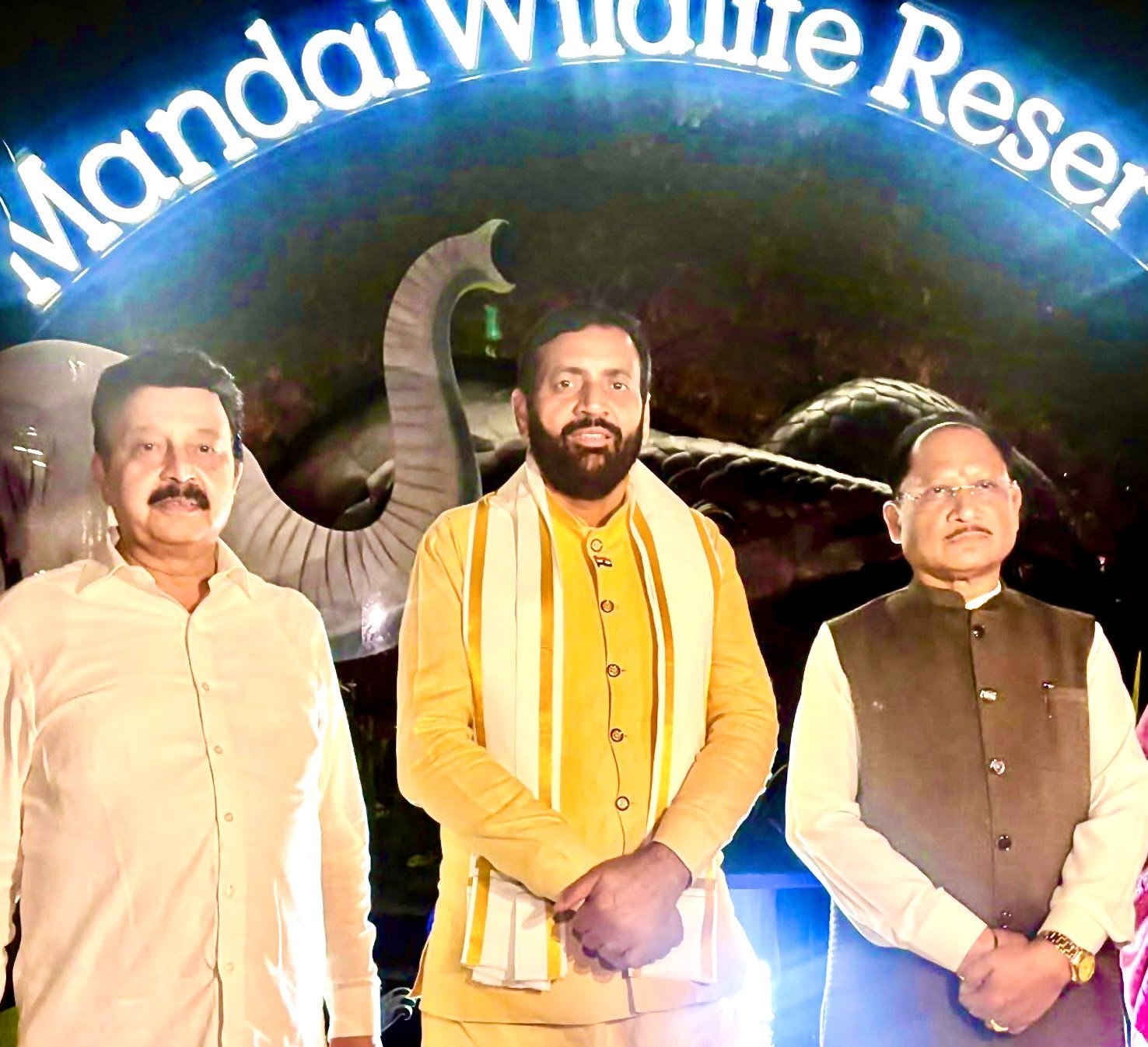
Chhattisgarh Chief Minister Vishnu Deo Sai (right) and Haryana Chief Minister Nayab Singh Saini (centre) during their visit to Mandai Wildlife Reserve in Singapore, where they reviewed wildlife conservation and eco-tourism practices on Monday, October 5, 2026. Photo: primelookindia.com via CG/DPR
CM Vishnu Deo Sai explores wildlife conservation, habitat management and visitor facilities with Haryana Chief Minister Nayab Singh Saini during Singapore visit
Key Highlights
- CM Sai visits Mandai Wildlife Reserve during his Singapore tour.
- Haryana Chief Minister Nayab Singh Saini accompanies him.
- Focus on wildlife conservation, natural habitats and modern visitor facilities.
- Chhattisgarh looks to adapt successful global practices to its own ecological conditions.
- Eco-tourism envisaged as a means of conservation as well as generating local employment.
- State’s nearly 44 per cent forest cover provides a strong foundation for nature-based tourism.
Raipur/Singapore: Chhattisgarh is looking at global experience to strengthen its own model of wildlife conservation and eco-tourism, with Chief Minister Vishnu Deo Sai visiting Singapore’s Mandai Wildlife Reserve to study how conservation, natural habitats and visitor experiences can be effectively integrated.
Accompanied by Haryana Chief Minister Nayab Singh Saini, Sai toured the wildlife reserve and examined its conservation practices, habitat management, tourist facilities and public-awareness initiatives.
Sai is in Singapore to participate in the first Singapore-India Network for Growth (SING) Forum 2026, following his nomination by the Ministry of External Affairs, Government of India.
For Chhattisgarh, the visit has particular relevance. Nearly 44 per cent of the State’s geographical area is under forest cover, while its vast forest landscape stretching from Bastar to Surguja supports rich biodiversity and considerable potential for nature-based tourism.
The Chief Minister said the objective was not to reproduce Singapore’s model in Chhattisgarh, but to understand successful practices and adapt them to the State’s distinctive geography, forests and biodiversity.
“By learning from Singapore’s experiences, we can develop an eco-tourism model suited to Chhattisgarh’s natural conditions—one that strengthens conservation while also promoting tourism and employment,” Sai said.
At Mandai Wildlife Reserve, the Chief Minister observed how wildlife conservation operates alongside carefully managed visitor experiences. The systems for maintaining natural surroundings, creating public awareness and managing tourism offered useful insights into how conservation destinations can also become centres of environmental education and responsible tourism.
The larger opportunity for Chhattisgarh lies in ensuring that tourism growth does not come at the expense of the forests and wildlife that make these destinations valuable in the first place. Sai stressed that any model adopted by the State would have to keep conservation at its core while creating economic opportunities for local communities, rural youth and people living around forest regions.
Chhattisgarh already has several destinations capable of supporting such an approach. Bastar and Kanger Valley, along with Achanakmar, Indravati and Udanti-Sitanadi, showcase the State’s diverse natural landscape and wildlife wealth.
Connecting these areas with better visitor facilities, responsible tourism practices and meaningful participation of local communities could create new livelihood opportunities while strengthening incentives to preserve the natural environment.
The Singapore visit therefore represents more than an examination of a successful wildlife attraction. For Chhattisgarh, it offers an opportunity to study how international practices can be selectively adapted to build an eco-tourism identity rooted firmly in the State’s own forests, wildlife and communities.

YOU MAY LIKE THIS