Reg No. - CHHBIL/2010/41479ISSN - 2582-919X

Rupee Gains 7 Paise to 95.19 Against US Dollar in Early Trade
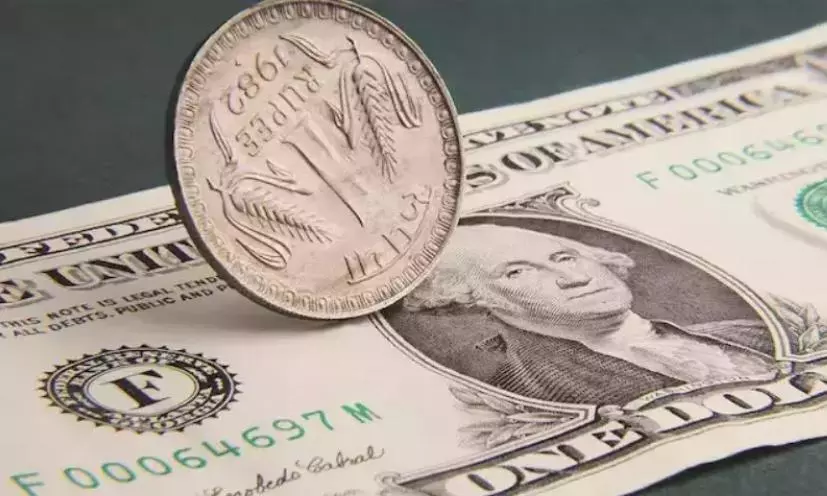
An Indian rupee coin rests on a US dollar banknote in this representational photograph. The rupee strengthened to 95.19 against the dollar in early trade on Friday, October 30, 2026.(Representational Image)
Softer dollar and easing US Treasury yields support the currency, while elevated oil prices limit gains
Key Highlights
- The rupee strengthened 7 paise to 95.19 against the US dollar in early trade on Friday, October 30, 2026.
- The currency opened at 95.21, compared with Thursday’s closing level of 95.26.
- Analysts cited a weaker dollar and declining US Treasury yields as supporting factors.
- Forex traders indicated an immediate USD–INR trading range of 94.75–95.75.
Mumbai: The rupee appreciated by 7 paise to 95.19 against the US dollar in early trade on Friday, October 30, 2026, supported by a softer American currency and easing US Treasury yields. Weak Asian markets and concerns over elevated crude oil prices, however, limited further gains.
At the interbank foreign exchange market, the domestic currency opened at 95.21 before strengthening to 95.19. The movement followed Thursday’s session, when it closed 2 paise higher at 95.26.
Forex traders said sustained capital inflows and a reduction in the oil import burden would provide firmer support for appreciation. They placed the currency pair’s immediate operating range at 94.75–95.75 per dollar.
Anuj Choudhary, Research Analyst at Mirae Asset Sharekhan, attributed the positive opening to dollar weakness and softer US Treasury yields, while noting that Asian market weakness and oil-price pressures restricted the advance.
Choudhary also noted that the European Central Bank and Bank of Japan had kept interest rates unchanged.
The dollar index, which measures the greenback against six major currencies, was down 0.27% at 101.75. Brent crude futures were 1.05% lower at $116.09 a barrel during the reported trading period, although high oil costs remained a concern for India’s import bill.
Market participants were also watching developments in West Asia, the US midterm elections and forthcoming American inflation and employment figures for signals affecting currency movements.
Anindya Banerjee, Head of Commodity and Currency Research at Kotak NEO, said the Reserve Bank of India’s role would remain important in maintaining orderly exchange-rate movements.
Separately, the International Monetary Fund called for greater exchange-rate flexibility to help India adjust to energy-related shocks. IMF Communications Director Julie Kozack said allowing the currency to reflect those pressures would support the economy’s adjustment.

YOU MAY LIKE THIS