Reg No. - CHHBIL/2010/41479ISSN - 2582-919X

Protests Sweep Europe as Living Costs, Housing and Pension Demands Fuel Unrest
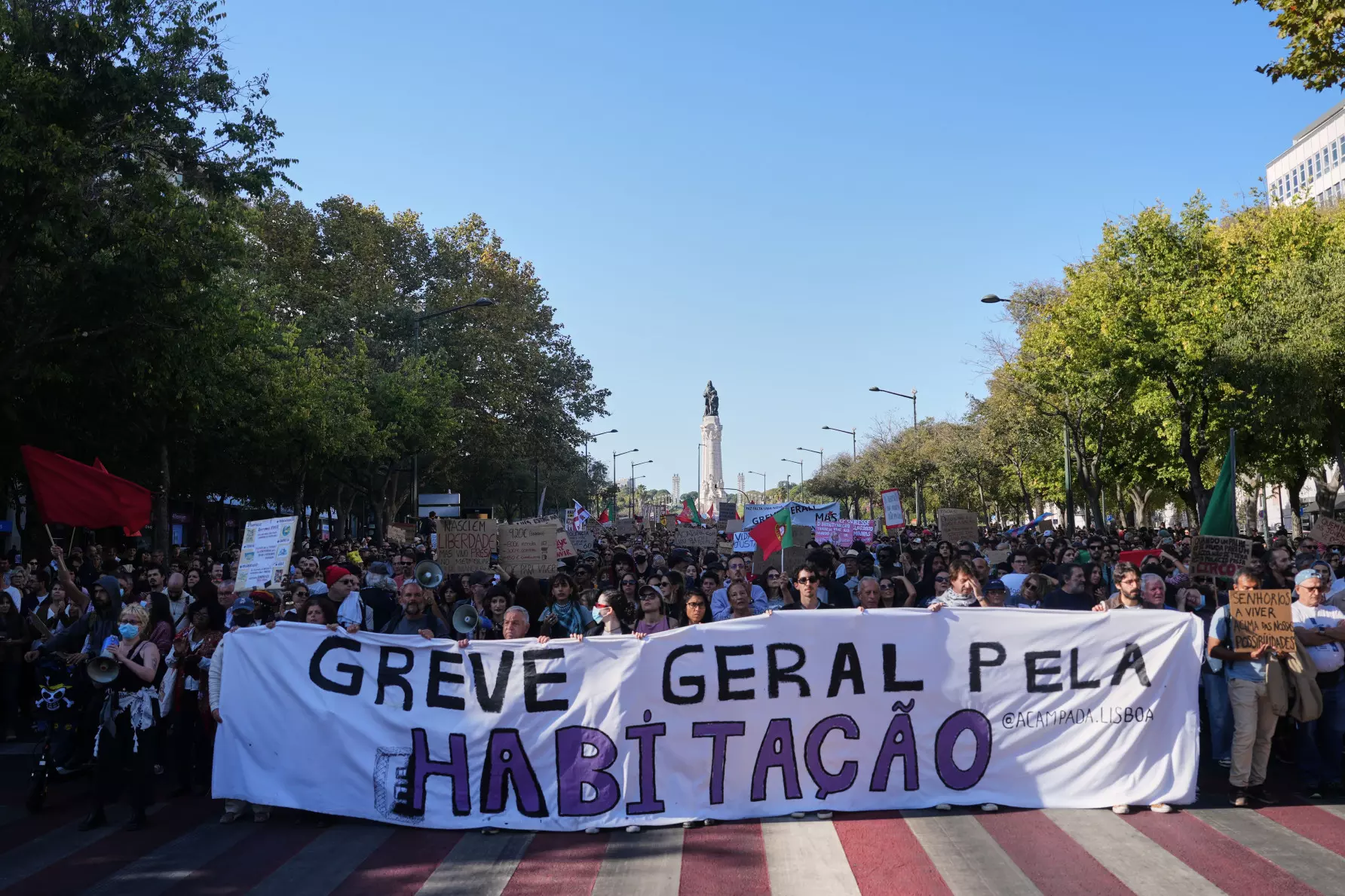
People carry a banner reading “General strike for housing” in Portuguese during a demonstration demanding affordable homes in Lisbon, Portugal, on Saturday, October 24, 2026. Photo: AP/Ana Brigida
Demonstrations across France, Albania, Italy, Spain and Portugal bring thousands onto the streets, with clashes in several cities and heightened security following earlier violence.
Key Highlights
- Rising living costs, education funding, housing affordability and pension protection drive demonstrations across five European countries.
- France deploys 70,000 security personnel as nationwide marches draw large crowds.
- Students and opposition supporters rally in Albania, demanding education reforms and action against corruption.
- Italy reinforces security with additional soldiers in Milan amid protests over economic hardship and military spending.
- Pensioners march in Madrid, while housing campaigners demonstrate in Lisbon.
- Portuguese police clear a protest camp early on Sunday following Saturday’s housing march.
Paris: A wave of demonstrations is sweeping across several European countries as students, workers, pensioners and housing campaigners demand action on rising living costs, public services and economic insecurity. Protests across France, Albania, Italy, Spain and Portugal brought thousands onto the streets on Saturday, October 24, with clashes in several cities prompting police interventions and extensive security deployments. Although the demonstrations reflect different national grievances, education, pensions, affordable housing, corruption and opposition to war feature prominently among protesters’ concerns.
Authorities tightened security after violence during earlier demonstrations, deploying additional police and, in Milan, soldiers. However, the weekend also included peaceful marches, notably the pensioners’ demonstration in Madrid, underlining the varied character of the protests across the continent.
France Faces Fresh Clashes Despite Major Security Deployment
In France, demonstrations over household expenses and education funding again brought large crowds onto the streets. Authorities estimated nationwide participation at 410,000, while organisers claimed more than 800,000 people attended, including 250,000 in Paris.
The mobilisation developed from protests that began in high schools, where students demanded additional teachers, improved facilities and greater investment in education. Those concerns subsequently attracted wider participation as anger over fuel prices and living costs grew.
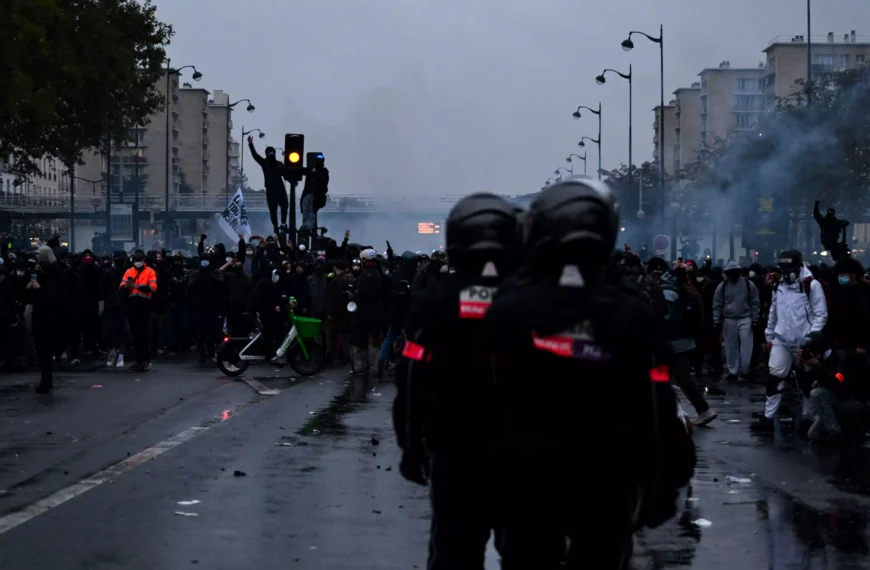
Although Saturday’s demonstrations were largely peaceful, confrontations broke out in Paris and several other cities. Police used tear gas in locations including Marseille, Lyon, Bordeaux, Lille, Toulouse, Montpellier and Nantes.
Around 70,000 security personnel were deployed nationwide. Nearly 1,000 people were arrested, according to the Euronews report, while Interior Minister Laurent Nunez said two people suffered serious injuries.
Businesses in some areas boarded up windows or closed temporarily after damage during the previous weekend. Restrictions on protest routes also drew criticism from unions and politicians on the left, adding a dispute over policing to the demonstrators’ economic demands.
Albanian Students Demand Education Reforms and Accountability
In Albania’s capital, Tirana, thousands joined fresh anti-government demonstrations as student demands over education continued to overlap with broader opposition to Prime Minister Edi Rama’s administration.
High school and university students are seeking lower tuition fees, increased public investment and action against alleged corruption in the education system. Some participants have also joined calls for the prime minister’s resignation.
University professors, artists and opposition groups expressed support for the mobilisation. Demonstrators gathered outside the prime minister’s office before moving towards the Education Ministry, where a separate student protest took place.
Police deployed tear gas and water cannons during confrontations. Authorities said 2,500 officers were stationed across the capital, while government buildings were attacked and dozens of demonstrators detained.
Officials reported more than 300 injuries among protesters and police during the recent unrest. Rama renewed calls for dialogue while warning that those responsible for violence would face a sustained response from the authorities.
Italy Reinforces Security as Economic and Anti-War Protests Spread
Italian cities witnessed demonstrations combining anger over low wages, rising prices and government policies with opposition to increased military spending.
Marches took place in Rome, Milan, Turin, Bologna, Florence and Naples. In Rome, anti-war demonstrators opposed Italy’s involvement in conflicts and increased defence expenditure.
Confrontations occurred in several locations. In the capital, protesters threw bottles and set off firecrackers near a police cordon, prompting the use of water cannons. Police used tear gas during clashes in Turin, while tensions were also reported in Florence and Bologna.
Milan remained under particularly tight security following vandalism and looting during the previous weekend. Prime Minister Giorgia Meloni’s government deployed an additional 500 soldiers, while authorities introduced drone surveillance, railway station checks and rapid-response arrangements.
Police also conducted more than 150 searches in Milan, Monza and other cities as part of investigations into earlier violence. The demonstrations brought together different groups whose demands ranged from better public services to opposition to rearmament.
Madrid Pensioners Seek Protection Against Inflation
In Spain, thousands of pensioners and supporters marched through Madrid to demand retirement incomes sufficient to maintain a decent standard of living.
The demonstration, organised by the pensioners’ movement with trade union support, proceeded from Atocha station towards Calle Alcalá.
Participants called for pension increases linked to actual inflation, a minimum pension matching the minimum wage and measures to close the gender pension gap. Protecting the public pension system against privatisation was another central demand.
The General Confederation of Labour also sought access to early retirement without financial penalties for workers with at least 35 years of contributions, alongside the repeal of several pension reforms introduced since 2011.
The march highlighted concerns extending beyond present retirees to younger workers who will eventually depend on the same system. Unlike the confrontations reported elsewhere, Madrid’s pension demonstration proceeded peacefully. Euronews
Lisbon Housing Protest Followed by Police Clearance of Camp
Affordable housing dominated the demonstrations in Portugal, where thousands marched through Lisbon on Saturday.
Protesters subsequently established more than 100 tents in Rossio Square. Police moved in early on Sunday, October 25, clearing the encampment and making several arrests. Minor injuries were reported, although immediate totals were unavailable.
Reuters reported that Portuguese home prices have more than doubled since 2017, while rents for new leases have nearly doubled. Campaigners opposed proposed changes making evictions easier and removing rent caps on new leases, arguing that worsening affordability is placing increasing pressure on households, particularly young people.
Different Demands Across a Weekend of Mobilisation
The demonstrations encompass distinct movements rather than a single campaign: education and household costs in France, student grievances and political accountability in Albania, economic and anti-war demands in Italy, pensions in Spain and housing in Portugal.
Their convergence over the same weekend illustrates the breadth of pressure facing governments over living standards and public policy. Alongside those demands, clashes and security restrictions have intensified debate about how authorities respond to mass demonstrations.