Reg No. - CHHBIL/2010/41479ISSN - 2582-919X

Pragati College Holds Voter Awareness Programme, Urges Students to Become Responsible Participants in Democracy
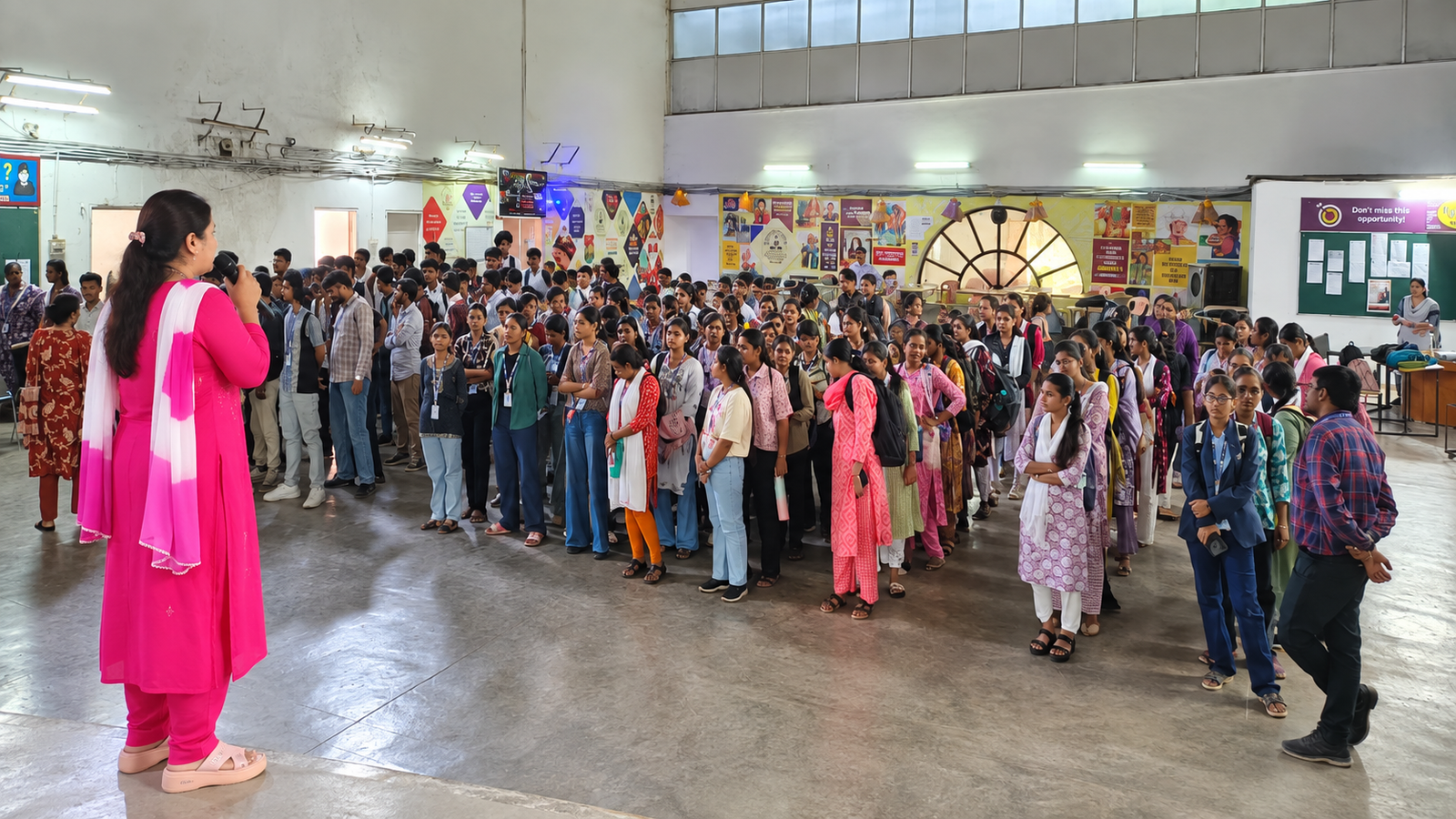
Dr Soumya Nayyar, Principal of Pragati College, Raipur, addresses students during the Voter Awareness Programme organised by the Electoral Literacy Club on Tuesday, October 6, 2026. She urged eligible students to exercise their right to vote responsibly, make informed electoral choices and actively participate in strengthening democracy and nation-building. Photo: channel24india.com
Electoral Literacy Club initiative explains voting rights, voter registration and the responsibility of young citizens; Principal calls upon eligible students to vote thoughtfully and contribute to nation-building
Key Highlights
- Voter Awareness Programme organised by the Electoral Literacy Club of Pragati College, Raipur
- Principal stresses that voting is a constitutional right and democratic responsibility
- Eligible students encouraged to enrol as voters and exercise their franchise
- HOD Education Dr K. N. Gajpal explains voter registration and the role of Forms 6, 7 and 8
- Students encouraged to choose candidates thoughtfully rather than remain indifferent to elections
- Administrator Jyoti Thakur, Heads of Departments, faculty members and students from various departments participate in the programme
Raipur: Democracy becomes meaningful not merely when citizens possess the right to vote, but when they understand the value of that right and exercise it responsibly. Carrying this message to young voters, the Electoral Literacy Club of Pragati College, Choubey Colony, Raipur, organised a Voter Awareness Programme on Tuesday, October 6, bringing together students and faculty members from across the college.
The programme, held at the college’s Activity Hall, focused on familiarising students—particularly first-time and prospective voters—with electoral participation, voter registration and the larger responsibility that accompanies the right to choose one’s representatives.
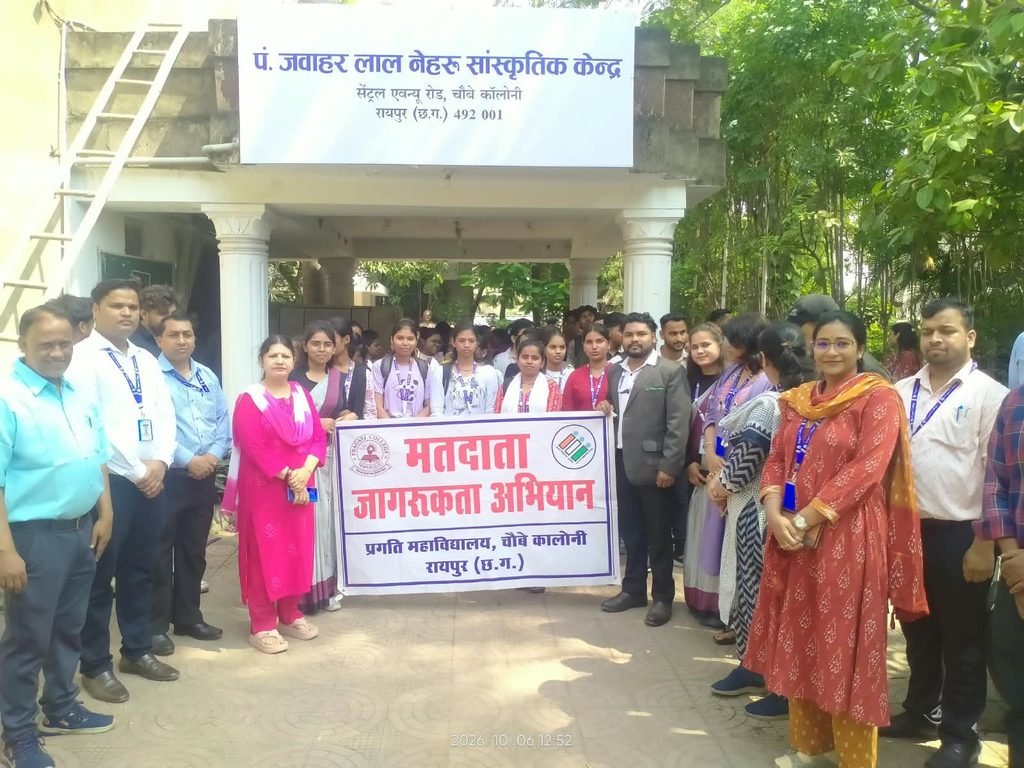
Addressing the gathering, the Principal of Pragati College said voting is a constitutional right that gives every eligible citizen an opportunity to participate directly in strengthening India’s democratic system.
“Every eligible citizen should cast his or her vote. But voting should not become merely a formality. We must understand the candidates, make an informed choice and vote for the person we believe can genuinely contribute to society and the nation,” she said.
She reminded students that democracy cannot be strengthened by remaining spectators. Young people, she said, must understand that their participation in elections has consequences extending far beyond polling day.
“The future of the country is also shaped through the choices we make as voters. When we vote responsibly, we are not only choosing a representative; we are participating in nation-building,” she told the students.
She urged those who had attained voting age to ensure that their names were included in the electoral roll and not to wait until an election was approaching to complete the necessary formalities.
Students Introduced to Voter Enrolment Process
HOD Education Dr K. N. Gajpal took the students through the practical aspects of becoming a registered voter and explained how citizens can participate effectively in the electoral process.
He familiarised students with the purpose of electoral forms, including Form 6 for enrolment of new voters, Form 7 relating to objections or deletion of names, and Form 8 for correction or updating of particulars in the electoral roll.
Dr Gajpal emphasised that attaining the eligible age alone does not automatically enable a person to vote; one’s name must be properly enrolled in the electoral roll. Students were therefore encouraged to verify their registration and become familiar with the procedures available for inclusion and correction of electoral details.
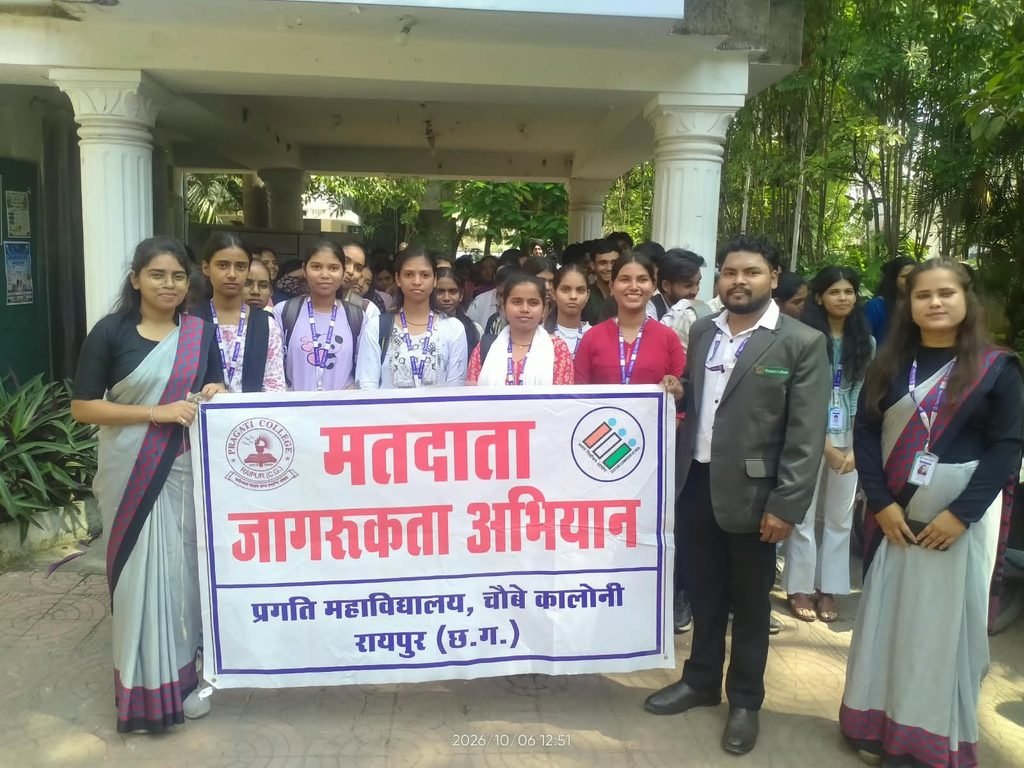
He also explained that electoral literacy goes beyond knowing how to cast a vote. It involves understanding democratic institutions, making informed choices and recognising that citizens have responsibilities alongside their rights.
For young voters entering the electoral system for the first time, such awareness assumes particular significance because the habits they develop at this stage can influence their participation in public life for years to come.
Electoral Literacy Beyond the Classroom
The programme sought to make electoral education more practical and relatable for students rather than treating democracy simply as a concept studied in textbooks.
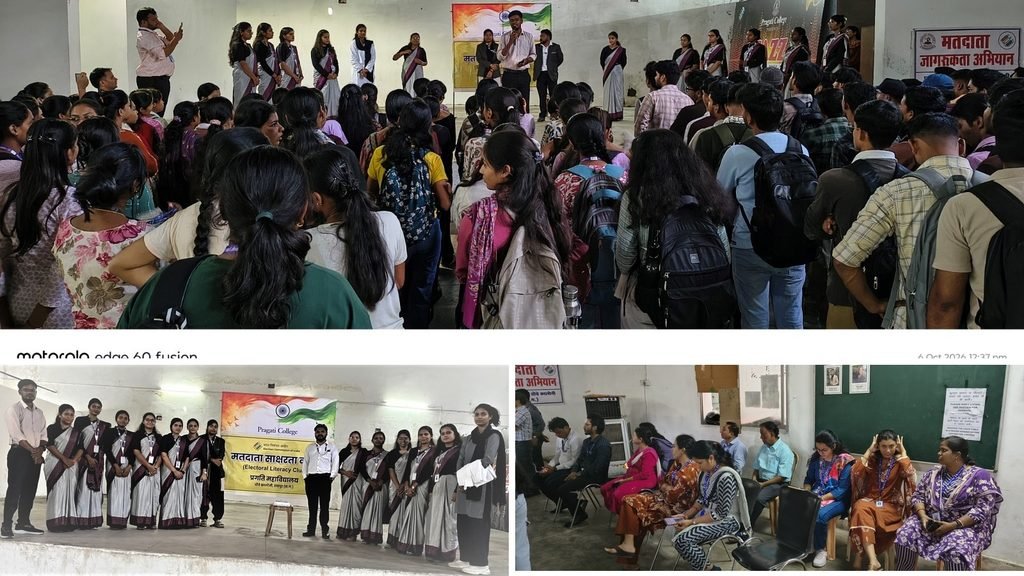
Students were encouraged to understand the voting process, electoral rolls and the importance of making an independent and informed electoral choice. They were also urged to spread voter awareness among family members and within their communities, particularly by helping eligible citizens understand the importance of enrolment.
The Electoral Literacy Club initiative underlined the principle that a strong democracy depends not only on conducting elections, but also on informed citizens who willingly participate in them.
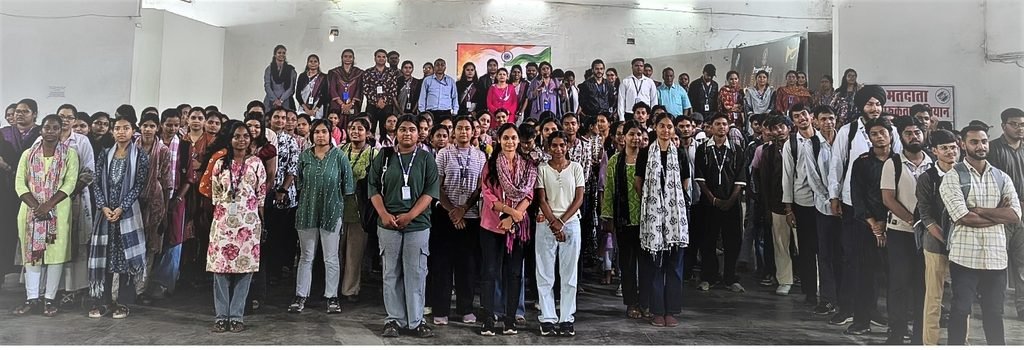
The event witnessed participation from students of different departments along with their faculty members and Heads of Departments. Administrator Jyoti Thakur was also present, reflecting the institution-wide involvement in the voter awareness initiative.
The enthusiastic participation of students turned the programme into more than an informational session. It became an exercise in democratic awareness—reminding young citizens that while a voter may cast only one ballot, that single vote carries an equal place in deciding the country’s democratic direction.

YOU MAY LIKE THIS