Reg No. - CHHBIL/2010/41479ISSN - 2582-919X

Parliament Adjourned, But Not Prorogued: 10-Day Gap Fuels Delimitation Speculation
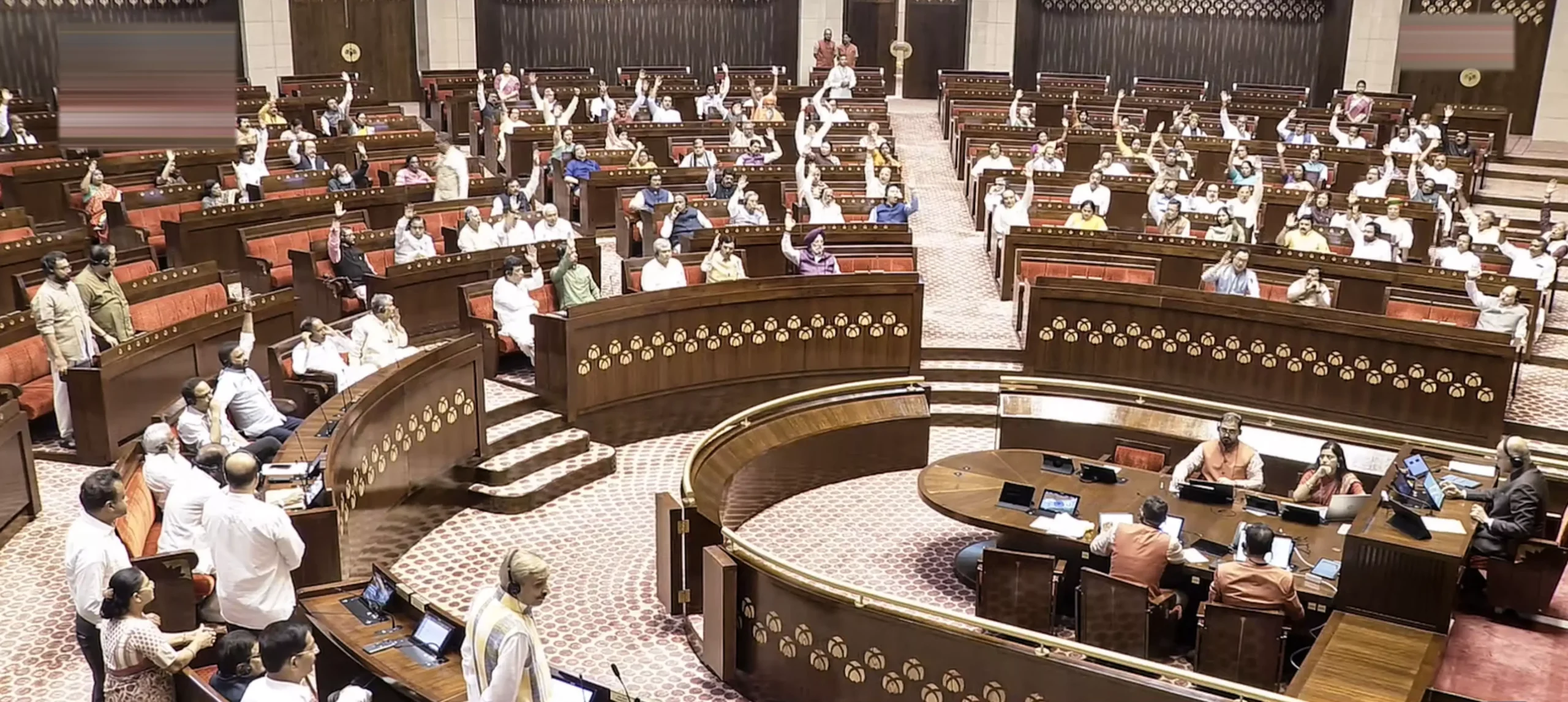
Members in the Rajya Sabha during proceedings in Parliament. Both Houses were adjourned sine die on August 13, 2026, but the delay in formally proroguing the Monsoon Session has prompted Congress to question whether further legislative business is being contemplated. (Photo: Sansad TV )
Congress questions the unusual delay in formally ending the Monsoon Session, linking it to speculation over delimitation and the Women’s Reservation framework; the government has denied plans for a special session
In Short
- Lok Sabha and Rajya Sabha were adjourned sine die on August 13, but the Monsoon Session had still not been formally prorogued by Sunday morning.
- Congress leader Jairam Ramesh questioned the 10-day interval, saying prorogation ordinarily follows within a few days.
- Congress has sought to link the delay with speculation over a possible delimitation-related Constitutional amendment, but no such government move has been officially announced.
- The government has denied reports that it plans to convene a special session of Parliament.
- Southern states continue to press for safeguards ensuring that successful population control does not reduce their relative representation in Parliament.
New Delhi, Sunday, August 23, 2026: A constitutional procedure that normally attracts little public attention has suddenly become the focus of political speculation after the Monsoon Session of Parliament remained formally unprorogued 10 days after both Houses were adjourned sine die.
The Lok Sabha and Rajya Sabha concluded their sittings on August 13. The Ministry of Parliamentary Affairs said the Monsoon Session, which began on July 20, had 19 sittings spread over 25 days.
But adjournment sine die and prorogation are not the same thing.
Adjournment sine die ends the sittings of a House without specifying another date for meeting. Prorogation, however, is the formal termination of a parliamentary session by the President.
It is this remaining constitutional step—and the length of time it is taking—that has prompted questions from the Congress.
Congress general secretary Jairam Ramesh said on Sunday that the interval between adjournment sine die and prorogation is generally two to four days, while acknowledging that there have been exceptions.
Ramesh himself pointed to considerably longer gaps in the past, including 28 days following the 2015 Monsoon Session and 20 days in 2021.
The present delay, therefore, is unusual enough to invite political questions, but is not by itself unprecedented.
Why Delimitation Has Entered the Debate
Congress has sought to connect the delay with speculation surrounding delimitation and legislation required to give effect to the new framework for women’s reservation in Parliament and state legislatures.
Ramesh questioned whether Union Home Minister Amit Shah was seeking the two-thirds parliamentary strength required for a delimitation-linked Constitutional amendment in a possible special sitting.
That, however, remains a political allegation rather than an announced government plan.
The government has denied that it intends to convene a special session.
The distinction is important. Until the government announces legislation or formally summons Parliament, the absence of prorogation cannot by itself establish that a special sitting—or a delimitation amendment—is imminent.
Nevertheless, delimitation has become one of the most politically sensitive questions confronting Centre-state relations.
Southern states fear that a future redistribution of Lok Sabha seats based substantially on population could reduce their relative parliamentary influence compared with states where population has grown more rapidly.
Their argument is straightforward: states that successfully implemented population-stabilisation policies should not be politically penalised for doing so.
That concern surfaced again at the Southern Zonal Council meeting at Mahabalipuram, chaired by Union Home Minister Amit Shah.
Tamil Nadu Chief Minister C Joseph Vijay sought a clear legislative assurance from the Centre that no state would suffer a reduction in its percentage share of representation in Parliament because of its success in controlling population growth.
The demand is significant because it shifts the discussion beyond simply freezing the present strength of the Lok Sabha. The central issue becomes whether the relative parliamentary weight of individual states can be protected even if the total number of seats eventually increases.
Karnataka’s leadership, meanwhile, has argued for retaining the existing strength of 543 elected Lok Sabha seats for another 25 years.
The competing proposals demonstrate why the next delimitation exercise could become one of India’s most consequential federal debates.
It involves not merely drawing new constituency boundaries but balancing population, democratic representation and federal equity.
For the moment, however, Parliament remains in an unusual procedural position: its two Houses have stopped sitting, but the session awaits formal prorogation.
Whether the delay proves to be merely procedural or acquires larger political significance will depend on what the government does next.
Until then, the distinction matters.
Parliament has been adjourned. The Monsoon Session has not yet been formally prorogued—and the political questions surrounding that gap are growing.

YOU MAY LIKE THIS