Reg No. - CHHBIL/2010/41479ISSN - 2582-919X

Moisture Loss and Pest-Related Damage in Paddy Storage: A Scientific and Natural Process
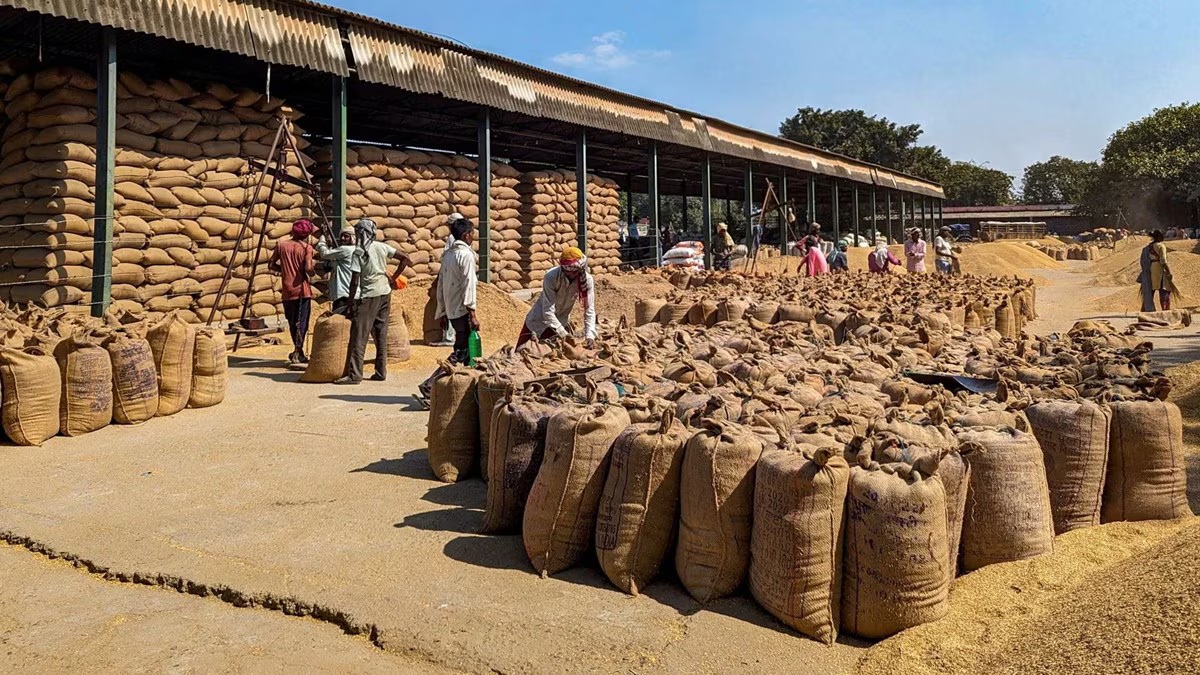
Chhattisgarh paddy procurement system—supported by digital tokens, online payments, stock tracking, and grievance redressal mechanisms—has emerged as one of the most organised and closely monitored systems in the country -Symbolic Image ( Internet)
Government mechanisms ensure safety and transparency in paddy procurement despite moisture loss and pest factors
Raipur: Misleading claims are being circulated in some places regarding losses in paddy due to moisture reduction and damage caused by rodents and pests during storage. These claims are contrary to facts. The reality is that a partial reduction in weight during paddy storage due to loss of moisture—commonly referred to as “moisture loss” or “drying loss”—is a natural and technical process.
This phenomenon has existed for decades and is observed across all paddy-producing states in the country.
According to official records, moisture loss of 6.32 per cent was recorded during the Kharif Marketing Year (KMY) 2019–20, while 4.17 per cent was reported in 2020–21. These figures clearly establish that moisture loss is neither a new nor a sudden occurrence, but a continuous physical and technical process.
At paddy procurement and storage centres, factors such as moisture content, temperature, storage duration, transportation, and environmental conditions naturally lead to a certain percentage of weight reduction in paddy. Scientifically, this is termed as “moisture loss” or “drying loss”. While the process cannot be completely eliminated, it can certainly be regulated, measured, and made transparent.
For the Kharif Marketing Year 2024–25, an estimated moisture loss of around 3.49 per cent has been projected, which is in line with the average of previous years and is not considered abnormal.
Under the current paddy procurement system, measures such as digital stock entry at procurement centres, weight verification, quality testing, warehouse tracking, and monitoring of transportation and lifting have been implemented to ensure that any irregularity is detected promptly. Moisture loss is no longer an assumed factor; it has become a data-driven and fully traceable process. Losses within the prescribed natural limits are treated as normal, while any abnormal deviation triggers investigation and accountability.
The core objective of the paddy procurement system is to ensure that farmers receive the full and fair price for their produce, storage-related discrepancies are prevented, and the entire mechanism remains reliable and transparent.
Today, the state’s paddy procurement system—supported by digital tokens, online payments, stock tracking, and grievance redressal mechanisms—has emerged as one of the most organised and closely monitored systems in the country. This has strengthened farmers’ confidence and enhanced accountability across the process.
It is therefore clarified that moisture loss is a scientific reality of storage—now being managed for the first time with complete transparency, monitoring, and regulatory control, said official authorities.

YOU MAY LIKE THIS