Reg No. - CHHBIL/2010/41479ISSN - 2582-919X

Modi renews pledge to Nari Shakti as women’s quota returns to Parliament
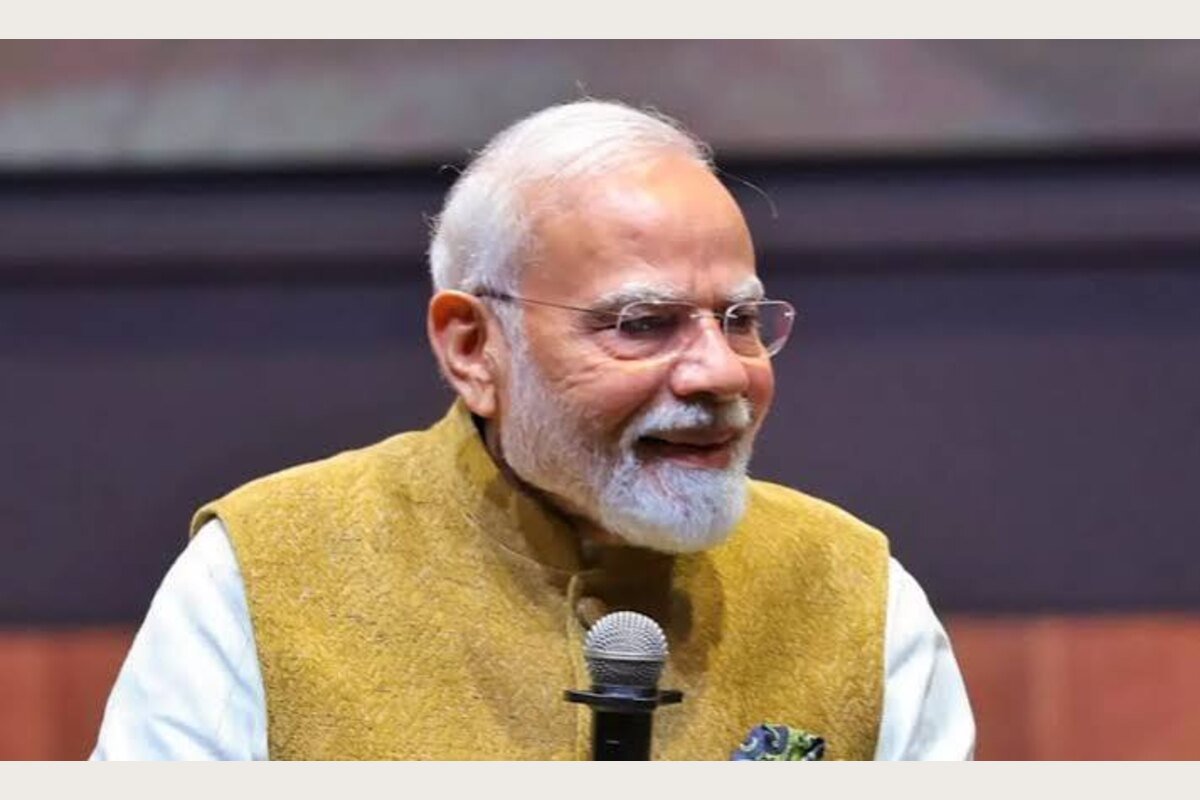
Prime Minister Narendra Modi reaffirms his government’s commitment to implementing the one-third reservation for women in the Lok Sabha and State Assemblies in a video message on 28 November 2026. File photo.
The Prime Minister says women have waited decades for greater political representation as the Centre prepares to bring a revised delimitation package before Parliament
Key Highlights
- In a video message on 28 November 2026, Prime Minister Narendra Modi recalled letters and conversations with women who had pressed for greater political representation.
- The Centre proposes a 50 per cent increase in seats, with the 2011 Census guiding the redrawing of constituencies.
- The revised package seeks to preserve States’ relative shares of Lok Sabha seats until 2051 and implement the women’s quota after delimitation.
New Delhi: Prime Minister Narendra Modi on Saturday reaffirmed his government’s commitment to implementing the one-third reservation for women in the Lok Sabha and State Assemblies. In a video message shared ahead of Parliament’s special session, he said women across the country had waited decades for a greater voice in elected legislatures and pledged to remove obstacles to putting the quota into effect.
“We had made a promise to our Nari Shakti and we remain committed to fulfilling it,” Modi wrote in the post accompanying his video. His message came a day after the Union Cabinet cleared a revised legislative package that links the rollout of women’s reservation to an expansion of elected legislatures and a fresh delimitation exercise.
Modi recalls women who wrote to him and raised the demand in person
Modi said he had been involved in efforts to advance women’s political participation for years. He recalled women writing to him and speaking to him directly about reservation. Those exchanges, he said, reflected how widely the demand for greater representation was shared.
The Prime Minister said he believed women across the country supported the effort and assured them that the government would work to clear the hurdles to implementation. He described its resolve as firm and said parties he accused of opposing the quota could only delay women’s greater participation in the Lok Sabha and State Assemblies. He expressed confidence that it would come about in time.
The 2023 law established the quota. The new Bills seek to bring it into effect
Parliament passed the Nari Shakti Vandan Adhiniyam in 2023 as the Constitution (106th Amendment) Act. It provides for reserving roughly one-third of the seats in the Lok Sabha, State Assemblies and the Delhi Assembly for women. This includes one-third of the seats reserved for the Scheduled Castes and Scheduled Tribes in those legislatures, where applicable.
The 2023 amendment links implementation to a delimitation exercise after the publication of figures from the first Census conducted after the amendment comes into force. The revised package seeks to bring implementation forward by using the available 2011 Census figures to redraw constituencies. Completing the exercise in time for the 2029 Lok Sabha election would depend on parliamentary approval and the work of the Delimitation Commission.
How the Centre proposes to expand legislatures
Under the proposed Constitution (132nd Amendment) Bill and the accompanying delimitation legislation, the number of seats would increase by 50 per cent at the first delimitation. The proposed constitutional ceiling for the Lok Sabha would rise from 550 to 850 seats, while the ceiling for State Assemblies would increase from 500 to 650.
The ceilings set the maximum size of the legislatures. Actual seat totals would follow the expansion formula and the delimitation exercise. Uttar Pradesh, for example, could see its Lok Sabha delegation rise from 80 to 120 MPs and its Assembly grow from 403 to 605 members. The proposed higher Assembly ceiling makes room for that expansion.
For voters, the changes would become visible in the constituency map. Towns, villages or urban wards could be grouped differently, and new constituencies would be created. The exercise would also determine which constituencies are reserved for women. Those designations would shape how political parties select candidates and where prospective candidates prepare to contest.
Why States’ relative representation is at the centre of the debate
The revised package proposes preserving the relative distribution of Lok Sabha seats among States until 2051. A uniform percentage increase would give States larger delegations while broadly preserving their relative weight in the House. The 2011 Census would guide the redrawing of constituencies within States.
This addresses a concern raised by States whose share of the national population has declined. Under a population-based redistribution, a State could gain MPs in a larger House and still command a smaller share of the total seats. The proposed freeze defers that redistribution while allowing the Lok Sabha to expand and its constituency boundaries to be redrawn.
The April vote still hangs over the special session
The Centre’s previous constitutional amendment fell short of the required majority in the Lok Sabha in April. It received 298 votes in favour and 230 against. Opposition parties said they supported reservation for women and raised objections to the delimitation framework, including the absence of an explicit guarantee in the earlier Bill on States’ relative share of seats. The revised package brings that dispute back to Parliament with a proposed freeze written into the plan.
The Lok Sabha is scheduled to begin its special sitting on 30 November, with the Rajya Sabha due to meet on 2 December. A constitutional amendment requires a majority of the total membership of each House and at least two-thirds of members present and voting.
Modi’s message put the decades-long demand for women’s representation at the forefront of the session. Parliament now faces a decision on the route to implementation. If it approves the package, the next decisions will concern the boundaries of the new constituencies, the seats designated for women and the election at which voters will first use the new map.

YOU MAY LIKE THIS