Reg No. - CHHBIL/2010/41479ISSN - 2582-919X

Iran Rules Out US Talks Until Seven Conditions Are Met, Says Three Tankers Hit Mines
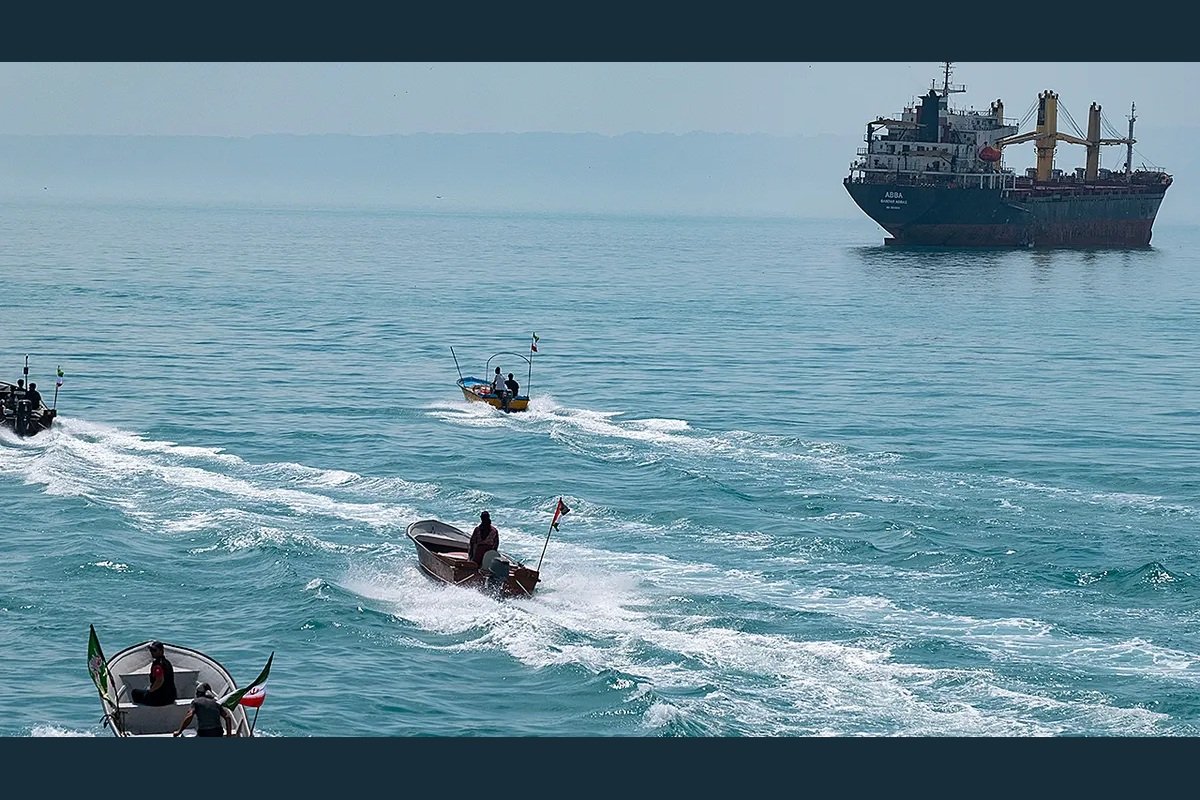
Small boats cross the water near a cargo ship in an image illustrating commercial shipping in the Gulf. Photo credit :Fox New
Tehran has yet to publish its full list of demands. Iran’s Revolutionary Guard says three oil tankers caught fire in the Strait of Hormuz despite US air cover, a claim that remains unverified.
Key Highlights
- Iran’s chief negotiator, Mohammad Bagher Qalibaf, says Tehran will hold off on talks to end the conflict until Washington meets seven conditions.
- Iranian state media say the demands include lifting sanctions, ending the US naval blockade and releasing seized Iranian assets. Tehran has yet to publicly detail all seven conditions.
- A maritime security advisory recorded seven tanker strikes since 16 November but said official authorities had yet to confirm Iranian claims that naval mines caused the incidents.
Tehran: Iran said on Tuesday, 24 November 2026, that it would hold no talks with the United States to end the conflict until its seven conditions were met. The statement came a day after the naval arm of Iran’s Islamic Revolutionary Guard Corps (IRGC) claimed that three oil tankers had caught fire after striking mines in the Strait of Hormuz while under US aerial escort.
Tehran puts demands ahead of negotiations
Qalibaf, Iran’s parliament speaker and chief negotiator, told Iranian state television that Tehran would wait “until Iran’s seven conditions are met” before negotiating with Washington. He also warned that the conflict could spread geographically if the opposing side made what he described as a mistake. Iranian authorities have yet to publish the complete list, leaving it unclear what Washington would have to agree to before talks could begin.
Sanctions relief, the naval blockade and access to seized assets are the three demands Iranian state media have identified. Foreign Ministry spokesperson Esmaeil Baghaei said separately on Monday that Tehran would use the means available to it to confront the blockade. Iran has also tied the reopening of the strait to US steps that include halting hostilities, lifting the blockade and waiving sanctions.
Washington first imposed the blockade on Iran-related oil exports on 13 April. It lifted the restrictions in June after reaching a draft understanding with Tehran and restored them on 14 July after that agreement fell apart. Reuters reported that visible Iranian crude exports fell to nearly zero in recent months under the renewed blockade. That gives Tehran a direct economic reason to seek its removal before returning to negotiations.
Iran’s account of the tanker fires remains unverified
In a statement posted on Telegram on Monday, the IRGC Navy said the three tankers had breached its rules for passage through the strait. It claimed the vessels struck mines and caught fire despite US air cover. The account leaves several questions unresolved, including the identities of the vessels, the condition of their crews and the cause of the reported fires.
The Joint Maritime Information Center’s 22 November advisory reported that seven tankers had been struck since 16 November. It also said official authorities had yet to confirm Iranian claims of mine strikes. That advisory predates the IRGC’s latest statement. It documents the danger merchant crews were already facing, while the circumstances of the three incidents described by Tehran remain unresolved.
Why the Strait of Hormuz matters to India
The strait carries crude oil, petroleum products and liquefied natural gas from Gulf producers to world markets. In the first half of 2025, before the current conflict, about 20.9 million barrels of oil a day passed through it, equivalent to roughly one-fifth of global petroleum liquids consumption. The US Energy Information Administration estimates that Asian markets took 89% of the crude and condensate shipped through the strait in that period. India was among the four largest destinations, alongside China, Japan and South Korea.
Commercial traffic was already below its 2025 baseline before the latest tanker claim. For Indian refiners and other importers, a prolonged disruption can mean more expensive freight, higher insurance costs and less predictable delivery schedules. For crews, the immediate question is whether ships can make the passage safely. A clearer picture depends on reports from vessel operators and maritime authorities, while the prospects for talks depend on whether Tehran and Washington can agree on the terms for reopening negotiations.