Reg No. - CHHBIL/2010/41479ISSN - 2582-919X

India Warns Against Politicisation of Human Rights at UN, Calls for End to Selectivity and Double Standards
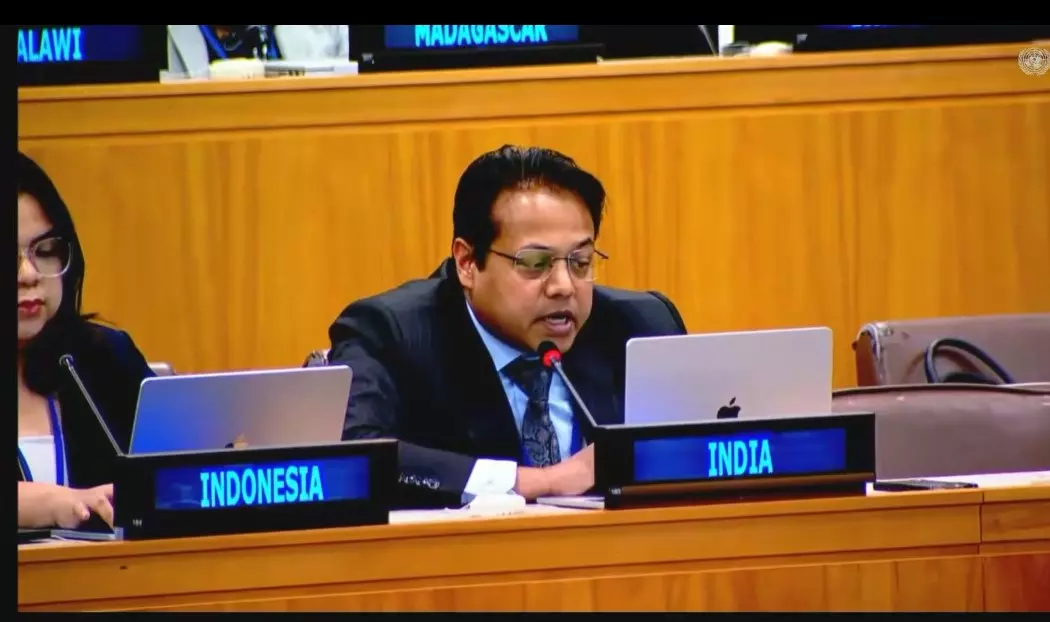
Anuj Swarup, First Secretary at the Permanent Mission of India to the United Nations, addresses the Third Committee during the 81st Session of the UN General Assembly in New York on Monday, October 12, 2026. Representing India’s position on the Human Rights Council’s report, Swarup called for impartiality, respect for cultural and historical contexts, and an end to politicisation, selectivity and double standards in international human rights mechanisms. Photo: primelookindia.com via X.com/@IndiaUNNewYork
At the 81st UN General Assembly Third Committee session, Indian diplomat Anuj Swarup stresses impartiality, respect for cultural and historical contexts, and a universal commitment to protecting human dignity
Key Highlights
- India urges United Nations human rights mechanisms to remain impartial and free from political influence.
- First Secretary Anuj Swarup presents India’s position before the UN General Assembly’s Third Committee.
- New Delhi expresses concern over selectivity and double standards in international human rights discussions.
- India emphasises the importance of respecting cultural diversity, historical circumstances and national contexts.
- The statement reaffirms India’s commitment to promoting and protecting human rights for all.
- Debate highlights the continuing challenge of balancing universal human rights standards with national sovereignty and institutional credibility.
United Nations: India has called upon United Nations human rights mechanisms to maintain impartiality, resist political influence and avoid selective approaches in addressing human rights concerns across the world. Presenting India’s position during the 81st Session of the United Nations General Assembly’s Third Committee on Monday, October 12, 2026, First Secretary at the Permanent Mission of India Anuj Swarup emphasised that international human rights institutions must uphold universal principles without allowing political considerations, selective scrutiny or double standards to undermine their credibility.
India Raises Concerns Over Politicisation of Human Rights
India’s intervention focused on the importance of preserving the independence and credibility of international human rights mechanisms.
Addressing the Third Committee under the agenda item concerning the Report of the Human Rights Council, Swarup conveyed New Delhi’s position that the international human rights framework must operate without political bias.
India’s appeal against politicisation, selectivity and double standards reflects its concern that human rights discussions should be guided by objective principles rather than competing geopolitical interests.
The intervention also underscored the importance of applying international standards consistently, irrespective of the political influence or international standing of the countries concerned.
Cultural and Historical Contexts Must Be Respected
Another important dimension of India’s statement concerned the need to recognise the cultural and historical circumstances within which different societies function.
New Delhi’s position highlights the importance of understanding national experiences when evaluating human rights challenges and the measures undertaken to address them.
Countries differ considerably in their historical development, institutional structures, social conditions and economic circumstances. These differences can influence the practical implementation of policies intended to protect human dignity.
However, recognition of such differences does not remove the responsibility of states to fulfil their international human rights obligations.
The challenge before international institutions is to ensure that universal standards are upheld while maintaining fairness, consistency and sensitivity to national circumstances.
Commitment to Human Rights for All
India reaffirmed its commitment to advancing human rights without discrimination or selective application.
The statement placed emphasis on the principle that the protection of human dignity must remain a universal responsibility.
India’s constitutional framework recognises fundamental rights, including equality before the law, freedom of speech and expression, protection of life and personal liberty, and safeguards against discrimination.
These constitutional guarantees form an important foundation of India’s domestic human rights framework.
At the international level, India’s participation in United Nations human rights discussions reflects its continuing engagement with multilateral institutions and international commitments.
Human Rights Council’s Credibility Under International Scrutiny
The United Nations Human Rights Council, established in 2006, plays a central role in promoting and protecting human rights worldwide.
Its responsibilities include reviewing human rights conditions, addressing serious violations and facilitating dialogue among member states.
The Council’s Universal Periodic Review mechanism provides for the examination of the human rights records of all United Nations member states.
Nevertheless, debates surrounding political influence, uneven scrutiny and the effectiveness of international accountability mechanisms have remained recurring features of discussions about the global human rights system.
India’s latest intervention places renewed emphasis on the need for institutions to maintain credibility through transparent, consistent and non-discriminatory approaches.
Multilateral Cooperation Essential for Meaningful Progress
International human rights protection requires sustained cooperation among governments, United Nations institutions, civil society organisations and other stakeholders.
Diplomatic disagreements can complicate such cooperation, particularly when human rights concerns intersect with geopolitical rivalries.
India’s appeal suggests that constructive dialogue and objective assessment should remain central to international engagement.
An approach grounded in cooperation, impartiality and respect for international obligations can help strengthen confidence in multilateral institutions.
India’s Message Reflects Wider Debate on Global Governance
The statement also forms part of a broader international discussion concerning the effectiveness and legitimacy of multilateral institutions.
As geopolitical competition intensifies, international organisations face growing pressure to demonstrate independence, fairness and consistency in their decisions.
For developing countries, questions of representation, institutional balance and equal treatment remain especially important in global governance discussions.
India’s intervention reinforces its stated preference for an international human rights framework that combines universal commitments with impartial assessment and constructive engagement.
Universal Principles Must Remain Above Political Divisions
The central message emerging from India’s intervention is that human rights protection should not become an instrument of selective political pressure.
The credibility of international human rights mechanisms depends not merely on the standards they proclaim but also on the consistency with which those standards are applied.
India’s call for an end to politicisation and double standards places responsibility on the international community to strengthen the fairness and effectiveness of global human rights institutions.
As the UN General Assembly continues its deliberations, the larger challenge remains ensuring that international human rights mechanisms serve their fundamental purpose: protecting human dignity and advancing rights for every individual, regardless of nationality, political circumstances or geopolitical considerations.
India Promises Continued Cooperation With UN Rights Institutions
Despite its concerns, India expressed its willingness to maintain constructive relations with the UN High Commissioner for Human Rights and the Office of the High Commissioner.
Swarup said India would continue engaging with these institutions in a “spirit of trust and partnership” while advancing human rights without selective treatment.
He also urged international mechanisms to “rise above politicisation and selectivity” so they could remain impartial and credible.

YOU MAY LIKE THIS