Reg No. - CHHBIL/2010/41479ISSN - 2582-919X

India Slams UN Rapporteur Over Dawood Ibrahim Report, Questions Bias and Factual Accuracy
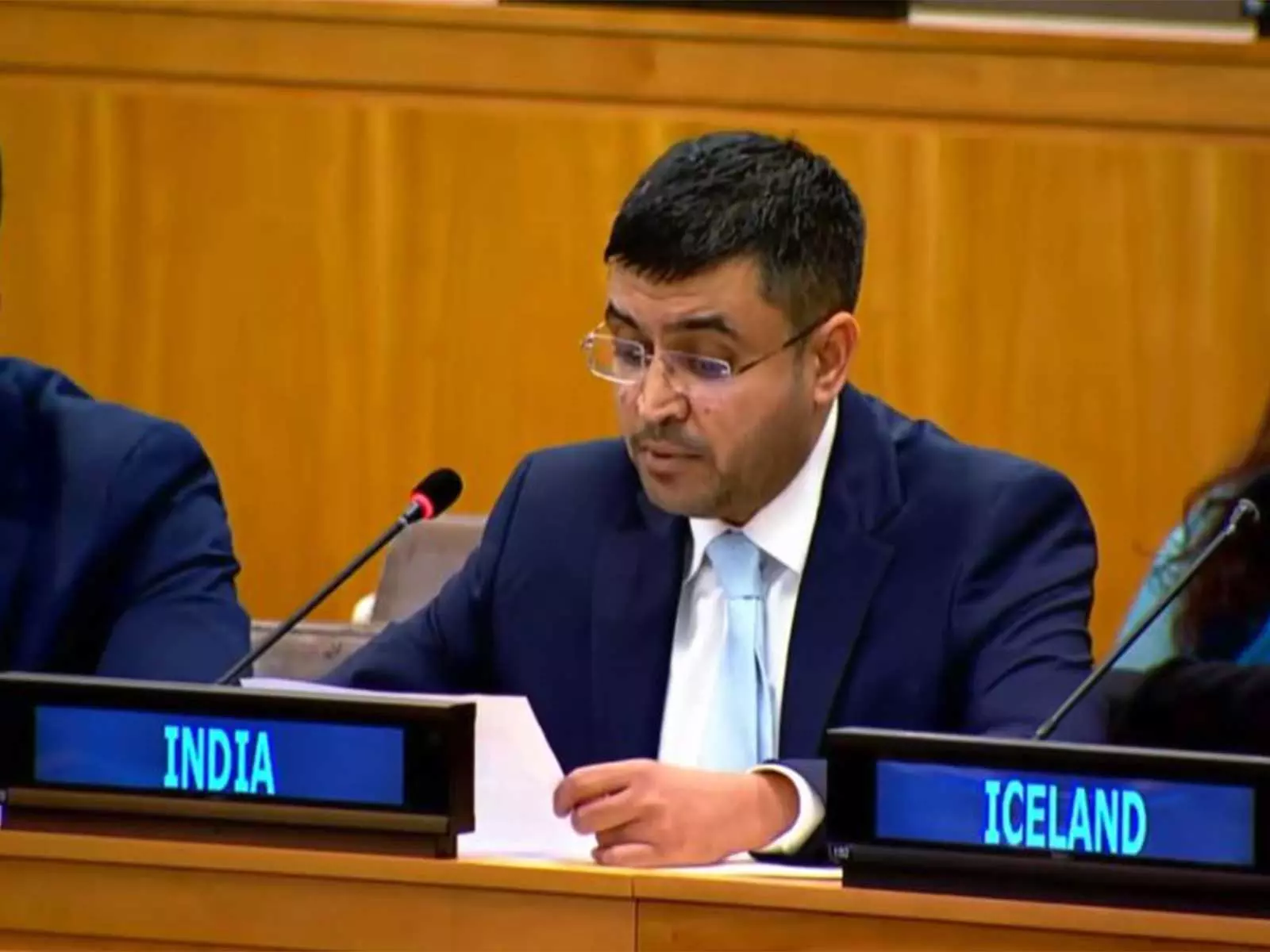
Indian diplomat Raghoo Puri addresses proceedings at the United Nations General Assembly in New York on Wednesday, October 21, 2026, as India raises objections to alleged factual inaccuracies in a report by UN Special Rapporteur Ben Saul concerning fugitive underworld figure Dawood Ibrahim and the D-Company criminal network. Photo: UN proceedings / Source -Reuters
India objects to the description of Dawood Ibrahim’s D-Company as an “India-based” criminal organisation, urging greater impartiality, accuracy and accountability in United Nations counter-terrorism reporting.
Key Highlights
- India strongly criticises alleged factual inaccuracies in a report presented by UN Special Rapporteur Ben Saul.
- The report describes fugitive underworld figure Dawood Ibrahim as the leader of the “India-based” D-Company criminal gang.
- Indian diplomat Raghoo Puri raises objections during proceedings at the United Nations General Assembly.
- New Delhi questions the publication of reports containing disputed information without adequate accountability.
- India calls for greater impartiality, factual accuracy and responsibility in international counter-terrorism assessments.
New York: India has strongly criticised a report by United Nations Special Rapporteur Ben Saul over its description of fugitive underworld figure Dawood Ibrahim and his criminal network, D-Company, raising serious concerns about alleged factual inaccuracies, institutional accountability and the need for impartiality in international counter-terrorism reporting. Addressing the United Nations General Assembly on Wednesday, Indian diplomat Raghoo Puri objected to the report’s characterisation of D-Company as an “India-based” criminal gang with links to terrorism, questioning the accuracy of such descriptions in documents presented under the authority of the United Nations.
India Raises Concerns Over UN Reporting Standards
India’s objection centres on the terminology used in the report and the broader responsibility of United Nations experts to ensure that their findings accurately reflect established facts.
The report, prepared by Special Rapporteur Ben Saul, identifies Dawood Ibrahim as the leader of the “India-based” D-Company criminal gang, which has links to terrorism.
Indian diplomat Raghoo Puri challenged the description, expressing concern that reports containing alleged factual inaccuracies could be circulated internationally without sufficient mechanisms for accountability.
India maintained that reporting on terrorism and transnational organised crime requires particular care because inaccurate geographical descriptions and misleading characterisations can influence international perceptions.
Dawood Ibrahim and the D-Company Network
Dawood Ibrahim has long been identified by Indian authorities as a fugitive organised crime figure associated with D-Company, a criminal network accused of involvement in activities ranging from organised crime to terrorism-related operations.
He is designated as a terrorist under United Nations sanctions measures linked to Al-Qaeda and associated individuals and entities.
Indian authorities have also accused Ibrahim of involvement in the 1993 Mumbai serial bomb blasts, which killed 257 people and injured hundreds.
The description of D-Company as “India-based” has consequently become a point of contention, particularly because India has repeatedly maintained that Ibrahim has operated from outside Indian territory.
However, the precise implications of the terminology used in the Special Rapporteur’s report would depend on the wider context in which the description appears.
Accountability and Impartiality Under Scrutiny
India’s intervention also highlighted the wider question of accountability in reports submitted by independent United Nations human rights experts.
Special Rapporteurs operate independently within the UN human rights system. Their reports and assessments can influence international debate, policy discussions and perceptions of countries’ compliance with human rights obligations.
New Delhi’s objection reflects its position that such reports must be grounded in accurate information and should avoid terminology that could create misleading impressions.
The Indian representative raised concerns over the release of reports containing alleged factual inaccuracies without corresponding accountability.
The criticism also underscores the importance of distinguishing between the geographical origins of a criminal organisation, its historical activities and the present location of its leadership.
Counter-Terrorism Assessments and International Credibility
Terrorism remains a major issue in India’s diplomatic engagement with international organisations, particularly in discussions concerning cross-border networks, terrorist financing and organised crime.
India has consistently advocated stronger international cooperation against terrorism and has called for coordinated action against individuals and organisations accused of supporting terrorist activities.
The latest disagreement illustrates the sensitivities surrounding international assessments of terrorism-related networks and the need for precise language in official documentation.
For New Delhi, the issue extends beyond a single reference to D-Company. It raises broader questions about the standards of evidence, verification and accountability expected from international institutions.
India Calls for Greater Responsibility
India’s criticism at the General Assembly reinforces its demand for greater accuracy and impartiality in United Nations reporting.
While the immediate dispute concerns the description of Dawood Ibrahim’s criminal network, the intervention also draws attention to the wider challenge of ensuring that international reports distinguish carefully between documented facts, interpretations and disputed claims.
The episode places renewed emphasis on the credibility of UN reporting mechanisms and the responsibility of independent experts to maintain rigorous factual standards when addressing sensitive issues involving terrorism and national security.

YOU MAY LIKE THIS