Reg No. - CHHBIL/2010/41479ISSN - 2582-919X

India Puts Energy Security First as US Russia Sanctions Bill Opens Door to 100% Tariffs
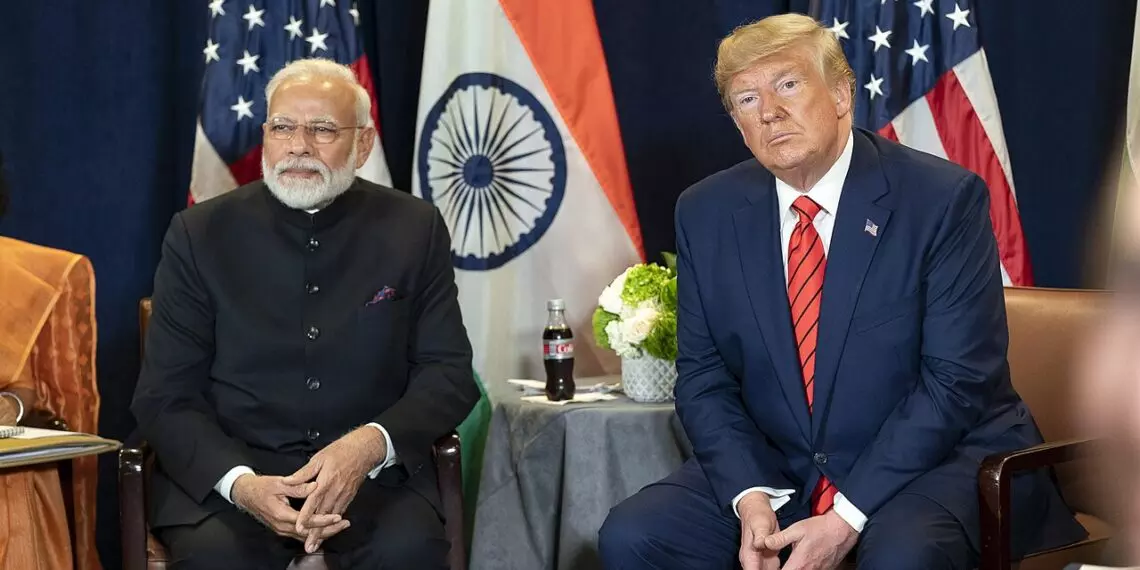
Energy Security in Focus: Prime Minister Narendra Modi with US President Donald Trump in a file photograph. India has reaffirmed that energy security for its 1.4 billion people will remain a priority after the US Congress passed legislation empowering Trump to impose steep tariffs on major purchasers of Russian oil and gas. (File Photo)
New Delhi says sourcing decisions will remain guided by market dynamics as legislation targeting major buyers of Russian energy awaits President Donald Trump’s signature
Key Highlights
- The US Congress has passed the Lindsey O. Graham Sanctioning Russia and Iran Act of 2026.
- The legislation can empower President Donald Trump to impose tariffs of up to 100 per cent on major purchasers of Russian energy; those tariffs have not automatically taken effect against India.
- India says energy security for its 1.4 billion people remains its priority.
- New Delhi says it will continue diversified energy sourcing based on evolving market dynamics.
- India has already raised the legislation’s potential consequences with US officials at high levels.
- The government says it will take necessary measures to protect India’s trade and economic interests.
New Delhi: India has reaffirmed that securing affordable and reliable energy for its 1.4 billion people will remain a priority after the US Congress passed legislation giving President Donald Trump sweeping powers to impose sanctions and tariffs of up to 100 per cent on major purchasers of Russian oil and gas.
The Lindsey O. Graham Sanctioning Russia and Iran Act of 2026 cleared the US House of Representatives by 262 votes to 159 after previously passing the Senate. It has been sent to Trump for his signature. The legislation targets Russia’s energy and defence sectors and its sanctions-evasion network, while potentially exposing major purchasers of Russian energy, including India and China, to steep US tariffs.
Importantly, the legislation authorises Trump to impose tariffs of up to 100 per cent; it does not mean such tariffs have automatically been imposed on India.
India Signals No Retreat on Energy Security
Responding to the development, the Ministry of External Affairs said New Delhi was monitoring further developments and reiterated that India’s energy policy would continue to be shaped by its domestic requirements and changing market conditions.
“As stated on several earlier occasions, India remains firmly committed to ensuring energy security for its 1.4 billion people.”
The MEA added:
“It will continue to do so through diversified sourcing and on the basis of evolving market dynamics.”
The statement signals that New Delhi does not intend to frame its energy-purchasing decisions solely around pressure arising from the new US legislation.
Russia has emerged as an important supplier of crude oil to India in recent years, making any measure targeting purchasers of Russian energy potentially significant for India’s energy-import strategy and its trade relationship with Washington.
India Says Concerns Were Raised With Washington
The MEA said the possible consequences of the legislation had already figured in high-level exchanges between India and the United States.
“This issue has been discussed at high levels in recent months with various US interlocutors.”
According to the ministry, India had also explained how such measures could affect more than its own energy purchases.
“Its potential implications for not just the bilateral relationship but also the international energy market have been very clearly articulated by the Indian side.”
The statement is significant because New Delhi is placing the issue simultaneously in the context of India-US relations, domestic energy requirements and the wider international energy market.
Trade and Economic Interests to Be Protected
India also made clear that it was preparing for the potential economic consequences of the legislation.
The MEA said New Delhi had conveyed its determination to take “all necessary measures” to protect India’s trade and economic interests.
“The government will work closely with Indian trade and industry bodies to deal with the implications of these developments,” the ministry said.
The actual impact on India will depend substantially on how the Trump administration uses the authority provided by the legislation, including the level and scope of any tariffs and the application of available exemptions or waivers.
For New Delhi, the immediate message is therefore one of continuity: India will watch Washington’s next steps while maintaining that energy sourcing must ultimately serve the requirements of its own population and economy.

YOU MAY LIKE THIS