Reg No. - CHHBIL/2010/41479ISSN - 2582-919X

Grand campaign of water conservation: MNREGA is increasing water reserves, greenery and livelihood in villages of Chhattisgarh
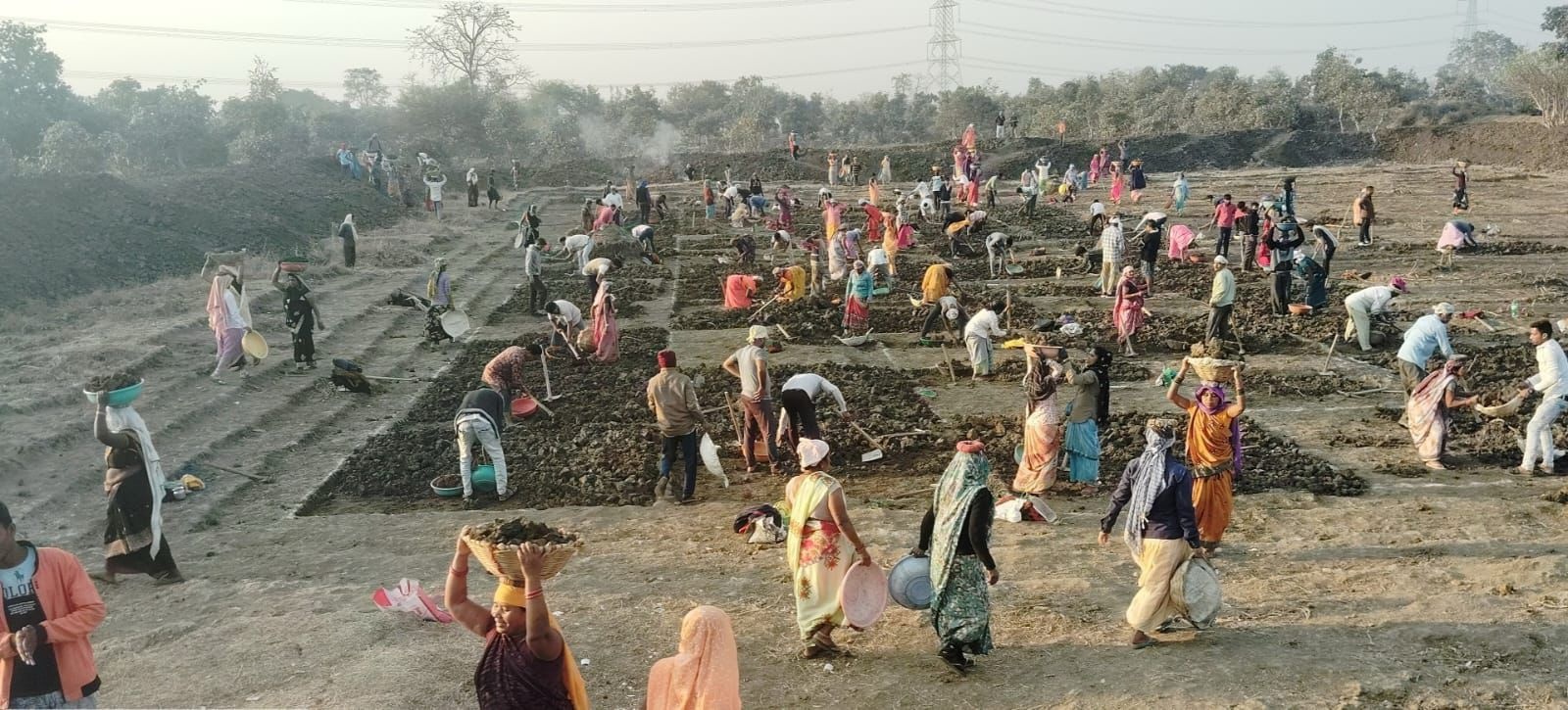
‘Mor Gaon-Mor Paani’ campaign became a public movement for water conservation, employment and rural prosperity got new momentum-Photo Credit -CG/PR
Raipur: Amidst climate change, uncertain rainfall and increasing water crisis, a massive public campaign is taking shape in Chhattisgarh regarding water conservation. Water conservation, employment generation, green development and livelihood promotion are being simultaneously carried forward across the state through the ‘Mor Gaon-Mor Paani’ campaign run under the Mahatma Gandhi National Rural Employment Guarantee Scheme (MNREGA). Water conservation is no longer just a matter of government schemes, but is developing into a comprehensive social initiative driven by public participation.
Under the campaign, more than one lakh water conservation and promotion works are being constructed in the state at a cost of approximately Rs 1610 crore. These include ponds, dams, check dams, water conservation structures, staggered contour trenches, farm ponds and other water conservation works. The objective of these assets is to retain maximum amount of rain water in the soil, promote ground water recharge and strengthen water availability in rural areas.
Through these works, employment is being provided to more than 11 lakh workers every day in the state, of which 57 percent are women. Thus, this campaign of water conservation is becoming a medium for conservation of natural resources as well as for women empowerment and strengthening the rural economy.
Creating livelihood through water conservation
The state government has also taken important steps towards directly linking water conservation with rural livelihoods. Construction of 13,065 livelihood huts on private land of sensitive and weaker sections of the society has been completed. Through these assets, rural families are getting opportunities for fishing, horticulture, vegetable production and other income enhancing activities.
Similarly, 624 community ponds are being developed under the ‘Nava Tariya-Aay ke Zaria’ initiative. Initiatives have been taken to link these water structures with the livelihoods of self-help groups, especially women groups, thereby developing an effective model of water conservation and economic empowerment.
Trench on hills, water harvesting in plains
Staggered Contour Trench (SCT) is being constructed on slopes and hilly terrain in many areas of the state. These structures stop the rapid flow of rain water and allow it to get absorbed into the ground. The action reduces soil erosion, improves ground water level and provides necessary moisture to the plantations. This coordinated effort of water conservation and tree plantation is increasing the green cover and strengthening the environmental balance.
New direction for water conservation through technology
A key feature of the ‘Mor Gaon-Mor Paani’ campaign is the use of modern technologies. GIS based stream planning, CLART app and watershed principles are being used for scientific planning and quality implementation of works.
Jaldoot system has been implemented to monitor ground water level, through which water level of open wells is being measured regularly. Work is also being done towards preparing water budget by publicly displaying water level information at Gram Panchayat level.
Model of transparency and public participation
To ensure transparency in the implementation of MNREGA, QR code based information system has been developed in every Gram Panchayat. Through the system , villagers can get information about approved and completed works in their village. People’s participation and monitoring are also being promoted through Employment Day, Housing Day, Social Audit and Jan Samvad programmes.
From partnership to partnership
With the active participation of public representatives, Panchayats, self-help groups, youth, social organisations and rural communities, this water conservation campaign has taken the form of a mass movement. Continuous efforts are being made to make water conservation a part of people’s daily behavior through gram sabhas, awareness campaigns and community efforts.
Chhattisgarh’s ‘Mor Gaon-Mor Paani’ campaign is today showing that a sustainable and inclusive model of rural development can be developed by combining water conservation, employment, women empowerment, technological innovation and community participation. The campaign is not just an effort to save water, but is also laying a new foundation for prosperity, self-reliance and environmental balance in the villages.

YOU MAY LIKE THIS