Reg No. - CHHBIL/2010/41479ISSN - 2582-919X

For British Hindus, Loyalty Lies With Their Karma Bhoomi — the UK’: RSS Chief Mohan Bhagwat
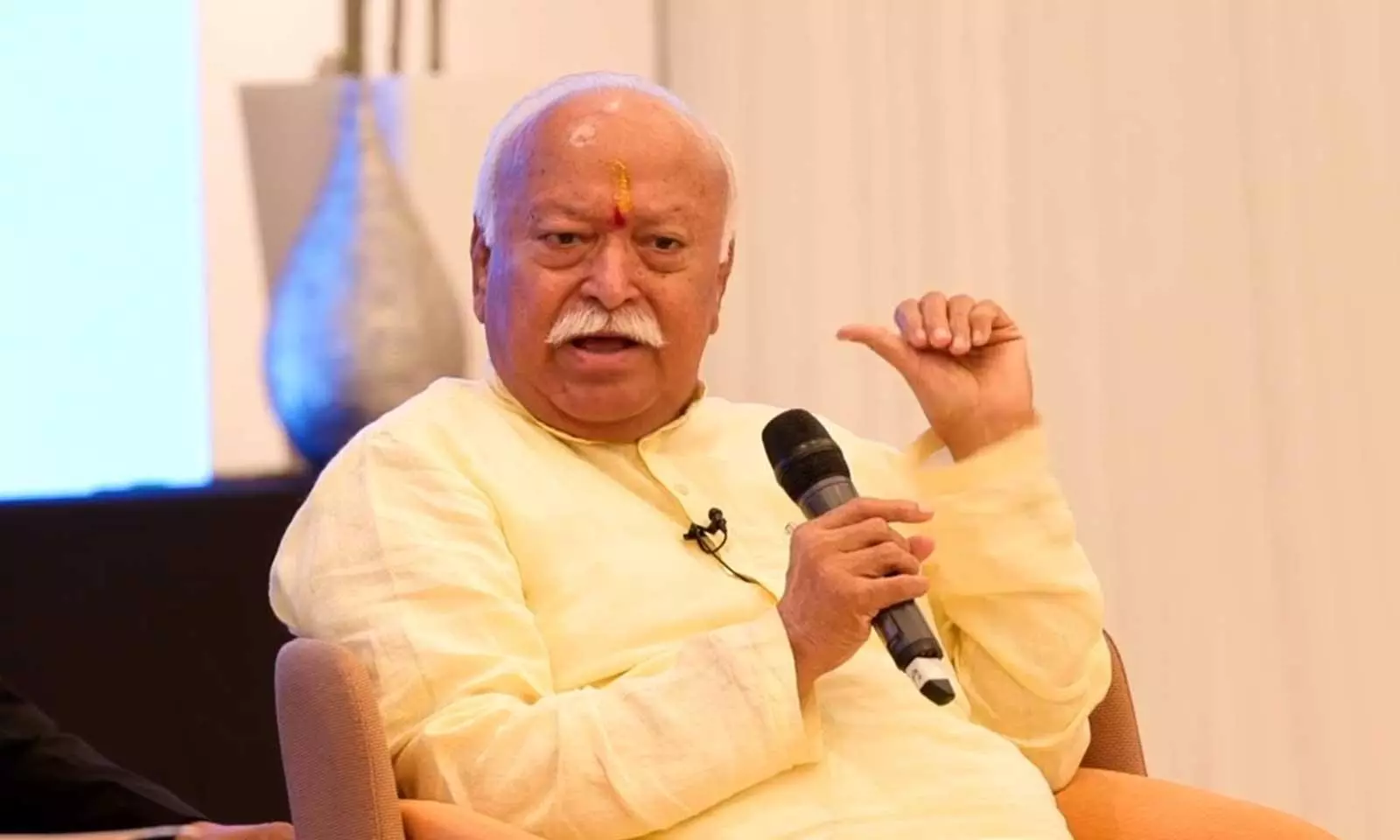
RSS chief Mohan Bhagwat speaks during an interaction. Addressing the ‘Celebration of Oneness’ gathering in London, Bhagwat said British Hindus need not face a conflict of loyalties, stressing that their loyalty lies with their ‘karma bhoomi’ — the United Kingdom — while explaining Hindutva as a broader civilisational outlook. ( Photo Credit: Social Media )
RSS chief says there is no conflict between being a committed Hindu and a loyal British citizen; explains Hindutva as a broader civilisational outlook rather than a particular religious practice or lifestyle
London: Rashtriya Swayamsevak Sangh (RSS) chief Mohan Bhagwat has said that Hindutva leaves no ambiguity over the loyalty of Hindus living outside India, asserting that their “karma bhoomi” — the land where they live, work and perform their duties — must command their loyalty.
Addressing a large Indian diaspora gathering titled ‘Celebration of Oneness’ in London on Sunday, Bhagwat responded to questions submitted by members of the audience, including concerns over whether British Hindus could face competing loyalties between India, viewed by many as their ancestral or janma bhoomi, and Britain, their karma bhoomi.
“Actually, there is no conflict. If British Hindus are achcha, pukka, sacha — good, strong and true — Hindus, there will never be a conflict between British and Bharat interests,” Bhagwat said.
The gathering was attended by community leaders, students and volunteers associated with the Hindu Swayamsevak Sangh (HSS) UK.
Key Highlights
- Bhagwat says the loyalty of British Hindus lies with their “karma bhoomi” — the United Kingdom.
- Says there need not be any conflict between British and Indian interests for Hindus living in Britain.
- Draws a distinction between “janma bhoomi” — the land of birth or ancestral connection — and “karma bhoomi”, the land where one’s duties are performed.
- Says the meaning of Hindu cannot be confined to a particular religious practice or lifestyle.
- Addresses questions surrounding perceptions and misconceptions about Hindutva.
- Remarks came during the London leg of the RSS chief’s three-nation tour.
‘There Is No Conflict’
Bhagwat’s remarks directly addressed a question that has often accompanied debates about diaspora identity — whether strong cultural and emotional links with India can coexist with complete civic loyalty to the country in which a person lives.
His answer sought to separate cultural roots from civic responsibility.
“Your karma bhoomi is where your loyalties lie,” Bhagwat said while explaining the position in the context of British Hindus.
In his formulation, maintaining a connection with Bharat as a civilisational or ancestral homeland does not require a person living permanently in another country to divide his or her national loyalty.
For British Hindus, he indicated, Britain is the place where their responsibilities as citizens are exercised.
What Does Hindutva Mean?
Bhagwat was also asked to explain Hindutva amid differing interpretations of the term.
He argued that the word Hindu could not be understood merely through the prism of a particular form of worship, religious practice or lifestyle.
“The word Hindu cannot be understood on the basis of any religious practice or lifestyle,” Bhagwat said.
His remarks presented Hindutva as a broader cultural and civilisational idea rather than one determined solely by ritual or a prescribed form of religious observance.
That distinction was central to his response to concerns over diaspora identity: cultural inheritance, in Bhagwat’s argument, need not compete with one’s obligations towards the country in which one lives.
‘Janma Bhoomi’ and ‘Karma Bhoomi’
The use of the two expressions — janma bhoomi and karma bhoomi — gave Bhagwat’s comments particular significance.
For generations of Indians who have settled overseas, India may remain a source of family, cultural, spiritual and civilisational connection. Bhagwat’s remarks, however, placed civic responsibility firmly in the country that has become their field of work and duty.
“If British Hindus are good, strong and true Hindus, there will never be a conflict between British and Bharat interests,” he said.
The message effectively sought to reject the idea that retaining a Hindu or Indian civilisational identity necessarily produces divided national loyalties.
The London interaction formed part of Bhagwat’s overseas engagements and provided him with an opportunity to address questions surrounding Hindutva, identity and the place of Hindu communities in countries outside India.
At the heart of his message was a distinction between where one’s cultural roots may lie and where one’s civic duty lies — with Bhagwat making clear that, for British Hindus, that duty and loyalty belong to Britain.

YOU MAY LIKE THIS