Reg No. - CHHBIL/2010/41479ISSN - 2582-919X

Encouraging Makhana Production in Chhattisgarh
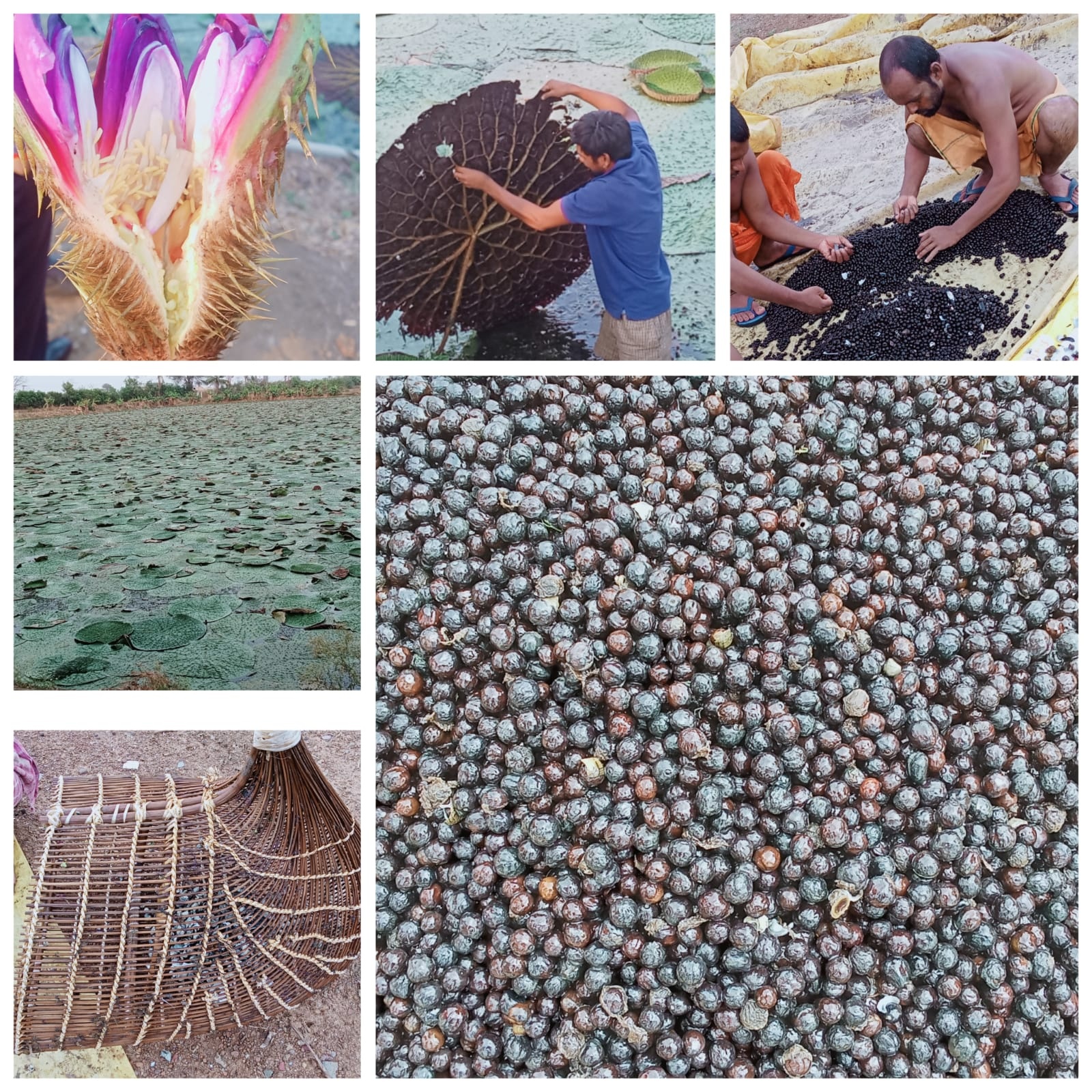
Rapid Implementation of the Scheme Underway-Photo Credit -CG/PR
Makhana Development Scheme Launched in Dhamtari, Balod, Mahasamund and Gariaband Districts; Rs 178.11 lakh Approved
Raipur: In Chhattisgarh, farmers are now increasingly moving beyond traditional crops and turning towards cash crops. In this direction, makhana cultivation has emerged as a new and highly profitable option for farmers.
Considering the immense potential for makhana production in the state, the Central Government’s Central Sector Scheme for Development of Makhana is being implemented at a fast pace. Following the historic announcement by Union Agriculture Minister Shivraj Singh Chouhan to include Chhattisgarh in National Makhana Board, activities related to makhana cultivation and processing have gained significant momentum in the state.
Officials of the Horticulture Department informed that the implementation of the scheme has commenced in Chhattisgarh from the year 2025–26. Under this scheme, an approval of Rs 178 lakh 11 thousand has been received for the state. For implementation of the scheme, the districts of Dhamtari, Balod, Mahasamund and Gariaband have been selected.
Strong Market Demand for Makhana
One of the most significant advantages of makhana cultivation is that farmers can earn substantially higher profits if, instead of selling raw seeds, they process them into makhana and market the final product. The seeds are dried, roasted and processed to prepare makhana, which has strong demand in the market.

Growing Interest of Farmers in Makhana Production
Under the scheme, activities related to both makhana production and makhana seed production have been proposed. Makhana cultivation will be undertaken over an area of 96.438 hectares in existing ponds constructed earlier by farmers and over 37.424 hectares on farmers’ land, covering a total area of 133.862 hectares. In addition, a seed production programme will be conducted over 15 hectares at agricultural and horticulture universities as well as departmental nurseries.
43 Farmers from Dhamtari District Participating in Makhana Production
At present, makhana production has already begun in Dhamtari district through selected women self-help groups. Prominent among them are Shail Putri Self-Help Group, Nayi Kiran Self-Help Group, Jai Maa Nav Jyoti Mahila Self-Help Group and Progressive Farmers Group.
In the district, sowing of makhana seeds has been completed in ponds spread over 55 acres, while preparations are underway in another 15 acres, involving 43 farmers. Preparations for sowing have also begun on 55 acres of land selected for land-based makhana cultivation, in which 20 farmers are participating.
Action Plan of Rs 2 Crore Proposed for 2026–27
It is noteworthy that an action plan worth Rs 2 crore has been proposed for the year 2026–27. Under this plan, makhana production is proposed in ponds over 75 hectares and on land over 30 hectares, construction of 10 new ponds, and additional makhana production over 5 hectares.
Training for Farmers in Makhana Production
Sharing her experience, Mrs Manisha Chandrakar, Director of Ojas Farm, who has been cultivating makhana for the past five years, stated that the climate and soil of Chhattisgarh are extremely suitable for makhana production. She noted that commercial makhana production in the state was first initiated by late Shri Krishna Kumar Chandrakar in village Lingadih of Arang Development Block, and the first makhana processing centre was established in December 2021.
At present, her organisation is not only engaged in production and processing but is also providing training to the farmers of various parts of the state and the country.
Maximum Profit Through Self-Production, Processing and Packaging
Chandrakar further informed that from one kilogram of makhana seeds, approximately 200 to 250 grams of popped makhana is obtained, which fetches a market price ranging from Rs 700 to Rs 1000 per kilogram. If farmers undertake production along with processing and packaging on their own, they can earn maximum profit per acre.