Reg No. - CHHBIL/2010/41479ISSN - 2582-919X

Consultative Workshop on Livelihood Enhancement in Naxal-Affected Districts Concludes Under the Chairmanship of Chief Secretary Vikas Sheel
In Short
- Key Focus: Sustainable and Inclusive Development in Naxal-Free Areas
- Goal: To Increase the Monthly Income of Families in 08 LWE-Affected Districts to ₹30,000
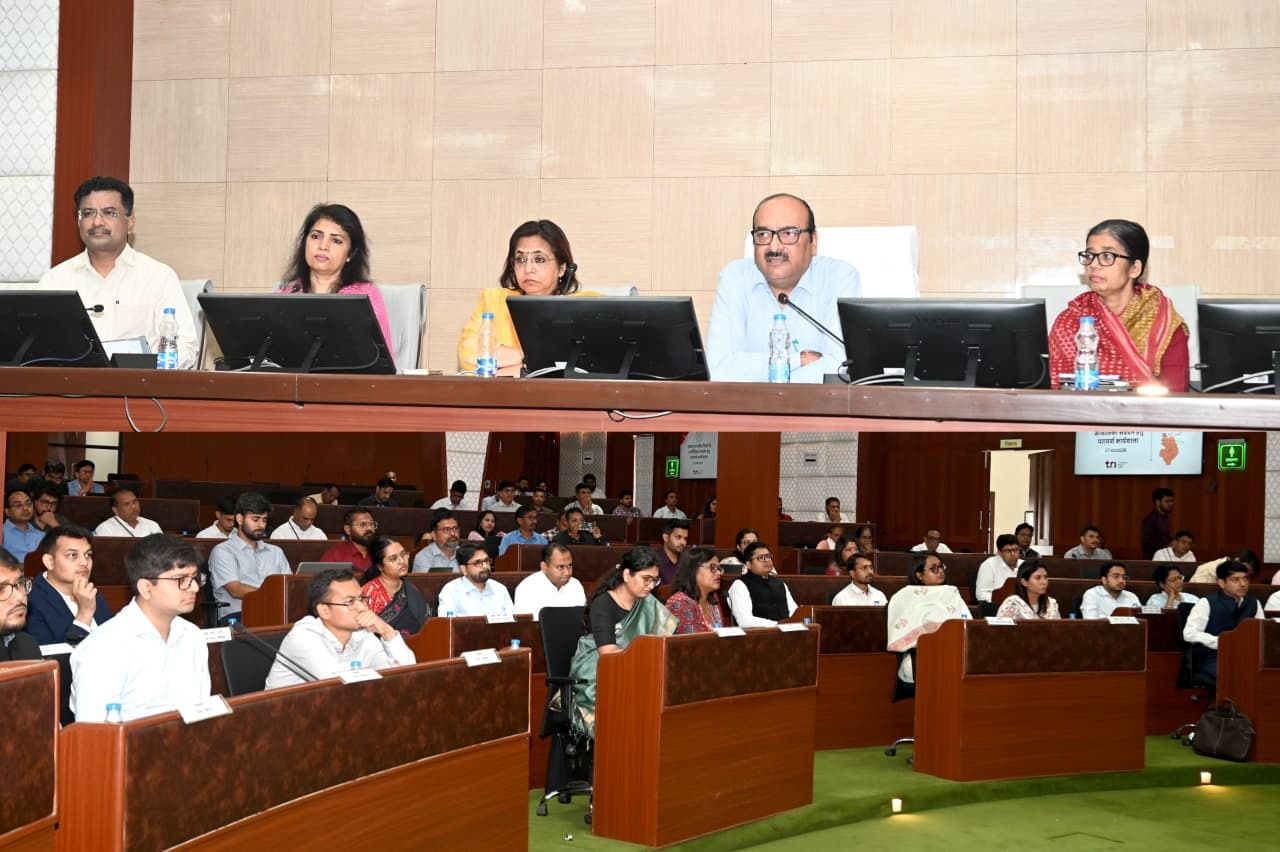
Raipur: With the objective of ensuring rapid, sustainable, and inclusive development in areas of the state that have been liberated from Naxalism, a state-level consultative workshop on livelihood enhancement for these districts was organised today on March 27, 2026 under the chairmanship of Chief Secretary Vikas Sheel.
The workshop was attended by Additional Chief Secretary Richa Sharma; Principal Secretary (Panchayat and Rural Development) Niharika Barik; Principal Secretary (Agriculture) Sahla Nigar; Principal Secretary . Sonmoni Borah ; and Secretary Bhim Singh. Also present were the Collectors and District Panchayat CEOs of the concerned districts, along with officials from the Departments of Panchayat and Rural Development, Forest and Climate Change, Home and Prisons, Tribal Welfare, and Village Industries, as well as representatives from the Transform Rural India Foundation.
During the workshop, Anish Kumar, Managing Director of the Transform Rural India Foundation, delivered a detailed presentation on the integrated policy formulated for these regions.
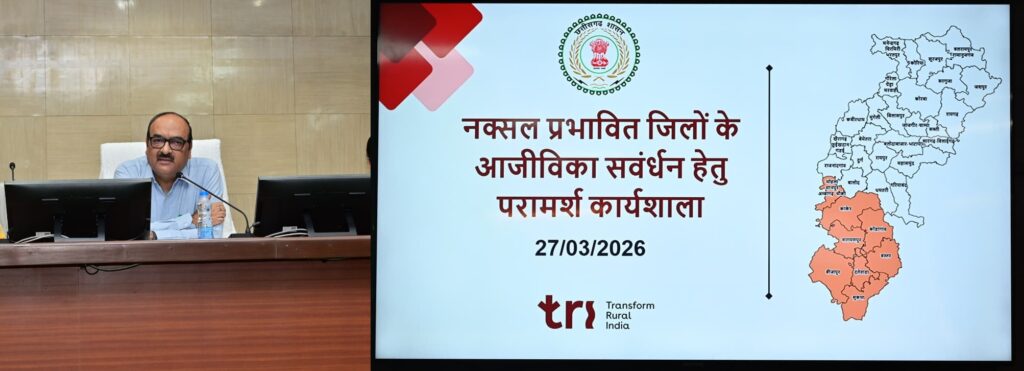
Speaking on the occasion, Chief Secretary Vikas Sheel stated that as Chhattisgarh continues its journey toward becoming Naxal-free, our responsibilities grow even greater. We must reach those areas where development has not yet penetrated and ensure sustainable and inclusive growth.
In alignment with the vision of Chief Minister Vishnu Deo Sai, all departments must adopt a coordinated approach and work together to formulate and execute an action plan for the next three years.
Special emphasis is to be placed on the operation and promotion of livelihood-generating activities based on local resources.
During the workshop, senior officials from various departments presented their suggestions for the effective implementation of various schemes. District-level officials shared their experiences and underscored the need for improved coordination.
Furthermore, a detailed discussion was held regarding a cluster-based and block-centric livelihood model. Under this model, the plan is to empower the rural economy by integrating sectors such as agriculture, animal husbandry, forest produce, fisheries, handicrafts, and micro-enterprises.
This initiative will ensure the integrated implementation and enhanced convergence of schemes across various departments.
During the workshop, the framework for a three-tier system of planning and implementation—spanning the district, block, and cluster levels—was discussed. Schemes tailored to local requirements will be formulated and implemented with expedition.
The State Government’s objective extends beyond merely formulating schemes; it aims to ensure a tangible increase in the income of rural households. Concurrently, special emphasis was placed on providing employment-oriented training to the youth and integrating them into self-employment opportunities.
It was further highlighted during the workshop that the entire value chain—from production to marketing will be strengthened to ensure that producers receive better returns and experience a significant increase in their income.
Officials were directed to identify potential livelihood clusters within every block during the next phase and to formulate a detailed action plan within 60 days; this plan is to encompass the framework for surveys, planning, and implementation.
The strategy presented at the workshop is poised to serve as a robust foundation for socio-economic transformation in Naxal-affected regions. This initiative will play a pivotal role in integrating rural households into the mainstream by fostering their self-reliance.
The workshop placed particular emphasis on the imperative to augment household incomes in districts affected by Left-Wing Extremism (LWE) in order to facilitate livelihood diversification and elevate living standards. According to a survey conducted by the NCAER, 85 percent of households in these regions have a monthly income of less than ₹15,000. Cognizant of this fact, the State Government has set a target to raise this figure to a minimum of ₹30,000 per month over the next two and a half to three years.
Principal Secretary Niharika Barik outlined a strategy for achieving this objective, anchored on four key pillars: diversification, collectivisation, technology, and saturation. Under this framework, every household will be linked to at least three distinct livelihood activities, and special focus will be directed toward four primary livelihood sectors within each district.
This initiative will be underpinned by a cluster-based and market-oriented approach, entailing the development of a robust value-chain mechanism.
The Chief Secretary issued directives to the district administration to ensure proactive leadership in this endeavor. Suggestions regarding the strengthening of the NTFP (Non-Timber Forest Produce) value chain and the promotion of FPOs (Farmer Producer Organizations) were presented by partner organisations such as NABARD, FES, and PRADAN.
During the workshop, the “Tripod Model” was presented as the basis for plan formulation, incorporating an integrated approach encompassing the family, the region, and the activities.