Reg No. - CHHBIL/2010/41479ISSN - 2582-919X

CM Vishnu Deo Sai Reaffirms Commitment to Women’s Empowerment During Navratri Celebrations in Raipur
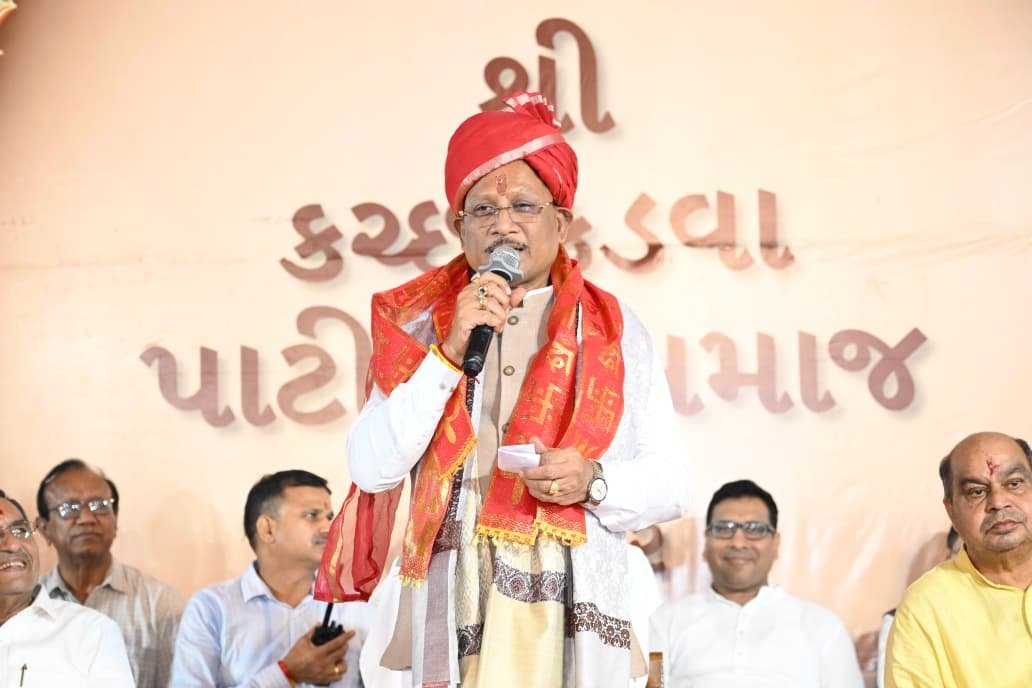
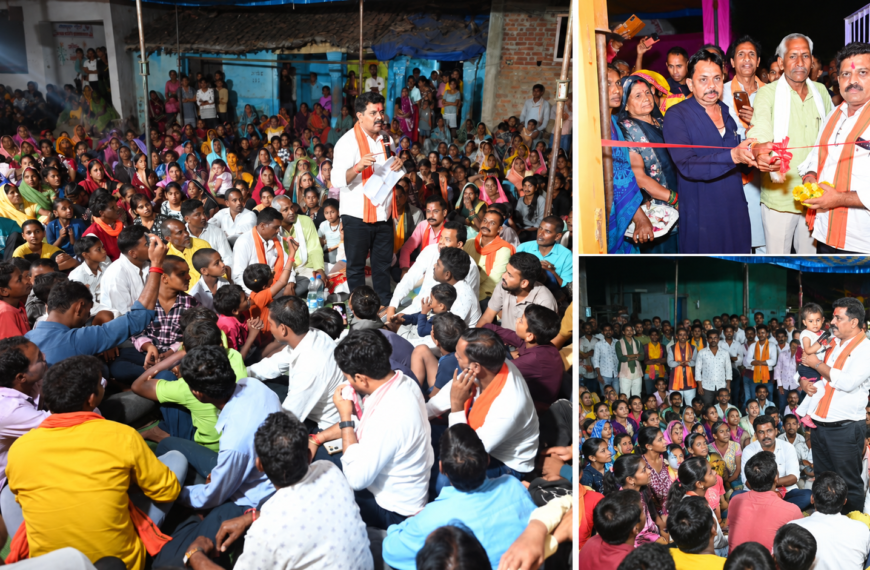
Chhattisgarh Chief Minister Vishnu Deo Sai addresses devotees and participants during a Navratri and Garba celebration in Raipur on Saturday, October 17, 2026, highlighting the importance of women’s empowerment, cultural heritage and social harmony while extending festive greetings to the people of the state. Photo: primelookindia.com via CG/CMO
Chief Minister Attends Durga Puja and Garba Celebrations, Highlights Financial Independence of 68 Lakh Women Under Mahtari Vandan Yojana and 14 Lakh Lakhpati Didis in Chhattisgarh
Key Highlights
- Chief Minister Vishnu Deo Sai participates in Durga Puja, Navratri and Garba celebrations across Raipur.
- Sai reiterates the government’s commitment to women’s dignity, safety and economic empowerment.
- Nearly 68 lakh women receive ₹1,000 every month under the Mahtari Vandan Yojana.
- Chhattisgarh has achieved the milestone of 14 lakh Lakhpati Didis through women’s economic empowerment initiatives.
- Chief Minister emphasises the importance of preserving religious traditions, cultural heritage and social harmony.
- State government pursuing development while protecting Chhattisgarh’s cultural identity under the principle of ‘Vikas Bhi, Virasat Bhi’.
RAIPUR: Chief Minister Vishnu Deo Sai reaffirmed the Chhattisgarh government’s commitment to women’s dignity, safety, self-reliance and economic empowerment while participating in Durga Puja, Navratri and Garba celebrations at several locations across the state capital on Saturday, October 17, 2026. Describing Navratri as a celebration of feminine strength, devotion and India’s enduring cultural traditions, Sai said that the progress of women was fundamental to the prosperity of families, society and the state.
The Chief Minister extended Navratri greetings to the people of Chhattisgarh and emphasised that the festival symbolised not merely religious devotion but also the recognition of women’s indispensable contribution to society.
“Our government is fully committed to ensuring the dignity, safety, self-reliance and economic empowerment of mothers and sisters. The progress of women is not confined to individual families; it forms the foundation of the development of society and the entire state,” Sai said, expressing the central message of his address.
Chief Minister Offers Prayers at Maa Kali Temple
As part of his participation in the religious celebrations, Chief Minister Sai visited the Maa Kali Temple at Kalibadi in Raipur, where he offered prayers and sought the blessings of the Goddess for the happiness, prosperity and well-being of the people of Chhattisgarh.
He also attended Durga Puja, Navratri and Garba programmes organised at different locations in the capital, interacting with devotees and members of the community.
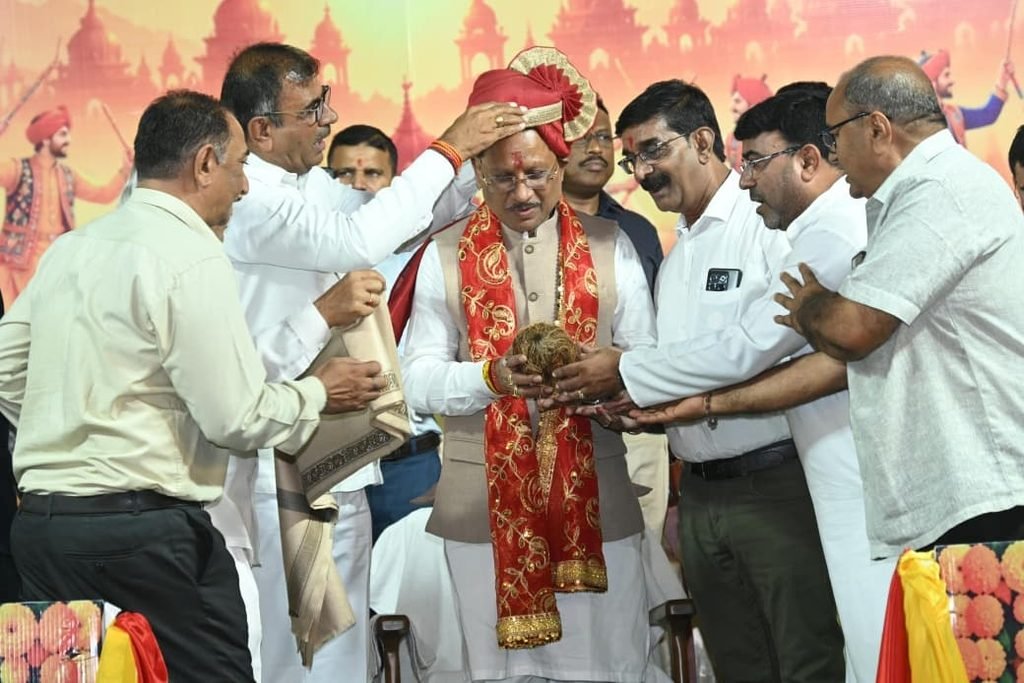
Chief Minister Vishnu Deo Sai receives a traditional ceremonial welcome and felicitation during a Navratri celebration in Raipur on Saturday, October 17, 2026, as community representatives honour him with a turban and ceremonial shawl in the presence of other dignitaries. Photo: primelookindia.com via CG/CMO
The Chief Minister appreciated the enthusiasm with which people from different sections of society participated in the celebrations, describing such occasions as an expression of Chhattisgarh’s deeply rooted cultural values and collective spiritual consciousness.
Navratri Celebrates the Strength and Dignity of Women
Addressing the gatherings, Sai said that Indian civilisation had always regarded women as embodiments of Shakti, or divine strength, and that Navratri reinforced society’s responsibility to respect and empower women.
“The nine days of worship dedicated to the different forms of Maa Durga inspire us to embrace courage, discipline, positivity and righteousness. Navratri strengthens our cultural consciousness while promoting love, harmony and mutual respect in society,” the Chief Minister said.
He observed that the participation of women and young girls brought particular significance to the celebrations and reflected the important place occupied by feminine strength in India’s religious and cultural traditions.
Sai stressed that honouring women should not remain confined to religious observances but must also find expression in social conduct, public policy and opportunities for economic independence.
Garba Reflects India’s Cultural Unity and Social Harmony
Highlighting the cultural significance of Garba, the Chief Minister described it as much more than a traditional dance performance.
“Garba is not merely a dance celebration; it is a beautiful expression of our faith and devotion to Maa Durga. The tradition that originated in Gujarat is now celebrated enthusiastically across the country, reflecting the unity that exists within India’s cultural diversity,” Sai said.
He observed that religious and cultural festivals played an important role in bringing communities together, strengthening relationships and encouraging mutual understanding.
According to the Chief Minister, celebrations involving people from different social and cultural backgrounds reinforced the values of brotherhood and harmony that have long characterised Indian society.
He also appreciated the role of families and younger generations in keeping traditional celebrations alive.
Mahtari Vandan Yojana Strengthens Financial Independence of 68 Lakh Women
Placing women’s economic empowerment at the centre of his address, Sai highlighted the impact of the state government’s Mahtari Vandan Yojana.
He said that nearly 68 lakh eligible women across Chhattisgarh were receiving ₹1,000 every month directly into their bank accounts under the scheme.
“Mahtari Vandan Yojana is not merely a financial assistance programme. It is an initiative that strengthens the confidence of our mothers and sisters and gives them greater freedom to make decisions concerning their lives and families,” the Chief Minister said.
He explained that women were using the assistance to meet household requirements, support their children’s education, address healthcare needs and develop savings.
The Chief Minister emphasised that even regular financial assistance could contribute meaningfully to women’s confidence and their participation in household decision-making.
“When a woman becomes economically empowered, the positive impact is felt throughout her family. Her confidence strengthens the household, and a stronger household contributes to a stronger society,” Sai said.
He reiterated that the government’s objective was to ensure that women across Chhattisgarh had meaningful opportunities to participate in the state’s development.
Fourteen Lakh Lakhpati Didis Demonstrate Women’s Economic Potential
Sai also highlighted the achievement of 14 lakh women becoming Lakhpati Didis in Chhattisgarh, describing the milestone as evidence of women’s determination, enterprise and growing economic capabilities.
He said that women associated with self-help groups were participating in diverse livelihood and income-generating activities, improving their household earnings and contributing to rural economic development.
“Today, 14 lakh sisters in Chhattisgarh have become Lakhpati Didis. This achievement reflects their hard work, dedication, entrepreneurial spirit and immense potential. Their economic progress is strengthening families and transforming the rural economy,” Sai said.
He emphasised that women’s financial independence contributed to better educational opportunities for children, improved healthcare and greater economic stability within families.
The Chief Minister said that expanding skill development, entrepreneurship and livelihood opportunities for women would remain an important component of the government’s vision for a developed Chhattisgarh.
Chhattisgarh’s Sacred Tradition of Shakti Worship
Referring to the state’s religious heritage, Sai described Chhattisgarh as the sacred land of Mata Kaushalya and a region blessed with a rich tradition of Goddess worship.
He mentioned the revered shrines of Maa Danteshwari in Dantewada, Maa Bamleshwari in Dongargarh, Maa Mahamaya in Ratanpur and Maa Chandrhasini in Chandrapur as important centres of faith and devotion.
“Chhattisgarh is the sacred land of Mata Kaushalya. The divine shrines of Maa Danteshwari, Maa Bamleshwari, Maa Mahamaya and Maa Chandrhasini represent the invaluable spiritual and cultural heritage of our state,” the Chief Minister said.
He observed that the illumination of Jyoti Kalash, devotional gatherings and traditional worship during Navratri reflected the depth of religious faith among the people.
The Chief Minister said that Chhattisgarh’s festivals demonstrated a distinctive relationship between spirituality, nature, community life and cultural traditions.
Preserving these traditions and passing them on to future generations, he added, was a collective responsibility.
‘Vikas Bhi, Virasat Bhi’ Guides Chhattisgarh’s Development
Sai said that the state government was advancing its development agenda while remaining firmly committed to protecting Chhattisgarh’s cultural and spiritual identity.
Referring to Prime Minister Narendra Modi’s vision of ‘Vikas Bhi, Virasat Bhi’, the Chief Minister emphasised that economic progress and cultural preservation should complement one another.
“Under Prime Minister Narendra Modi’s leadership, India is moving towards new heights of development while taking pride in its ancient cultural heritage. Our government is following the same principle of ‘Vikas Bhi, Virasat Bhi’ to build a modern and developed Chhattisgarh without losing its cultural identity,” Sai said.
He stated that the government was working towards improving facilities at important religious and cultural destinations while encouraging tourism and preserving the state’s traditional heritage.
According to the Chief Minister, temples, festivals and cultural institutions were not merely reminders of the past but living expressions of the values that continued to shape society.
Cultural Celebrations Connect Younger Generations With Traditions
The Chief Minister also underlined the educational and social importance of religious festivals, particularly for younger generations.
He said that participation in Navratri, Durga Puja and Garba celebrations helped children and young people understand the cultural traditions, spiritual values and collective responsibilities inherited from previous generations.
Such gatherings, he observed, encouraged social interaction, family participation and respect for India’s diverse traditions.
Sai maintained that preserving cultural heritage alongside modern development would help build a society that remained confident in its identity while embracing new opportunities.
Chief Minister Prays for Peace and Prosperity
Concluding his participation in the celebrations, Chief Minister Vishnu Deo Sai offered prayers to Maa Durga for the well-being of every family in Chhattisgarh.
He expressed hope that the blessings of the Goddess would bring peace, prosperity, happiness and continued progress to the state.
The celebrations were attended by public representatives, community members, devotees and a large number of citizens who participated enthusiastically in the religious and cultural programmes.
The Chief Minister reiterated that women’s empowerment, social harmony and cultural preservation would remain integral to the government’s vision of building a prosperous and developed Chhattisgarh.

YOU MAY LIKE THIS