Reg No. - CHHBIL/2010/41479ISSN - 2582-919X

Bihar Elections 2025: Nitish Kumar, Longest-Serving CM, Remains Key Political Force
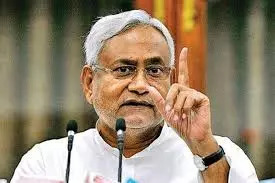
Nitish Kumar’s enduring influence and kingmaker role make him central to Bihar politics, even after more than two decades in power.
As results trickle in, Nitish Kumar’s strategic acumen, governance record, and alliance maneuvering continue to shape Bihar’s political landscape.
As Bihar’s 2025 Assembly election results begin to trickle in, all attention is on Nitish Kumar, the state’s longest-serving chief minister and one of India’s most enduring political figures. Known for his strategic acumen and ability to navigate shifting political landscapes, Kumar has remained central to Bihar politics for over two decades.
A Political Survivor
Nitish Kumar first became CM in 2000 and has since led the state through multiple coalition governments, often alternating alliances between the BJP and RJD. These frequent realignments have earned him the nickname “Paltu Ram” (turncoat), yet they highlight his unmatched ability to survive and remain politically relevant in Bihar’s unpredictable environment.
Early Life and Political Rise
Born in 1951 in Bakhtiyarpur, Kumar emerged from the Jayaprakash Narayan (JP) Movement of the 1970s, a launching pad for several socialist leaders, including Lalu Prasad Yadav. He won his first assembly seat from Harnaut in 1985 and later served as a Member of Parliament from Barh and Nalanda.
Transforming Bihar: The Sushasan Babu Era
Kumar’s tenure is credited with transforming Bihar’s image after years of neglect and the so-called “jungle-raj.” His initiatives in road infrastructure, rural electrification, education, and women’s empowerment earned him the moniker “Sushasan Babu” and a loyal voter base, particularly among women.
He also cultivated strong support among Extremely Backward Classes (EBCs), who often remain loyal to him regardless of his alliance partners. Analysts note that even if JD(U) cannot win a majority on its own, Kumar’s influence makes him a kingmaker, essential for both the NDA and INDIA bloc.
Alliance Shifts and Political Maneuvering
Over the years, Nitish has strategically switched alliances:
2013: Left NDA after Narendra Modi became BJP’s national face; joined RJD-Congress for 2015 Mahagathbandhan.
2017: Returned to NDA, citing corruption in Mahagathbandhan, and took oath as CM. 2020: NDA won narrow majority; JD(U) secured 43 seats, BJP 74.
2022: Broke away from NDA to form a coalition with RJD, Congress, and Left, with Tejashwi Yadav as deputy CM.
2024: Rejoined NDA just before Lok Sabha polls, becoming CM for the ninth time.
Why Nitish Kumar Remains Indispensable
Despite being labelled a political “flip-flopper,” Kumar’s astute political strategy, deep understanding of Bihar’s caste-driven dynamics, and ability to balance alliances make him indispensable. Notably, he has often opted to serve as Member of the Legislative Council (MLC), allowing him to remain CM without facing direct anti-incumbency in an assembly seat.
Experts say that Bihar’s electorate sees Kumar’s administrative experience and governance record as key assets, particularly his focus on women and EBCs, which could be decisive in the 2025 polls.
As results continue to come in, Nitish Kumar’s legacy and political maneuvering remain a central factor shaping Bihar’s evolving political landscape.

YOU MAY LIKE THIS