Reg No. - CHHBIL/2010/41479ISSN - 2582-919X

Beijing calls Xi–Trump–Putin summit in Shenzhen ‘groundbreaking’
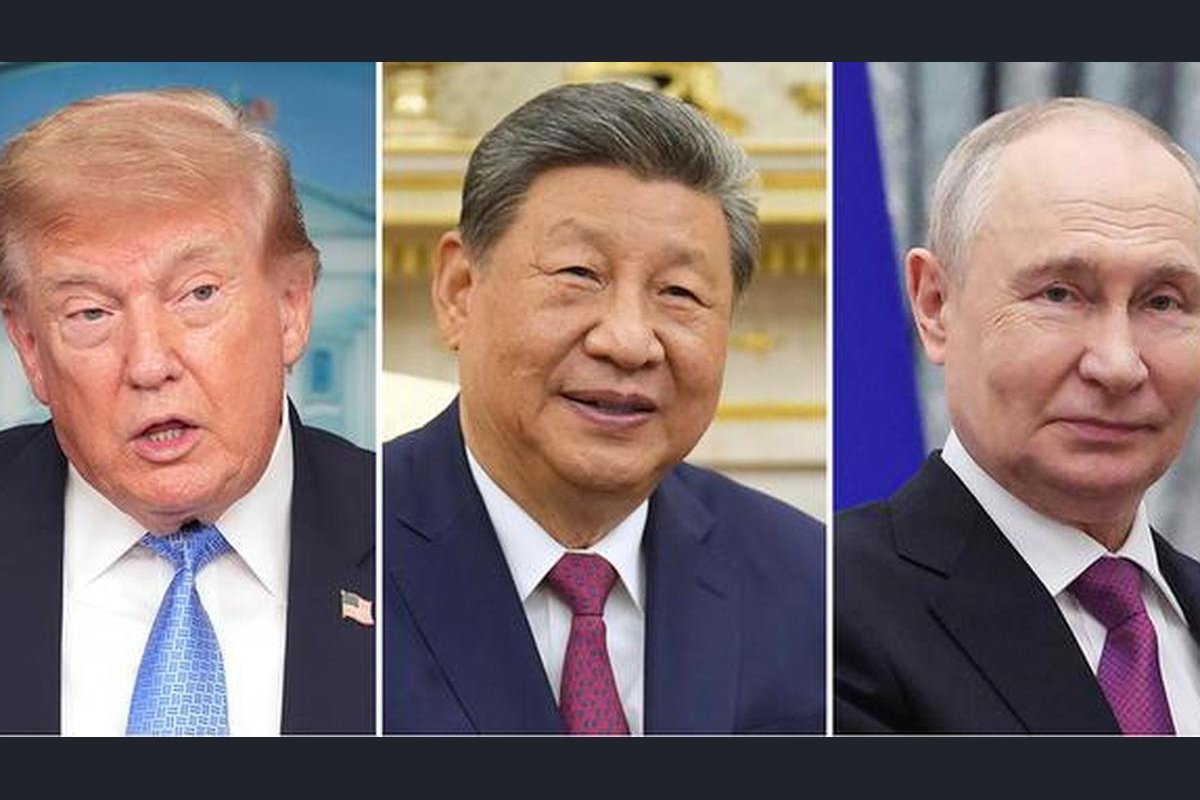
From left, US President Donald Trump, Chinese President Xi Jinping and Russian President Vladimir Putin in a composite of file photographs. The three leaders are scheduled to meet in Shenzhen, China, on 19 November 2026. File photos: AP
The three leaders are due to meet on the sidelines of APEC on 19 November. Washington plans to raise nuclear arms control and the war in Iran, while Trump now says he will also discuss Ukraine.
Key Highlights
- Chinese Foreign Ministry spokesperson Mao Ning said the first dedicated face-to-face meeting between the three presidents would focus on global peace and strategic stability.
- Washington wants to open a discussion on nuclear arms reductions following the expiry of New START in February.
- Trump said on Monday that he would discuss Ukraine, after US officials had indicated that he was unlikely to raise it. Beijing has yet to publish a detailed agenda.
Beijing: China on Monday described the upcoming meeting between President Xi Jinping, US President Donald Trump and Russian President Vladimir Putin as having “groundbreaking significance”. The leaders are due to meet in Shenzhen on Thursday, 19 November 2026, on the sidelines of the Asia-Pacific Economic Cooperation summit. Beijing said the first dedicated three-way meeting would give the presidents a chance to discuss global security and manage differences among their countries.
Trump says he will raise Ukraine
Trump told reporters before leaving Washington for Asia on Monday that he planned to discuss Russia’s war in Ukraine with Xi and Putin. His remarks followed a Friday briefing in which US officials had indicated he was unlikely to raise the war in the three-way session. Ukrainian President Volodymyr Zelenskyy has expressed concern about discussions affecting Ukraine’s future taking place without Kyiv’s participation.
Washington also intends to raise the war in Iran. The wider implications for West Asia include the security of energy supplies, although Beijing has announced no specific discussion or initiative on that issue. Asked about Iran and nuclear arms control, Mao said the leaders would discuss issues bearing on global peace and that China would release further information in due course.
Nuclear arms control faces a difficult opening
Washington sees Shenzhen as an opportunity to begin a conversation about nuclear arsenals after New START, the last bilateral nuclear arms control treaty between the US and Russia, expired in February. Trump has called for a successor arrangement that includes China. Beijing has resisted joining such negotiations, arguing that Washington and Moscow should first reduce their much larger stockpiles. A US official told the Associated Press that no agreement was expected to be announced at the meeting.
The immediate significance of Shenzhen lies in getting all three leaders into one room. A more consequential result would be a commitment to follow-up talks, with officials tasked to work on a defined issue such as nuclear risk reduction. So far, the public statements point to an opening for dialogue, with expectations of an immediate agreement low.

YOU MAY LIKE THIS