Reg No. - CHHBIL/2010/41479ISSN - 2582-919X

As Maoist Fear Recedes, Abujhmad’s Ancient ‘Ghotul’ Tradition Comes Alive Again
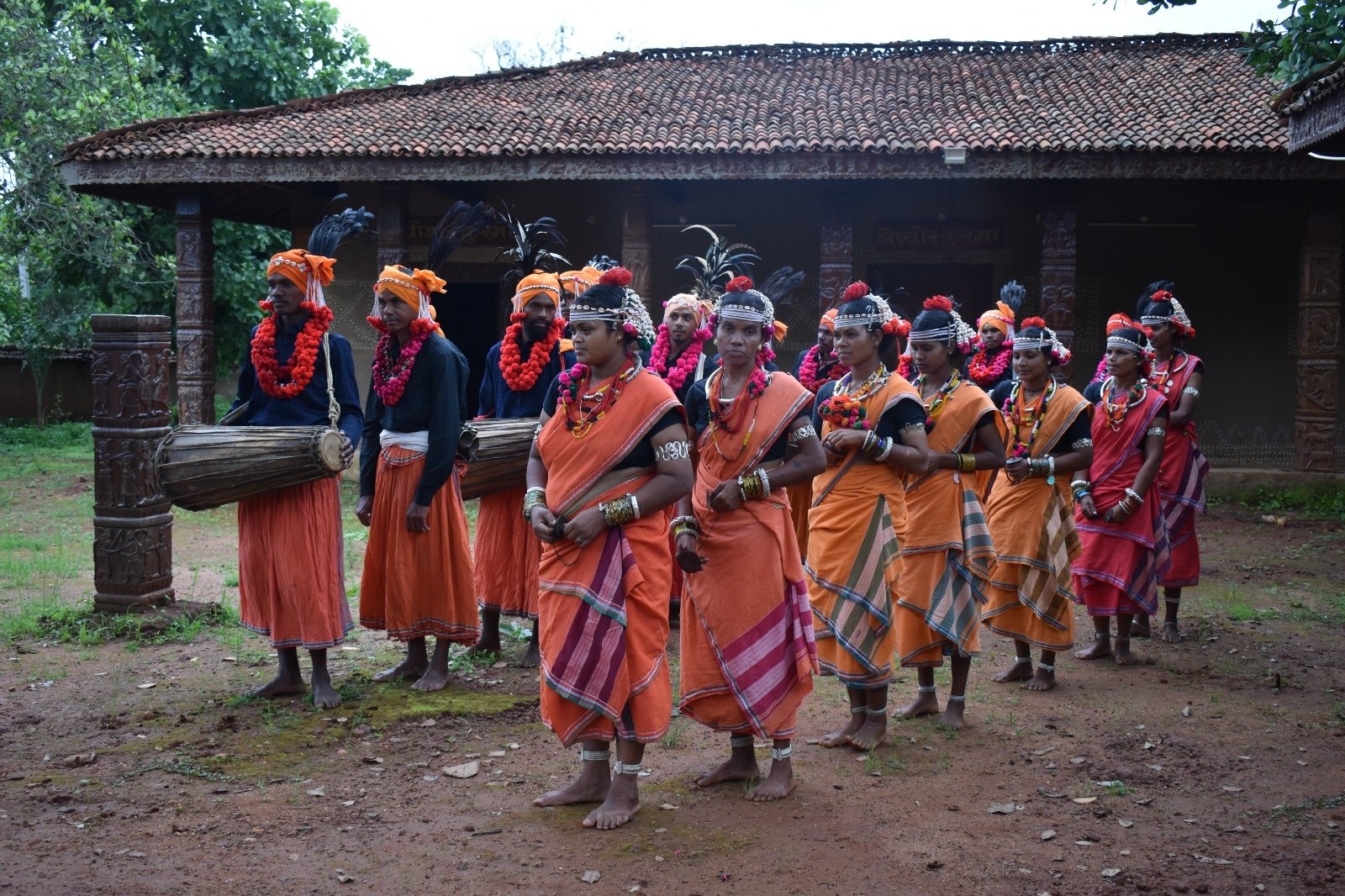
Tribal men and women in traditional attire gather with mandar drums as the Ghotul tradition regains its cultural space in Chhattisgarh’s Abujhmad region. With Maoist influence receding and the security environment improving, communities are once again reviving traditional music, dance and collective cultural practices-Photo Credit:primelookindia.com via CG/ DPR
Mandar beats and the songs of ‘Chelik-Motiyarin’ return to interior villages as tribal communities rebuild traditional Ghotuls and reconnect a new generation with their cultural heritage
Key Highlights
- Traditional Ghotuls being rebuilt with local wood and natural materials in interior Abujhmad villages
- Young people return to community spaces to learn tribal customs, music, dance and social responsibilities
- Declining Maoist influence and an improved security environment have helped restore evening community life
- Villagers see education, healthcare, roads, employment and communication as essential to sustaining the change
- The sound of the mandar is returning to evenings in Abujhmad.
Raipur : In remote villages of Narayanpur district, including Jharawahi, tribal communities are rebuilding traditional Ghotuls with locally available wood and natural materials, reviving an institution that for generations has served as a centre of cultural learning, discipline and community life.
The change carries particular significance in an area where years of Maoist violence and insecurity had severely disrupted normal social activity. Villagers who once avoided venturing out after sunset are gradually reclaiming community spaces as the security environment improves and Maoist influence recedes.
With evenings becoming safer, the silence associated with fear is increasingly giving way to the rhythms of the mandar and the traditional songs of Chelik-Motiyarin.
The revival is not merely about music and dance. In tribal society, the Ghotul traditionally provides a space where elders pass knowledge to younger generations — teaching social responsibilities, customs, community discipline, folk songs, dances and practical lessons of collective life.
Ghotul Returns as Abujhmad Reclaims Its Cultural Space
During the years of Maoist violence and uncertainty, evening gatherings in several interior areas became difficult. Community activities declined as residents preferred to remain inside their homes after dark.
With security operations reducing Maoist influence in parts of the region and a greater sense of safety emerging among residents, young people are once again gathering at Ghotuls and learning traditions directly from community elders.
The rebuilding of Ghotuls therefore represents something deeper than the restoration of a physical structure. It signals the return of cultural confidence to communities whose traditional way of life had been overshadowed by violence and insecurity.
The impact of the changing environment is also becoming visible beyond the Ghotul. Movement between villages, farming activities, visits to local haat-bazaars and participation in festivals are gradually regaining their earlier rhythm.
At the same time, residents recognise that security alone cannot guarantee lasting transformation. There is a growing expectation that peace must now be accompanied by better education, healthcare, road connectivity, communications and employment opportunities in Abujhmad’s remote settlements.
For the younger generation, the revived Ghotul offers an opportunity to understand a heritage that could otherwise have weakened during decades of conflict. For elders, it provides a space to transmit knowledge, customs and collective values to those who will carry them forward.
And perhaps the clearest evidence of change comes after sunset.
Where fear once emptied village spaces, young people are gathering again. The mandar is being played, traditional songs are being sung and community life is finding its rhythm again.
In Abujhmad, the return of the Ghotul is becoming a powerful cultural marker of a larger transition — from fear to confidence, from enforced silence to the sound of tradition.

YOU MAY LIKE THIS