Reg No. - CHHBIL/2010/41479ISSN - 2582-919X

Mann Ki Baat inspires citizens and drives positive change, says Sai
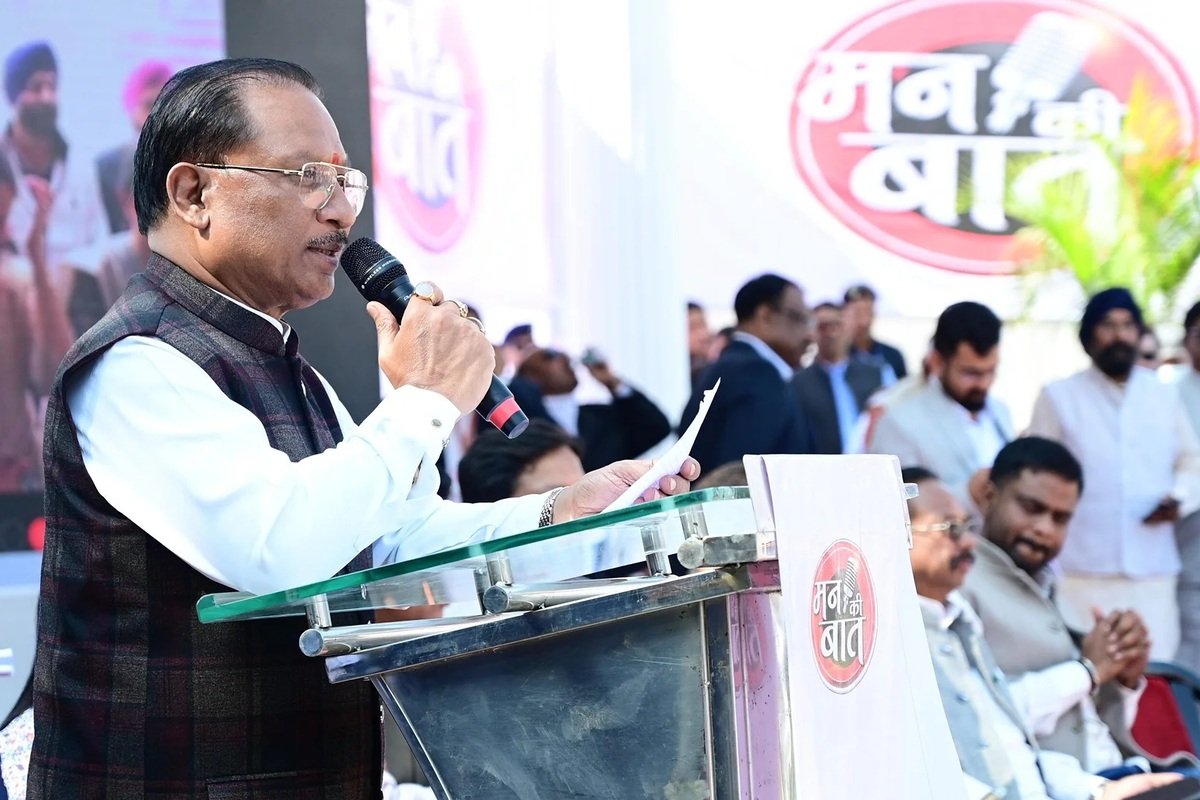
Chief Minister Vishnu Deo Sai addresses residents at Pushp Vatika in Sarganwa, Ambikapur, on 29 November 2026 after listening to the 140th episode of Mann Ki Baat with them. He urges young people to take up sport and announces a mini-stadium where local players can train closer to home. Photo: primelookindia.com via CG/PR
After listening to the 140th episode with residents in Ambikapur, the Chief Minister recalled how the programme brought national attention to Chhattisgarh’s community initiatives and announced a mini-stadium for young people in Sarganwa
Key Highlights
- Chief Minister Vishnu Deo Sai joined residents and elected representatives at Pushp Vatika in Sarganwa, Ambikapur, to listen to Prime Minister Narendra Modi’s 140th Mann Ki Baat broadcast.
- Sai said the programme gives local achievements a national audience and encourages listeners to take part in solving problems in their own communities.
- He recalled Bastar Pandum, Koriya district’s water conservation campaign and Har Ghar Munaga, which Modi had praised in earlier episodes.
- Sai announced a mini-stadium in Sarganwa and urged young people to stay away from drugs and make sport part of their lives.
- He planted a rudraksha sapling at Pushp Vatika, where a health camp offered check-ups and screening for non-communicable diseases.
Ambikapur: When a community’s work is heard across the country, it can give the people behind it a reason to keep going and give others an idea they can put to work at home. Chief Minister Vishnu Deo Sai said that was one of the strengths of Prime Minister Narendra Modi’s Mann Ki Baat, after joining residents and elected representatives to listen to its 140th episode at Pushp Vatika in Sarganwa, Ambikapur, on 29 November 2026.
“Mann Ki Baat has become a powerful way to inspire people, bring about positive change and encourage citizens to take part,” Sai said.
The Chief Minister said Modi speaks with the warmth of a family elder, sharing the achievements of people from across India and drawing attention to challenges that citizens can help address. By giving local initiatives a national audience, Sai said, the programme encourages people to see how their own efforts can make a difference.
Chhattisgarh’s local efforts reach a national audience
Sai recalled three initiatives from Chhattisgarh that Modi had praised in earlier broadcasts: Bastar Pandum, which celebrates Bastar’s cultural traditions, Koriya district’s water conservation campaign, and Har Ghar Munaga, which encourages households to grow drumstick trees.
He said the national recognition encouraged the people who had worked to preserve local traditions and protect the environment. It also gave other communities practical examples of what residents could achieve together.
From a message on fitness to a mini-stadium in Sarganwa
Turning to the latest episode, Sai highlighted Modi’s concern about drug addiction among young people and his appeal for a drug-free society. He also pointed to the Prime Minister’s discussion of cycling, the Fit India movement and India’s sporting achievements. Sai urged young people to stay away from drugs, adopt healthy habits and use their abilities to contribute to their communities.
At the gathering, Sai announced that a mini-stadium would be built in Sarganwa. He said young people in villages and remote areas need access to grounds, training and opportunities to develop their sporting abilities. The proposed facility is intended to give local players a place to practise closer to home.
“Young people are the strongest foundation for building a developed India and a developed Chhattisgarh,” Sai said.
Lessons on digital awareness and local enterprise
Sai also highlighted Modi’s discussion of iGOT Karmayogi, the digital platform for training government employees, and Sanchar Saathi, which helps users trace lost mobile phones and report suspected fraud. He said digital training can help officials serve citizens more effectively, while greater awareness of suspicious calls and messages can help people protect themselves.
The Chief Minister said the broadcast’s examples involving Indian jaggery, chocolate and camel-milk products showed how entrepreneurs could build businesses around local ingredients and traditional products. He said such ideas could create opportunities for self-employment.
A rudraksha sapling and a health camp
Sai also spoke about monthly financial support for women under the Mahtari Vandan Yojana. He said progress against Maoism had helped create conditions for development in Bastar and that revenue from Chhattisgarh’s natural resources was being used to support public welfare, infrastructure and employment.
At Pushp Vatika, Sai planted a rudraksha sapling under the Ek Ped Maa Ke Naam campaign and called on residents to take responsibility for protecting the environment. A health camp at the venue offered check-ups and screening for non-communicable diseases.

YOU MAY LIKE THIS