Reg No. - CHHBIL/2010/41479ISSN - 2582-919X

Sai sets out development priorities for Chhattisgarh, from farm incomes to jobs for young people
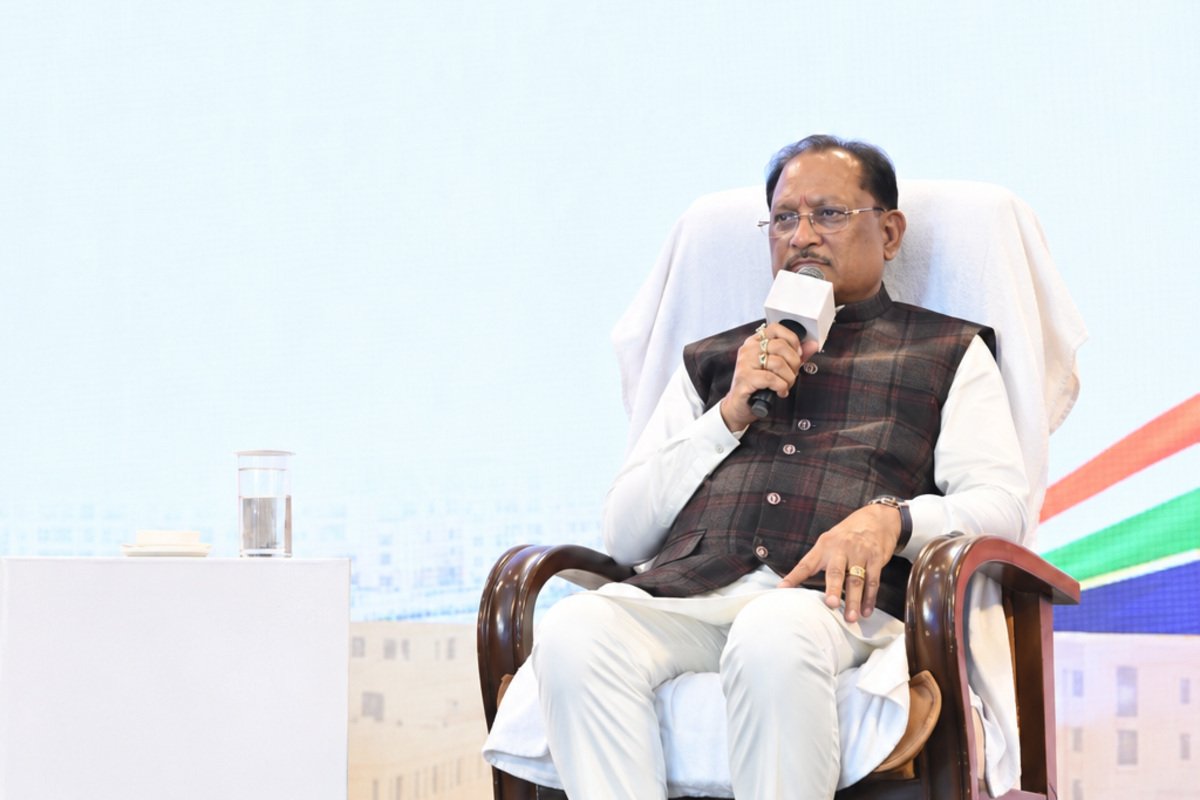
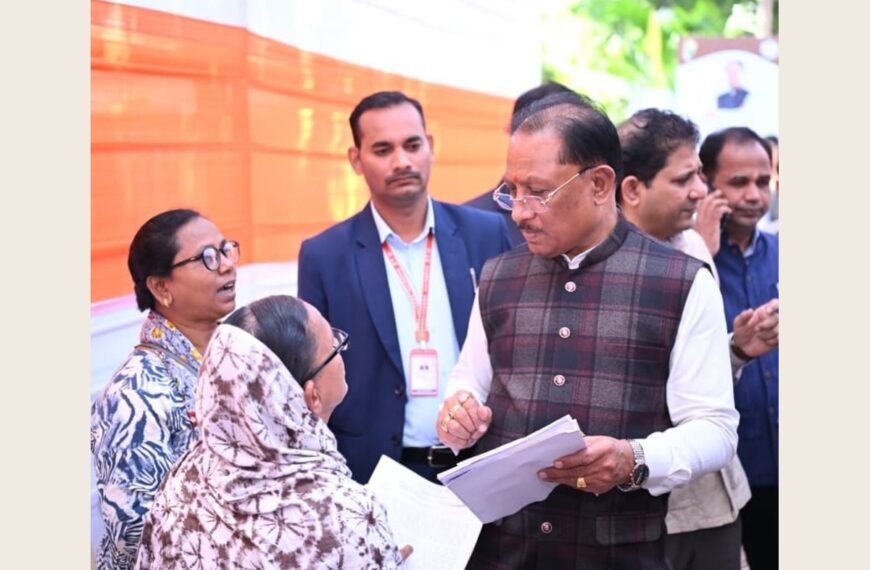
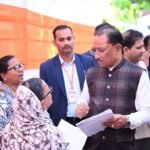
Chief Minister Vishnu Deo Sai speaks about farm incomes, opportunities for young people and the expansion of schools and healthcare in Bastar during a discussion in Raipur on 26 November 2026. Photo:primelookindia.com via CG/PR
The Chief Minister outlines his government’s three-year record on housing, women’s financial support, industrial investment and the expansion of schools and healthcare in Bastar.
Key Highlights
- Sai said eligible farmers who sell less than 21 quintals of paddy per acre can still receive input assistance calculated at the full 21-quintal benchmark.
- More than ₹21,350 crore has been transferred to women under the Mahatari Vandan Yojana in 33 instalments, he said.
- Chhattisgarh has received investment proposals worth more than ₹8.60 lakh crore over three years, according to figures cited by Sai.
- The state is upgrading 30 ITIs and aims to train 14 lakh students in artificial intelligence.
- Sai said schools had reopened in parts of Bastar and that the state’s health screening campaign had reached more than 34 lakh people.
Raipur: For a farmer whose field yields less paddy than expected, the size of the harvest can determine how much money comes home that season. Chief Minister Vishnu Deo Sai said on 26 November that Chhattisgarh would give eligible farmers the full input assistance calculated at 21 quintals per acre even if they sell less than that amount. He said the decision would particularly help small and marginal farmers in areas with lower yields.
Speaking about his government’s development priorities, Sai said, “Our effort is to ensure that no person, family or region is left behind in this journey of development, and that new opportunities for prosperity reach every village and every home.”
More room in the household budget
Sai recalled that the first Cabinet meeting after his government took office in December 2023 approved 18 lakh homes under the Pradhan Mantri Awas Yojana. He said the government paid two years of outstanding paddy bonuses and began procuring up to 21 quintals per acre at ₹3,100 per quintal. It also raised payments to tendu leaf collectors to ₹5,500 per standard bag.
He said about 68 lakh women receive ₹1,000 a month under the Mahatari Vandan Yojana. The state has also returned the preparation of ready-to-eat nutrition supplies to women’s self-help groups, giving them another source of work. Sai said more than 14 lakh women in Chhattisgarh had become Lakhpati Didis and that Sakhi One Stop Centres were operating in all 33 districts.
Training young people for the industries the state wants to attract
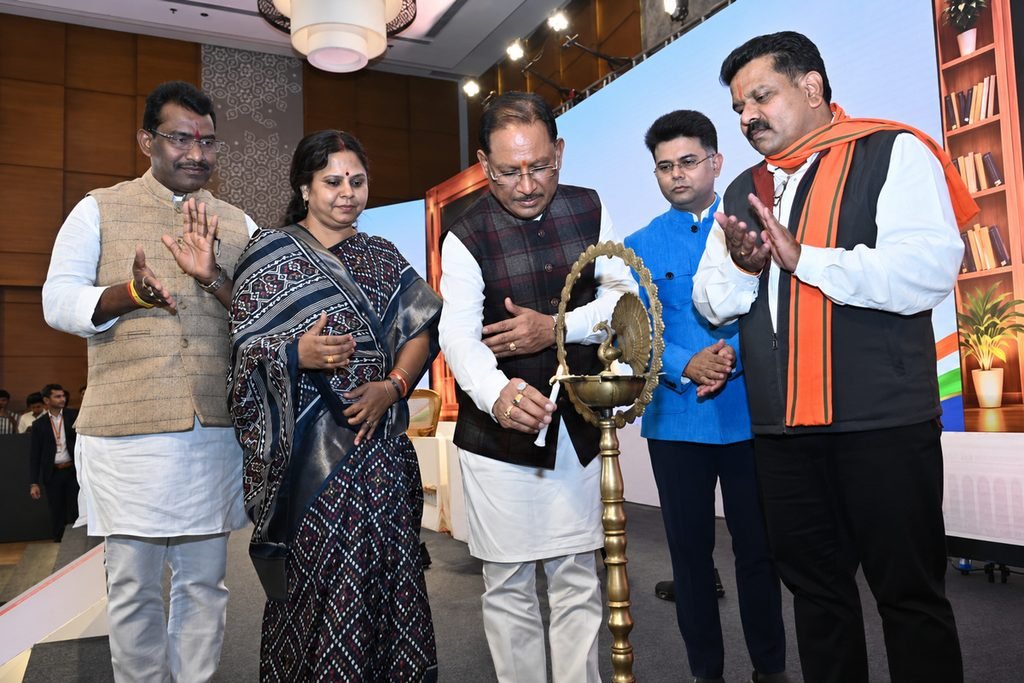
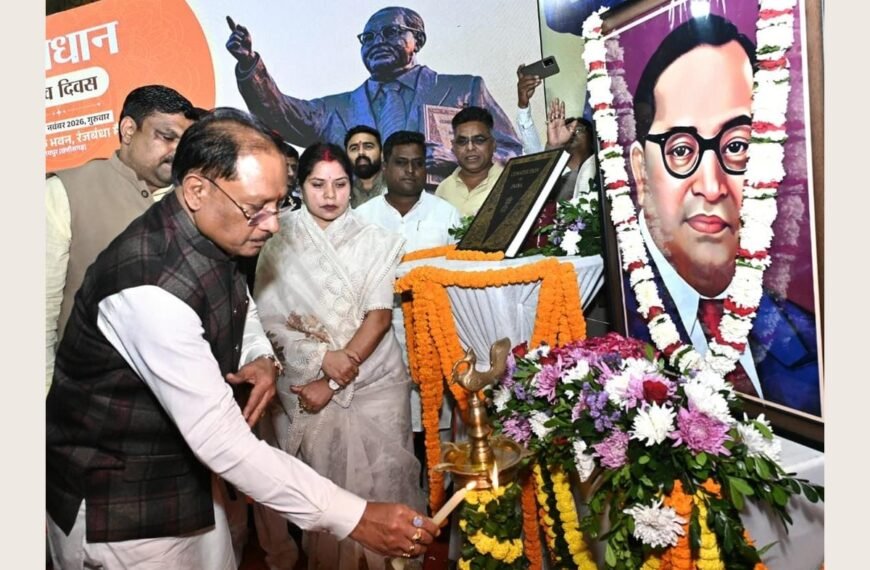
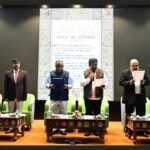
Chief Minister Vishnu Deo Sai lights the ceremonial lamp as Deputy Chief Minister Vijay Sharma (far right) looks on before a discussion on Chhattisgarh’s development priorities in Raipur on 26 November 2026. Photo: primelookindia.com via CG/PR
Sai said proposals for investment were coming from sectors such as electronics, semiconductors, pharmaceuticals and garments alongside Chhattisgarh’s established mineral-based industries. He cited more than 450 changes to make investment and business approvals easier, including a revamped single-window system. A semiconductor unit and an AI data centre park are being developed in Nava Raipur, he said, alongside plans for a pharma park, an electronics manufacturing cluster and garment parks.
The government is also preparing young people for those industries. In addition to upgrading 30 ITIs, it plans to develop six government engineering and polytechnic colleges as Chhattisgarh Institutes of Technology. Sai said a National Skill Training Institute being established in Nava Raipur would train about 4,000 young people annually. The state is developing 38 Nalanda libraries and has set a target of launching 5,000 start-ups through its entrepreneurship initiatives.
In Bastar, development means schools and care closer to home
Sai said schools that had been closed for years in areas affected by Naxalite violence had reopened. Education cities are being developed at Orchha in Abujhmad and at Jagargunda. He also cited the expansion of the tribal youth hostel in Delhi from 50 to 200 seats.
The Chief Minister said mobile medical units were reaching remote villages and pointed to the medical college in Geedam and the super-speciality hospital in Jagdalpur as part of the health expansion. He also discussed Bastar Roadmap 2.0 and plans to develop former security camps as Shaheed Gundadhur Seva Deras, where residents could obtain government services closer to home.
Local culture and everyday infrastructure
Sai said the state’s homestay policy was designed to help local families participate in tourism. He cited Bastar Pandum as a platform for tribal art, music, dance and food, and pointed to the Shaheed Veer Narayan Singh Memorial-cum-Tribal Freedom Fighters Museum in Nava Raipur. He also referred to efforts to support athletes through the Chief Minister’s sports mission.
On infrastructure, the Chief Minister said about 1,600 homes a day were being built under the Pradhan Mantri Awas Yojana and that 1.38 lakh solar installations had been completed under PM Surya Ghar. He linked those figures to a broader goal of giving families in remote areas the same chance to benefit from improvements in housing, education, healthcare and employment.