Reg No. - CHHBIL/2010/41479ISSN - 2582-919X

Savarkar’s grandnephew sends legal notice to Sonia Gandhi, seeks unconditional apology over memoir
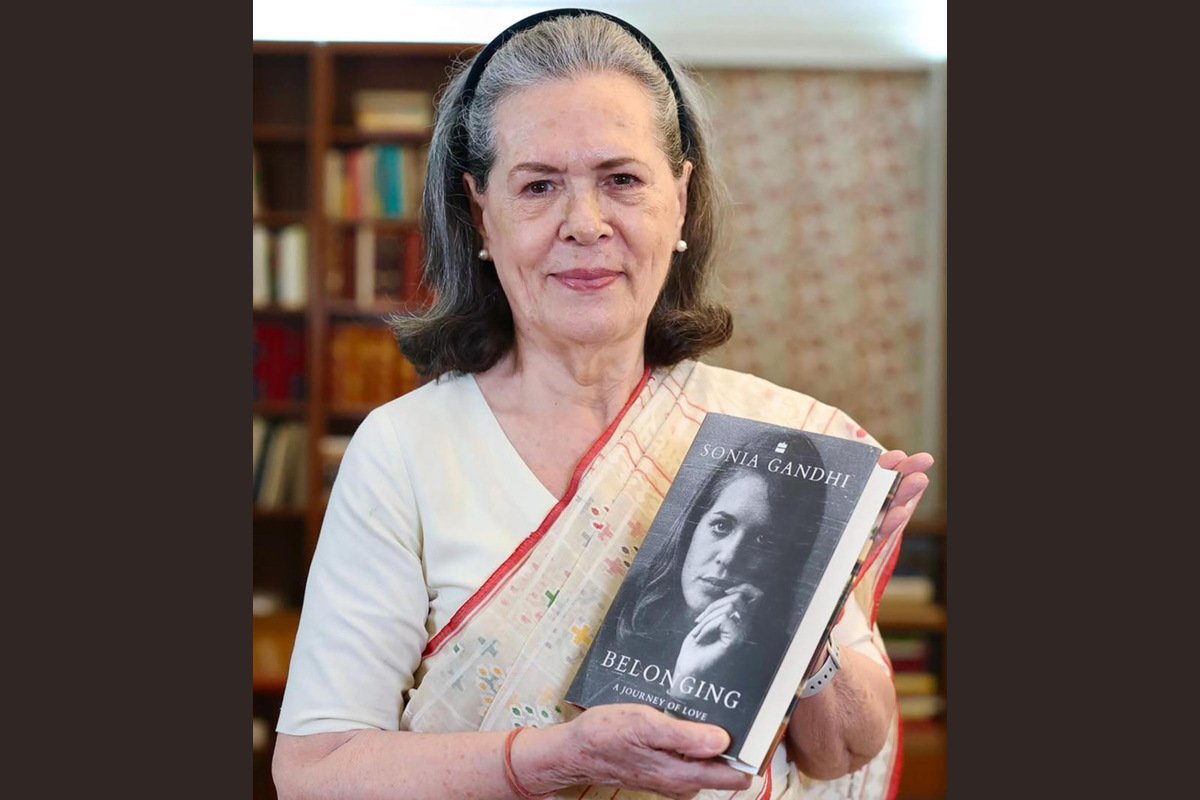
Congress leader Sonia Gandhi holds a copy of her memoir, Belonging: A Journey of Love. V.D. Savarkar’s grandnephew Satyaki Savarkar has issued a legal notice seeking an unconditional apology and corrections to two passages about him.Photo Credit:Knopf/Penguin Random House.”
The notice challenges two passages in Belonging: A Journey of Love and gives Gandhi 15 days from receipt to respond to demands for an apology, a public clarification and corrections.
Pune: Vinayak Damodar Savarkar’s grandnephew, Satyaki Savarkar, has sent a legal notice to Congress leader Sonia Gandhi over two passages in her memoir, Belonging: A Journey of Love. He alleges that the book misrepresents his granduncle’s conduct under British rule and his vision of India. The notice, reported on 23 November 2026, seeks an unconditional apology, a public clarification and corrections to the disputed passages.
Key Highlights
- Advocate Sangram Kolhatkar issued the notice on Satyaki Savarkar’s behalf, challenging passages on pages 201 and 443.
- The objections concern the treatment of Savarkar’s mercy petitions under British rule and the memoir’s description of his vision of Hindutva.
- The notice gives Gandhi 15 days from receipt to comply with its demands and says Satyaki Savarkar may pursue legal action if she fails or refuses to do so.
What the notice says about Savarkar’s imprisonment
The passage on page 201 juxtaposes the assaults and imprisonment endured by Congress freedom fighters with mercy petitions written by Savarkar and an allegation that RSS members acted as informers for British authorities. Satyaki Savarkar objects to the way those statements appear together. His notice argues that the wording leaves readers with the impression that Savarkar himself was involved in informing on Indian freedom fighters or collaborating with colonial authorities against them. He disputes that implication
The notice asks that Savarkar’s petitions be read in the context of his years in prison, including his incarceration in the Cellular Jail in the Andaman Islands. It points to the hardships he endured under British rule and argues that the passage gives readers an incomplete account of that period. For Satyaki Savarkar, the issue is what a reader may infer about his granduncle’s conduct when the petitions and the allegation about informers appear in the same sentence.
The distinction matters in a dispute over reputation. A petition addressed to colonial authorities is a document that can be examined in the circumstances in which it was written. An allegation of informing on fellow Indians is a separate claim about conduct and calls for evidence of its own. The notice challenges the association it believes the passage creates between the two.
The second passage concerns who belongs in India
Page 443 shifts from Savarkar’s conduct under British rule to his political ideas. In that passage, Gandhi contrasts Mahatma Gandhi’s vision of India with Savarkar’s Hindutva, which she characterises as an outlook that places Hindus above other communities. She connects that outlook to the RSS, the BJP and organisations associated with the Sangh Parivar. Satyaki Savarkar disputes the characterisation and says it harms his granduncle’s reputation and legacy.
The two passages raise different questions. The first concerns what Savarkar did and what the wording may lead readers to believe about his actions. The second concerns how an author interprets his political thought. That distinction gives the dispute a wider significance. A family is asking how an ancestor’s years of imprisonment and political life will be remembered. Readers are being asked to consider how a prominent political memoir describes a vision of India whose meaning is still contested.
A personal memoir draws a public challenge
HarperCollins India published Belonging: A Journey of Love on 10 November. The book’s cover carries a photograph taken by Rajiv Gandhi in Turin in 1966, before he and Sonia married. It is a personal image for a memoir that also reflects on India’s political history. The notice now focuses public attention on two passages in which Gandhi turns from her own memories to questions about the country’s past and identity.
Kolhatkar told reporters that his client had asked Gandhi to provide the factual basis for the statements. The notice says Satyaki Savarkar may pursue legal proceedings if his demands are refused or go unmet. A public response from Gandhi or HarperCollins India to the notice could not be verified as of the evening of 23 November

YOU MAY LIKE THIS