Reg No. - CHHBIL/2010/41479ISSN - 2582-919X

From a 1735 copperplate to a handwritten prison journal, Chhattisgarh brings its history to Bharat Mandapam
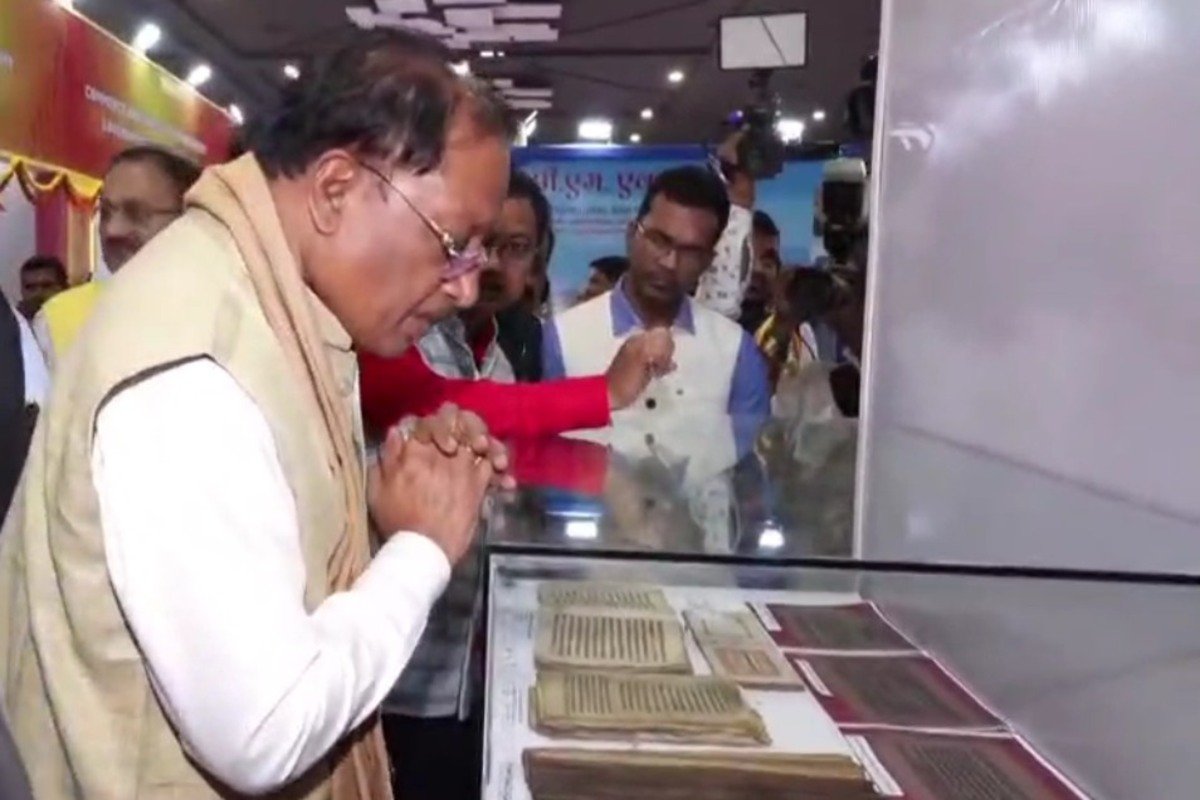
Chief Minister Vishnu Deo Sai reads a manuscript on display at the Chhattisgarh Pavilion during the India International Trade Fair at Bharat Mandapam, New Delhi, on 20 November 2026. Photo: primelookindia.com via CG/PR.
At the India International Trade Fair in New Delhi, rare manuscripts trace the region’s history through records of kings, remedies and everyday expenses, alongside a journal written behind bars during the freedom struggle.
Key Highlights
- Chhattisgarh’s Archaeology Department is exhibiting rare manuscripts, copperplates and historical records associated with the collection of Acharya Ramendranath Mishra.
- The exhibits include a copperplate issued by Amar Singh Deo in 1735, medicinal manuscripts from the Kalachuri period and Babu Rewaram’s 1858 account of the Haihaya rulers.
- An original copy of Shri Krishna Janmasthan Samachar Patra, a handwritten and illustrated prison journal edited by freedom fighter Pandit Sundarlal Sharma, is among the exhibits.
- The Chhattisgarh Pavilion is on the first floor of Hall No. 4 at Bharat Mandapam, stall 4F-03-A. The fair runs until 27 November 2026.
New Delhi: Chief Minister Vishnu Deo Sai paused before a glass case at the Chhattisgarh Pavilion on 20 November, his hands folded as he looked down at the manuscripts. Inside lay pages worn at the edges, bundles still tied with cord and records written by hand. The display brings together accounts of how the region was governed, what its people spent on everyday goods and what one freedom fighter recorded from inside Raipur jail.
The state Archaeology Department has assembled the exhibition at the 45th India International Trade Fair, organised by the India Trade Promotion Organisation at Bharat Mandapam. The objects associated with Acharya Ramendranath Mishra’s collection share the 1,000-square-metre pavilion with traditional arts, crafts and local products.
Addressing the pavilion gathering, Sai said Bastar and Chhattisgarh were increasingly being recognised for their tribal heritage, folk traditions, natural beauty and opportunities for development. He said the fair gave the state a chance to present that fuller story to visitors who had long heard about Bastar mainly in the context of Maoist violence.
What a copperplate and two medicinal manuscripts preserve
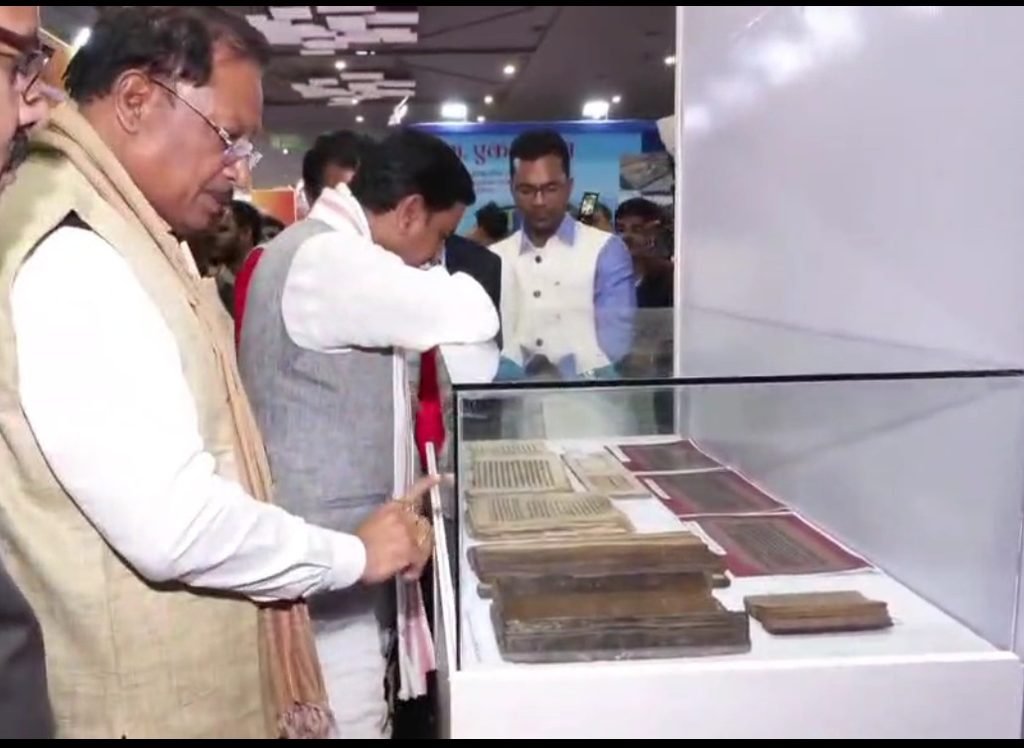
Chief Minister Vishnu Deo Sai gestures towards the historical manuscripts and records on display as others look on at the Chhattisgarh Pavilion, Bharat Mandapam, New Delhi, on 20 November 2026. Photo: primelookindia.com via CG/PR.
Among the exhibits is a copperplate issued in 1735 by Amar Singh Deo, the last ruler of Raipur’s Kalachuri line. It offers a record of the political and administrative life of the region. The display also includes Khoob Tamasha and Nasket, two medicinal manuscripts associated with the Kalachuri period in Ratanpur.
A rare manuscript written in gold lettering is associated with the era of Rani Durgavati of Garha Mandala. A separate Ramayana manuscript is linked to Sushendas Maharaj, who belonged to the tradition of disciples associated with Goswami Tulsidas. Together, these works show the range of material preserved in the collection, from records of governance and healing to texts passed down through religious traditions.
The historian who recorded the Haihaya rulers
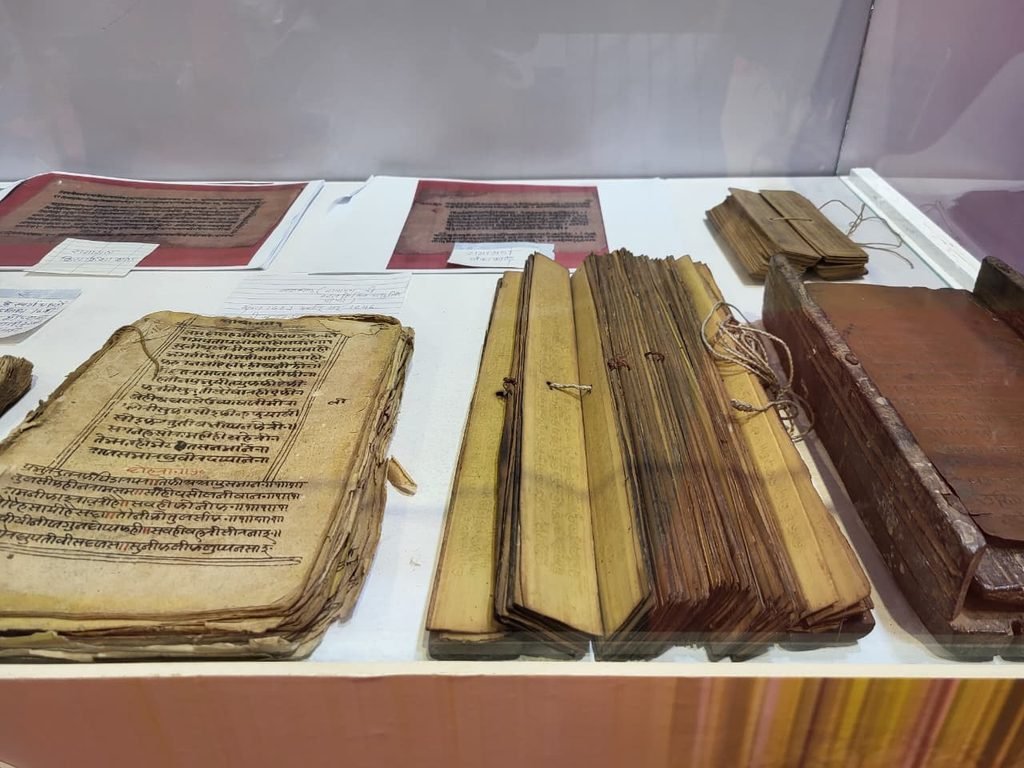
Handwritten pages and manuscript leaves tied with cord lie side by side in a display case at the Chhattisgarh Pavilion during the India International Trade Fair at Bharat Mandapam, New Delhi, in November 2026. Photo: primelookindia.com via CG/PR.
Babu Rewaram, a historian, poet and scholar who worked in Ratanpur in present-day Bilaspur district, completed Tawarikh-e-Haihaya Rajao Ki in 1858. Regarded as one of the earliest manuscript histories of Chhattisgarh, the work records the Haihaya rulers, also known as the Kalachuris, and provides a source for studying their reigns.
Another exhibit is a handwritten revenue sanad, or official document, in the Modi script from the reign of Gwalior’s Maharaja Daulat Rao Scindia. Its tax-related entries offer a glimpse of how revenue was recorded and administered.
Everyday life in the pages of an expense book
A handwritten expense ledger from around 1913 brings the exhibition closer to daily life. Compiled by Pandit Raghuvanshnath Thakur of Bilaspur, it records spending and the prices of everyday goods on the eve of the First World War. Thakur was a mentor to E. Raghavendra Rao, who later held senior office in the Central Provinces and Berar.
Where the copperplate tells visitors how authority was recorded, the ledger shows what someone thought worth accounting for at the end of the day. Entries made for practical reasons now help readers understand what things cost and how expenses were managed in the region more than a century ago.
The journal written inside Raipur jail
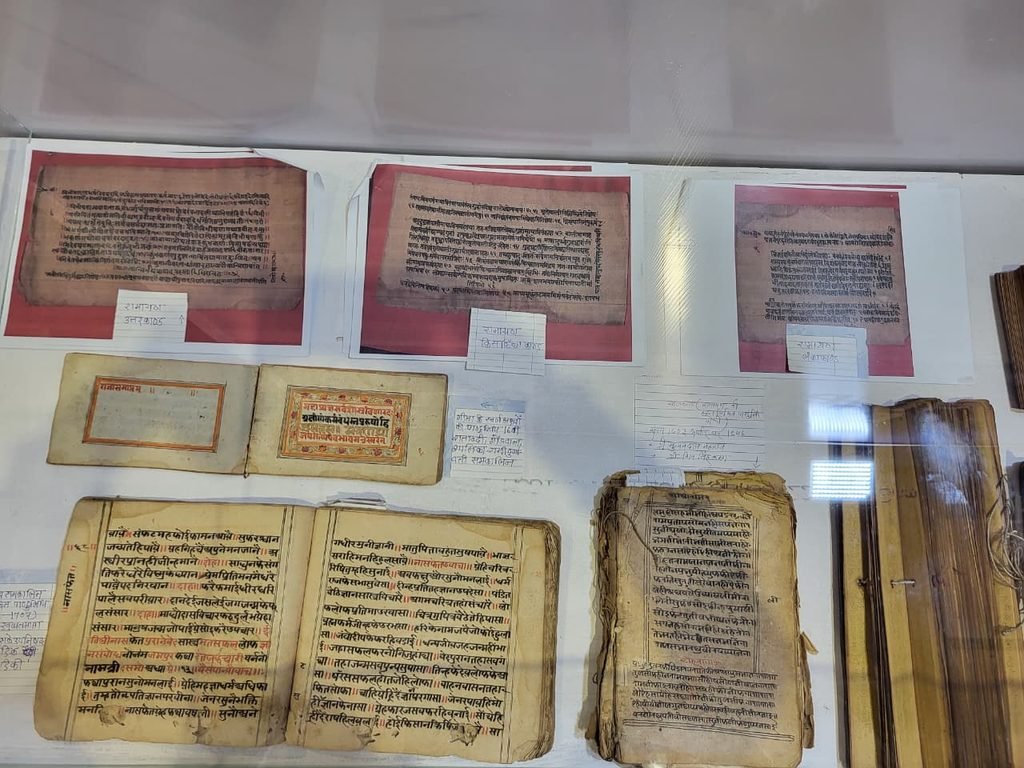
Open manuscript pages with black and red lettering are displayed beside decorated folios and archival records at the Chhattisgarh Pavilion, Bharat Mandapam, New Delhi, in November 2026. Photo: primelookindia.com via CG/PR.
One of the most poignant exhibits is an original copy of Shri Krishna Janmasthan Samachar Patra, regarded as one of India’s earliest handwritten prison journals. Freedom fighter Pandit Sundarlal Sharma, remembered as the Gandhi of Chhattisgarh, edited and produced the illustrated journal while imprisoned in Raipur during the Non-Cooperation Movement in the early 1920s.
Sharma prepared six issues. In them, he recorded the harsh conditions of prison life and the mistreatment of prisoners and freedom fighters by colonial authorities. The journal preserves an account written by someone living through those conditions, in the place where they occurred.
Preserving the originals for future readers
The exhibition also draws attention to the Union government’s Gyan Bharatam Mission, which supports the survey, cataloguing, conservation and digitisation of manuscripts. For collections such as this one, conservation protects the fragile originals, while digitisation can give readers and researchers access to pages that cannot be handled frequently.
Visitors can see the exhibition at stall 4F-03-A, first floor, Hall No. 4, Bharat Mandapam, New Delhi, until 27 November 2026

YOU MAY LIKE THIS