Reg No. - CHHBIL/2010/41479ISSN - 2582-919X

In Mithila, Prashant Kishor Urges Brahmins to Put Education First
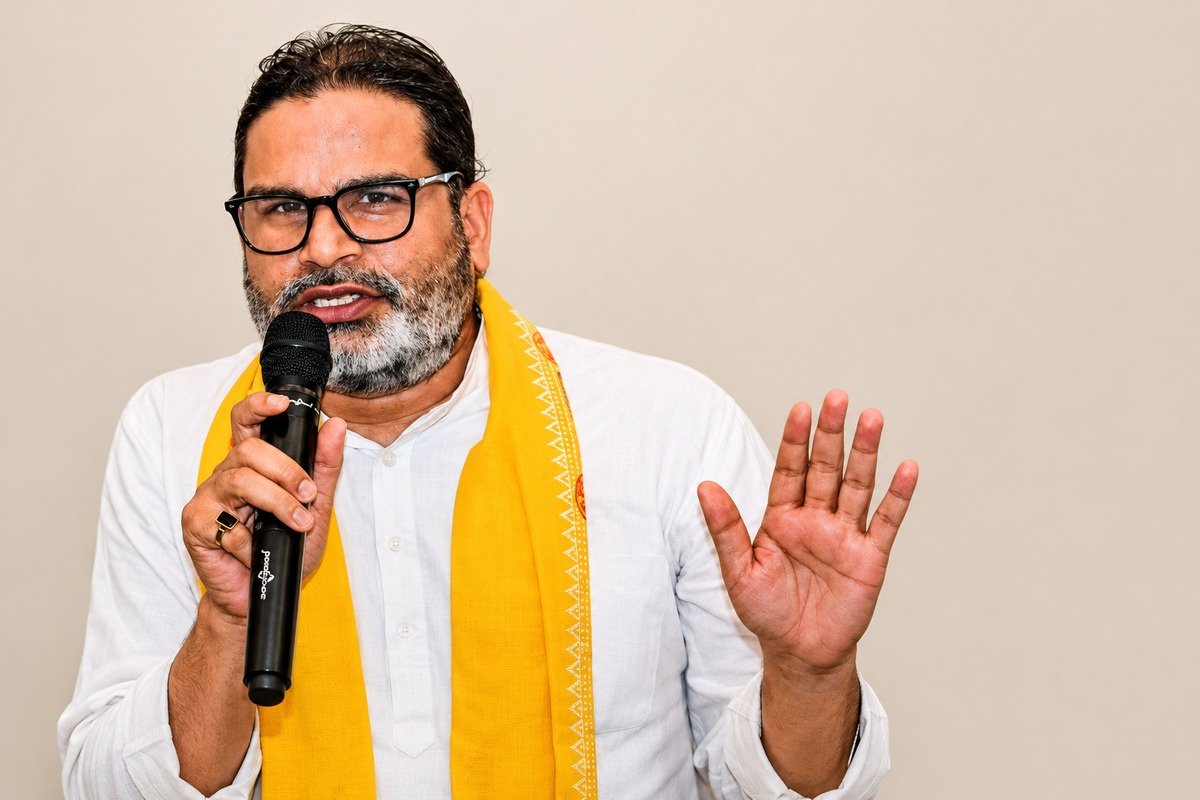
Jan Suraaj Party founder and Bankipur MLA Prashant Kishor ( File Photo)
Speaking in Darbhanga’s Mahinam village, the Jan Suraaj founder questioned whether voting along caste lines had improved people’s lives and challenged hostility towards Muslims.
Key Highlights
- Jan Suraaj founder and Bankipur MLA Prashant Kishor addressed the Maithil Intellectuals’ Symposium-cum-Felicitation Ceremony in Mahinam village.
- Responding to a call for a Brahmin candidate, he asked what having a Brahmin MLA and MP had done to ease local economic hardship.
- He recalled the sacrifices earlier generations made to educate their children and questioned hostility towards Muslims.
Darbhanga, Monday, 9 November 2026 — A call for a Brahmin candidate at a gathering in Bihar’s Mithila region prompted Jan Suraaj Party founder Prashant Kishor to ask what caste representation had delivered for local families. Addressing the Maithil Intellectuals’ Symposium-cum-Felicitation Ceremony in Mahinam village, in Darbhanga district’s Benipur block, the Bankipur MLA pointed out that the area already had a Brahmin legislator and a Brahmin MP. He asked the audience to judge that representation by whether it had improved their lives.
What has political representation changed?
Kishor said the area had been represented by a Brahmin MLA for 15 years. He then put a question to the gathering: “Then, why are you living in such hardship?” His point was that sharing a caste identity with elected representatives gave voters little indication of how those leaders would address their economic concerns.
He drew on what he said he had seen during his foot marches through Darbhanga and Madhubani, contrasting Mithila’s reputation for scholarship with the economic hardship he encountered. “This was once the land of scholars. Today, it has become the land of labourers,” he said.
Education and relations between communities
Kishor recalled that earlier generations prioritised their children’s education even when household budgets were stretched. He also spoke of a tradition of helping people in need and urged the gathering to reflect on how those values could guide the community today.
Turning to relations between communities, Kishor questioned hostility towards Muslims among sections of the Brahmin community. He recalled Muslim electoral support for Brahmin candidates in Mithila and asked his listeners to reconsider a political approach that treats Muslims as irrelevant to electoral calculations.

YOU MAY LIKE THIS