Reg No. - CHHBIL/2010/41479ISSN - 2582-919X

Apollo College Hosts International Seminar on Strengthening Educational Research
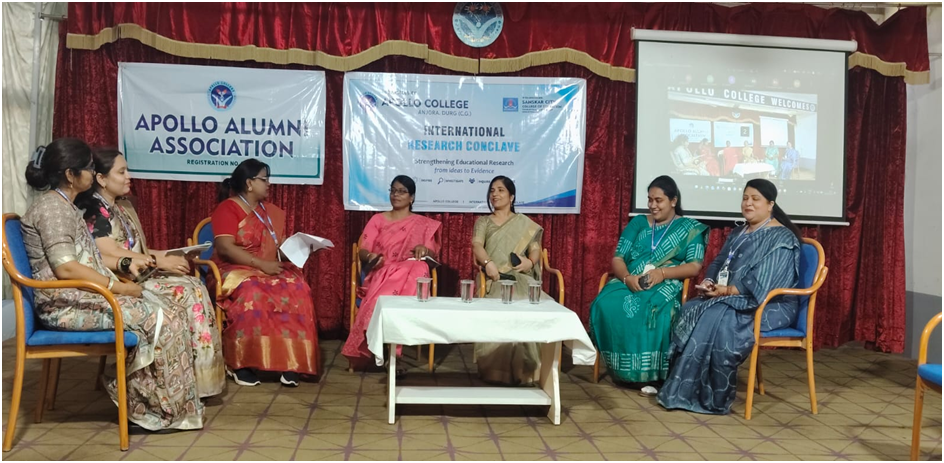
Panellists participate in a discussion during the international research seminar on “Empowering Educational Research: From Ideas to Evidence” at Apollo College, Anjora, Durg, on Saturday, October 31, 2026. The programme was jointly organised with Sanskar City College of Education, Thakurtola, Rajnandgaon. Photo: primelookindia.com via Divya Sharma
Joint initiative with Sanskar City College of Education explores research methods, evidence-based findings and innovation in teacher education
Key Highlights
• Apollo College, Anjora, and Sanskar City College of Education jointly organise an international research seminar.
• Sessions explore the theme “Empowering Educational Research: From Ideas to Evidence”.
• Speakers discuss research design, data collection, analysis and the practical application of findings.
• B.Ed., M.Ed. and D.El.Ed. student-teachers, research scholars and alumni participate.
• Research originality, ethics and student-centred education receive special emphasis.
Durg: Apollo College, Anjora, jointly with Sanskar City College of Education, Thakurtola, Rajnandgaon, organised an international research seminar on “Empowering Educational Research: From Ideas to Evidence” on Saturday, October 31, 2026.
The programme aimed to strengthen the quality of educational research, introduce participants to emerging research trends and scientific methods, and encourage an investigative approach to issues in education.
B.Ed., M.Ed. and D.El.Ed. student-teachers, research scholars and alumni participated in the seminar, which brought together academic perspectives on connecting research ideas with reliable evidence and practical outcomes.
From identifying problems to interpreting evidence
The speakers included Dr Preeti Mandal of Tribhuvan University, Nepal; Dr Dharmendra Shukla; and Dr Avinash Pandey, a faculty member in the Department of Education at Ishwar Saran P.G. College, Prayagraj.
Their presentations covered the selection of research problems, research design, methodological approaches, data collection, analysis and the usefulness of research findings.
The speakers explained that research requires a systematic and scientific process through which educational problems can be identified and effective, practical solutions explored.
They emphasised the importance of moving beyond an initial idea to a clearly defined enquiry supported by appropriate methods and careful interpretation of evidence.
NEP 2020 and changing educational needs
Discussions also examined educational research in the context of the National Education Policy 2020.
The speakers highlighted the need to make education more practical, skill-oriented, innovative and student-centred. They stressed that quality research, evidence-based findings and improved teaching methods could contribute to strengthening the education system.
Participants were encouraged to consider how research could address classroom needs and support meaningful improvements in teaching and learning.
Originality and ethics in research
Research integrity formed another important part of the seminar.
The speakers encouraged research scholars to maintain originality, follow ethical practices and adopt a scientific approach throughout their work.
They also highlighted the appropriate use of modern technological resources in research, alongside careful attention to the credibility and usefulness of findings.
The sessions provided participants with an opportunity to understand both theoretical principles and practical aspects of educational enquiry.
Academic guidance and coordination
The seminar was organised under the guidance of Chief Patron Dr B.S. Bhatia, with the patronage of Dr Manish Jain, Dr Sanjay Agrawal and Ashish Agrawal.
Secretary Atul Deshlahra and Principal Dr Siddharth Jain extended support to the programme.
Dr Rakhi Sharma and Prof. Dr Gurpreet Kaur coordinated the seminar.
The programme encouraged research interest, scientific thinking, critical enquiry and innovation among student-teachers and scholars. It concluded with a commitment to making educational research rigorous, useful and responsive to society’s needs.

YOU MAY LIKE THIS