Reg No. - CHHBIL/2010/41479ISSN - 2582-919X

PM Modi Hails ISRO’s NVS-03 Launch as a Boost to India’s NavIC Navigation System
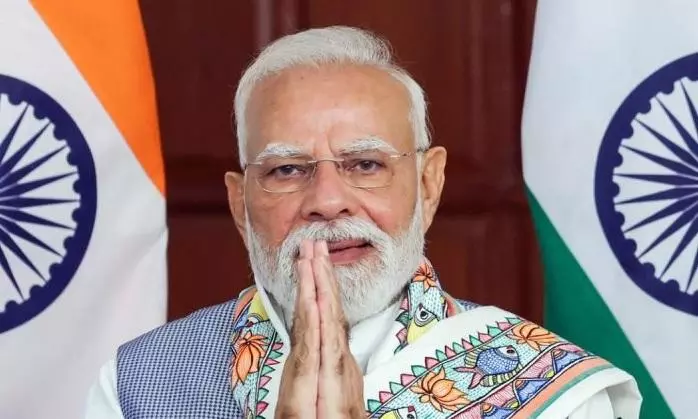
Prime Minister Narendra Modi, in a file photograph. He congratulated ISRO’s scientists and engineers on Saturday, October 31, 2026, following the successful launch of GSLV-F18 carrying the NVS-03 navigation satellite from Sriharikota.
GSLV-F18 places the 2,250-kg satellite into its designated transfer orbit after a late-night launch from Sriharikota
Key Highlights
• Prime Minister Narendra Modi congratulates ISRO scientists and engineers on the successful GSLV-F18/NVS-03 mission.
• The rocket lifts off from Sriharikota at 11.51 p.m. on Friday, October 30, 2026.
• The 2,250-kg navigation satellite enters its designated geosynchronous transfer orbit about 20 minutes after lift-off.
• The mission strengthens NavIC, India’s indigenous regional satellite navigation system.
• Applications include navigation and real-time tracking of trains, vehicles and shipping vessels.
New Delhi: Prime Minister Narendra Modi on Saturday, October 31, 2026, congratulated ISRO’s scientists and engineers on the successful launch of GSLV-F18 carrying the NVS-03 navigation satellite, describing the mission as an important step towards strengthening India’s indigenous NavIC navigation system.
The Prime Minister’s message followed the late-night launch from Sriharikota, where the GSLV rocket lifted off at 11.51 p.m. on Friday and successfully placed the 2,250-kg satellite into its designated geosynchronous transfer orbit about 20 minutes later.
In a post on X, Modi said the mission would advance India’s pursuit of self-reliance in critical technologies and support navigation services benefiting the public.
“Congratulations to our scientists and engineers at ISRO on the successful launch of GSLV-F18 carrying NVS-03. This mission marks an important step in strengthening NavIC, our indigenous satellite navigation system,” Modi said.
He also praised the dedication and ingenuity of India’s space scientists, saying their achievements continued to make the nation proud.
Late-night launch from Sriharikota
Working through its shortest-ever launch campaign, ISRO completed the mission with a textbook lift-off from the Second Launch Pad at the Sriharikota spaceport.
The GSLV climbed into the night sky with a trail of orange flames as thousands of spectators gathered at the visitors’ gallery to witness the launch.
Scientists and engineers monitored the flight from the mission control centre. About 20 minutes after lift-off, ISRO confirmed that NVS-03 had separated as scheduled and entered its designated transfer orbit, prompting celebrations among the mission team.
The successful orbital injection paved the way for subsequent manoeuvres to move the satellite into its operational orbit.
NVS-03 strengthens NavIC constellation
The mission marks a significant step in strengthening Navigation with Indian Constellation, or NavIC, the country’s independent regional satellite navigation system.
The launch brings the constellation towards its minimum operational configuration of four satellites, with NVS-03 required to complete its orbit-raising and commissioning activities before entering regular service.
Modi said the satellite’s enhanced capabilities would further India’s efforts to develop and sustain critical technologies domestically.
Navigation support for transport and civilian services
NVS-03 is a second-generation navigation satellite equipped with indigenous and procured atomic-clock technology.
Its intended applications include navigation and real-time tracking of trains, road vehicles and shipping vessels.
The mission supports the continued development of India’s satellite navigation capabilities, connecting advances in space technology with services used in transport and other civilian sectors.

YOU MAY LIKE THIS