Reg No. - CHHBIL/2010/41479ISSN - 2582-919X

Rubio and Jaishankar Hold High-Level Talks in Mumbai as India–US Trade Agreement Nears Finalisation
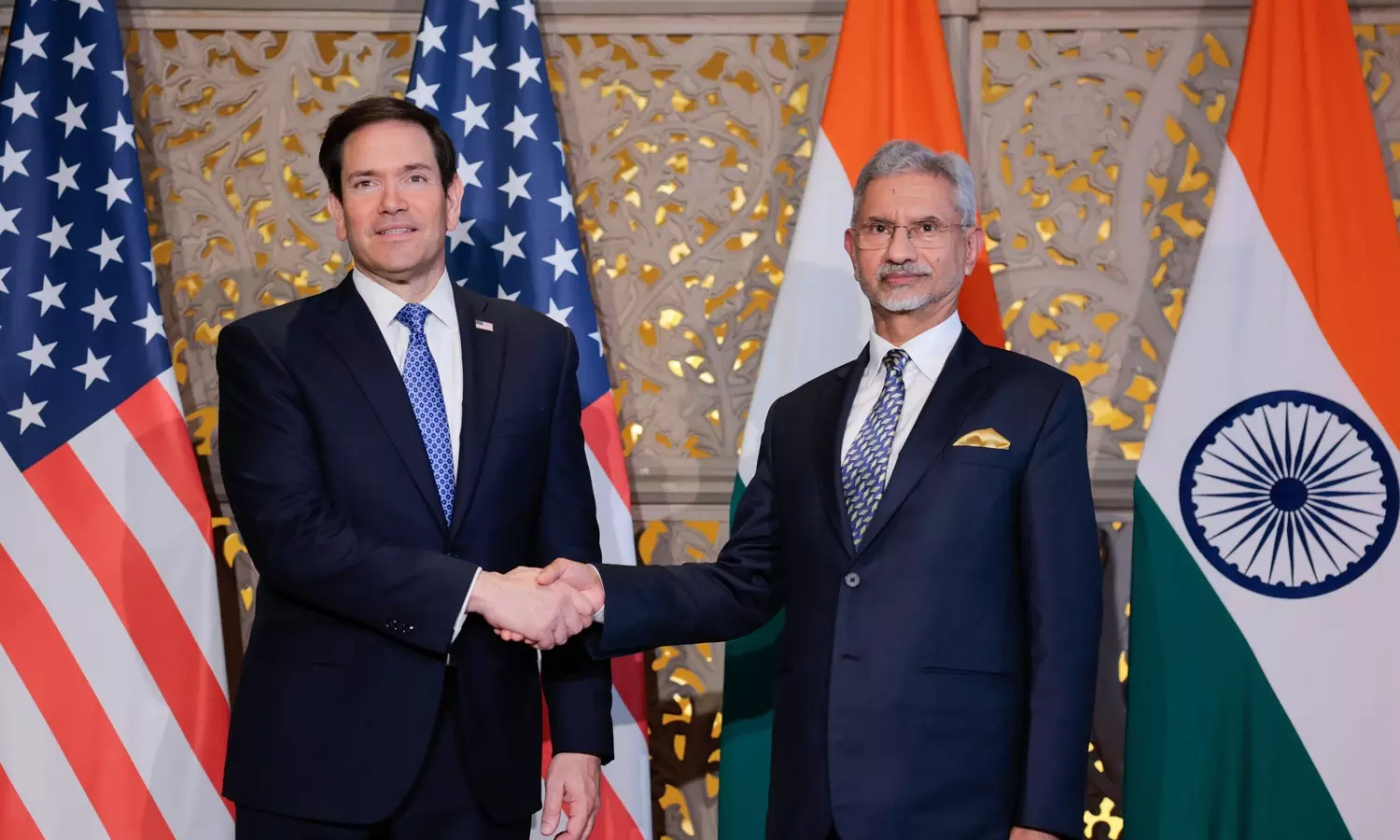
US Secretary of State Marco Rubio (left) shakes hands with External Affairs Minister S. Jaishankar ahead of their bilateral meeting in Mumbai on Tuesday, October 20, 2026, as India and the United States move closer to finalising a proposed trade agreement amid discussions on tariffs, energy cooperation and outstanding commercial issues. Photo: AP
US Secretary of State Marco Rubio says only a few outstanding issues remain before the proposed agreement can be concluded, as New Delhi and Washington seek to strengthen energy cooperation and overcome months of trade tensions
Key Highlights
- US Secretary of State Marco Rubio meets External Affairs Minister S. Jaishankar in Mumbai on Tuesday, October 20, 2026.
- Discussions focus on advancing the proposed India–US trade agreement and strengthening bilateral energy cooperation.
- Rubio says the two countries are extremely close to concluding the agreement.
- Only a small number of outstanding issues remain to be resolved, according to the US Secretary of State.
- Trade negotiations have faced difficulties over US tariffs and India’s purchases of Russian oil.
- The meeting signals renewed diplomatic engagement between New Delhi and Washington to resolve differences and strengthen economic relations.
Mumbai: India and the United States moved closer to finalising a long-awaited bilateral trade agreement on Tuesday, October 20, 2026, as US Secretary of State Marco Rubio held high-level discussions with External Affairs Minister S. Jaishankar in Mumbai. The meeting came amid renewed efforts by New Delhi and Washington to overcome months of disagreements involving American tariffs and India’s purchases of Russian oil. Rubio expressed optimism about the progress of negotiations, indicating that only a limited number of outstanding issues remained before the two countries could conclude the proposed agreement.
Rubio Signals Breakthrough in Trade Negotiations
Speaking to reporters in Mumbai, Rubio indicated that negotiations between the two countries had reached an advanced stage.
“We’re very, very close. I would say we’re about as close as you can be without having executed the agreement. I think there’s a small number of items left to wrap up, so I think that will happen shortly,” Rubio said.
His remarks suggested that the principal areas of negotiation had progressed sufficiently for both sides to focus on resolving the remaining differences.
However, neither the precise outstanding issues nor a definitive timetable for signing the agreement was disclosed in the information available.
The Secretary of State’s assessment nevertheless indicated renewed momentum in bilateral economic diplomacy following months of uncertainty.
Tariff Disputes and Russian Oil Purchases Complicate Relations
Trade discussions between India and the United States have faced significant challenges over American tariff measures and India’s continued purchases of Russian oil.
These disagreements have complicated negotiations and created uncertainty surrounding the future direction of bilateral trade relations.
For India, energy procurement remains closely connected to national economic priorities, including supply security and affordability.
For Washington, tariffs and energy-related concerns have formed part of the broader discussions shaping its commercial relationship with New Delhi.
The Mumbai meeting provided another opportunity for senior representatives of both countries to address these differences through diplomatic engagement.
Energy Cooperation Emerges as Important Part of Discussions
Alongside trade negotiations, Rubio and Jaishankar discussed strengthening energy cooperation between the two countries.
Energy has become an important dimension of India–US relations, particularly as both governments consider questions of supply security, economic stability and commercial cooperation.
The discussions reflected the wider importance of energy policy in shaping bilateral economic relations.
Although specific new energy commitments were not detailed in the available account, the inclusion of energy cooperation in the talks demonstrated its continuing significance to the bilateral relationship.
Mumbai Meeting Reflects Renewed Diplomatic Engagement
The discussions between Rubio and Jaishankar came at a time when both governments were seeking to revive negotiations that had encountered difficulties over several months.
The engagement underscored the importance attached by New Delhi and Washington to maintaining dialogue despite differences on trade and energy policies.
India and the United States share substantial economic interests, and progress towards a bilateral trade agreement could provide greater certainty for businesses and investors operating between the two countries.
However, the actual commercial benefits will depend on the final provisions of any agreement, including the treatment of tariffs, market access and other negotiated commitments.
Final Outstanding Issues Yet to Be Resolved
Rubio’s statement that only a small number of issues remained suggested that negotiations were approaching a potentially decisive stage.
Nevertheless, an agreement cannot be regarded as concluded until the remaining matters are settled and the necessary formal procedures are completed.
The details of those outstanding issues were not provided in the available report.
For both countries, resolving the remaining differences will be important in determining whether the renewed diplomatic momentum translates into a formally executed trade agreement.
India–US Economic Partnership Approaches Important Juncture
The Mumbai discussions highlighted the continuing importance of India–US economic relations despite recent disagreements.
The proposed trade agreement could represent a significant development in bilateral commercial engagement if both governments successfully resolve the outstanding issues.
Rubio’s optimistic remarks indicated that Washington expected progress in the near future, although the precise timing of an agreement remained uncertain.
The meeting between the two foreign policy leaders therefore marked another important stage in efforts to strengthen bilateral cooperation and move towards a negotiated settlement of trade-related differences.

YOU MAY LIKE THIS