Reg No. - CHHBIL/2010/41479ISSN - 2582-919X

Air India Frankfurt–Delhi Flight Diverted to Jaipur After Hijack Alert, 306 Passengers and Crew Safe
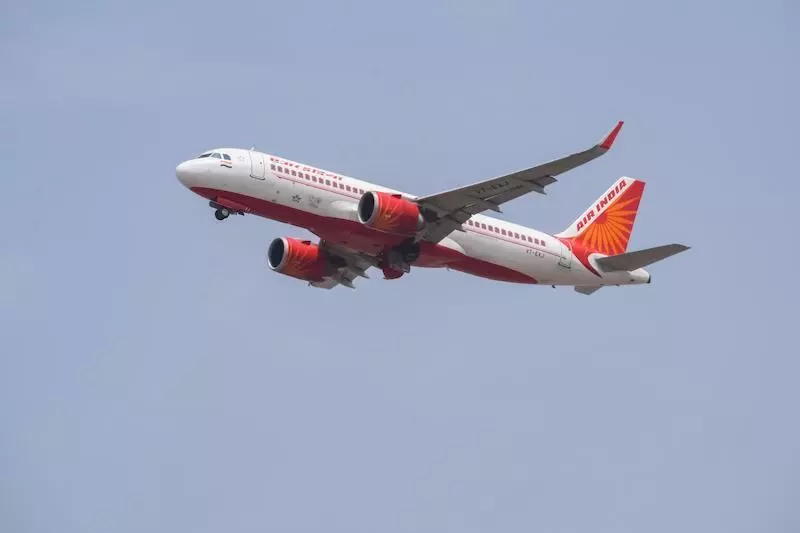
Air India passenger aircraft is seen in flight in this illustrative photograph accompanying reports of the Frankfurt–New Delhi service AI2030 being diverted to Jaipur on Wednesday, October 14, 2026. The Boeing 787-9, carrying 293 passengers and 13 crew members, reportedly transmitted a hijack emergency code while in Mumbai-controlled airspace. Following security checks at Jaipur Airport, the aircraft received clearance and continued to New Delhi.Photo: primelookindia.com | Representational image
Pilot’s reported activation of emergency transponder code 7500 triggers security response; Boeing 787-9 undergoes checks at Jaipur before receiving clearance to continue journey to Delhi
Key Highlights
- Air India flight AI2030, operating from Frankfurt to New Delhi, diverted to Jaipur on Wednesday, October 14, 2026.
- Boeing 787-9 aircraft carrying 293 passengers and 13 crew members.
- Hijack alert reportedly triggered by activation of internationally recognised Squawk Code 7500.
- Mumbai Air Traffic Control contacted the aircraft after detecting the emergency signal.
- Pilot reportedly denied intentionally transmitting a hijack alert.
- Aircraft moved to an isolation bay at Jaipur Airport for mandatory security checks.
- Flight subsequently received security clearance and reached Delhi.
- Initial reports indicate that the hijack alert was false.
New Delhi: An Air India flight carrying 306 passengers and crew members from Frankfurt to New Delhi was diverted to Jaipur on Wednesday morning, October 14, 2026, after an apparent hijack alert triggered an aviation security response. The Boeing 787-9 aircraft operating flight AI2030 was redirected as a precaution after its transponder reportedly transmitted Squawk Code 7500, the internationally recognised signal indicating unlawful interference or hijacking. Although the pilot reportedly denied deliberately activating the emergency code, aviation authorities followed established security procedures, allowing the aircraft to proceed to Delhi only after necessary checks and clearance.
Emergency Transponder Signal Triggers Security Alert
The incident reportedly unfolded while the Frankfurt–Delhi flight was passing through Mumbai-controlled airspace.
According to preliminary information, the aircraft’s transponder transmitted Squawk Code 7500, immediately raising concerns about possible unlawful interference.
The code is internationally recognised by air traffic controllers as an indication that an aircraft may be experiencing a hijacking or another form of unlawful interference.
Upon detecting the signal, Mumbai Air Traffic Control reportedly contacted the flight crew to ascertain the nature of the emergency.
However, the pilot reportedly informed controllers that the crew had not intentionally declared an emergency.
Despite this response, aviation authorities treated the alert seriously and initiated precautionary procedures.
What Does Squawk Code 7500 Mean?
Modern commercial aircraft are equipped with transponders that transmit identification and other information to air traffic control systems.
Pilots can select internationally recognised emergency codes to communicate particular situations.
Among the most important are:
- 7500: Hijacking or unlawful interference.
- 7600: Radio communication failure.
- 7700: General emergency.
The transmission of Code 7500 is treated as a serious aviation security indicator because it may be used when direct communication is difficult or unsafe.
However, transmission of the code does not, by itself, establish that an actual hijacking has occurred.
An incorrect selection, technical malfunction or other operational issue may also require investigation.
In the Air India incident, the precise reason for the reported activation had not been established in the initial account.
Flight Diverted to Jaipur as Precautionary Measure
Although the flight crew reportedly denied declaring a hijacking emergency, aviation authorities decided to divert the aircraft to Jaipur in accordance with precautionary security procedures.
The Boeing 787-9 landed at Jaipur Airport, where security personnel and relevant aviation authorities initiated checks.
The aircraft was reportedly directed to an isolation bay, a designated area used for handling aircraft requiring special security attention.
Such arrangements allow authorities to conduct necessary inspections while minimising potential risks to other aircraft, airport operations and passengers.
The diversion reflected the aviation industry’s established principle of treating unexplained emergency signals seriously until the circumstances have been examined.
Security Checks Completed, Aircraft Cleared for Delhi
Following its arrival at Jaipur, the aircraft underwent security checks before being cleared to resume its journey.
According to the supplied account, the flight subsequently reached New Delhi.
The initial information did not indicate that any passenger or crew member had been injured or that an actual hijacking attempt had occurred.
The incident was therefore being described as a false hijack alert, although the circumstances surrounding the emergency code transmission would require clarification.
No definitive explanation for the reported transponder activation was provided in the available information.
293 Passengers and 13 Crew Members on Board
The Air India flight was carrying 293 passengers and 13 crew members, making a total of 306 people on board.
The Boeing 787-9 Dreamliner is a long-haul, wide-body aircraft commonly deployed on international routes.
Given the number of people travelling on the aircraft, the unexplained emergency signal required a coordinated response involving flight crew, air traffic controllers and airport security authorities.
The subsequent security clearance and continuation of the flight brought the immediate disruption to an end.
Aviation Safety Protocols Leave Little Room for Uncertainty
The incident highlights the importance of emergency communication systems in modern civil aviation.
Aviation authorities must respond to potential security threats even when preliminary communication suggests that an alert may have been transmitted unintentionally.
In cases involving a possible hijacking signal, controllers and security agencies cannot rely solely on assumptions about whether the threat is genuine.
The priority remains the safety of passengers, crew members and airport personnel.
The Frankfurt–Delhi diversion demonstrates how a single emergency transponder signal can activate a wider security response, even without independent confirmation of unlawful interference.
Cause of False Alert Remains Unclear
While the flight was reportedly cleared to continue its journey, questions remain about how the emergency code was transmitted.
It is not yet clear whether the incident resulted from an inadvertent selection, a technical issue or another operational circumstance.
Any determination would depend on an examination of relevant flight information and findings from the competent aviation authorities.
The available account does not establish pilot error or equipment malfunction.
Flight Reaches Delhi After Security Clearance
The reported arrival of flight AI2030 in Delhi following security checks at Jaipur brought the immediate incident to a close.
For passengers, the diversion meant an unexpected interruption to their international journey. For aviation authorities, it required a response to a potentially serious security signal.
The incident also underscores the importance of coordination between pilots, air traffic controllers, airport operators and security agencies.
Although the hijack alert reportedly proved false, the precautionary diversion illustrates the emphasis placed on passenger safety when an aircraft transmits a recognised emergency code.

YOU MAY LIKE THIS