Reg No. - CHHBIL/2010/41479ISSN - 2582-919X

Chhattisgarh Chief Secretary Vikas Sheel Orders Comprehensive Roadmap to Combat Drug Trafficking and Substance Abuse
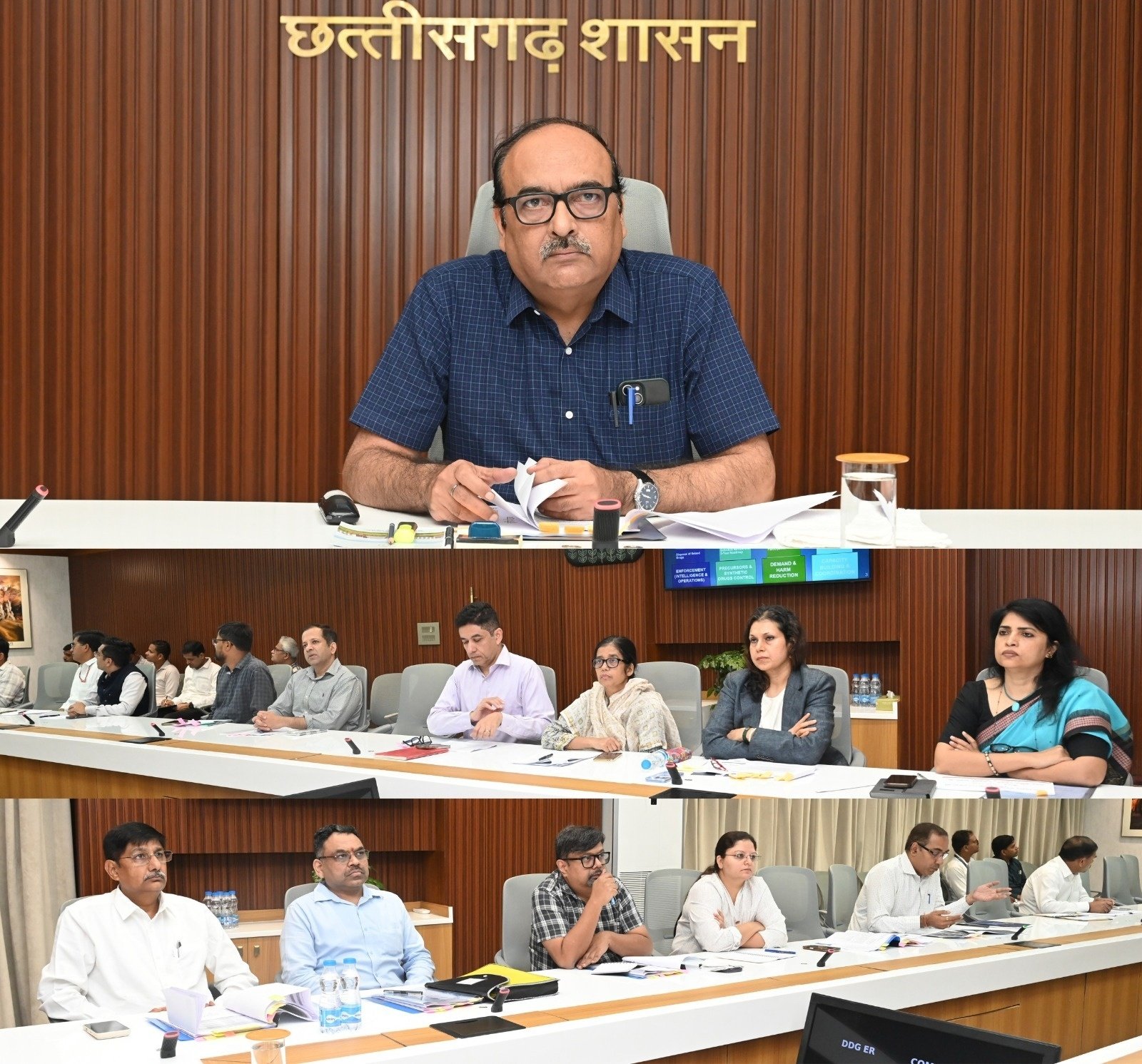
Chhattisgarh Chief Secretary Vikas Sheel chairs the State-Level Narco Coordination Centre (NCORD) Committee meeting at Mahanadi Bhawan, Raipur, on Monday, October 12, 2026, directing officials to prepare a comprehensive roadmap to combat illegal drug trafficking and substance abuse under the Nasha Mukt Bharat Abhiyaan. Senior officials from the Police, Home, Health, Education and other departments participate in the meeting to review enforcement measures, interstate border vigilance and awareness campaigns. Photo Credit:primelookindia.com via CG/DPR
State-Level NCORD Meeting Calls for Stronger Border Vigilance, Coordinated Enforcement, Educational Awareness Campaigns and a Vision Document Under Nasha Mukt Bharat Abhiyaan
Key Highlights
- Chief Secretary Vikas Sheel directs departments to prepare a comprehensive vision document and action plan for a drug-free Chhattisgarh.
- State and district-level NCORD committees instructed to conduct regular, result-oriented reviews.
- Police and Excise Departments asked to intensify vigilance along interstate borders to prevent illegal drug trafficking.
- Anti-Narcotics Task Force to continue enforcement operations and awareness programmes in educational institutions.
- Complaints received through the MANAS portal and special enforcement campaigns reviewed.
- Schools, colleges and universities directed to educate students about the harmful consequences of substance abuse.
Raipur: Chhattisgarh Chief Secretary Vikas Sheel on Monday, October 12, 2026, directed government departments to prepare a comprehensive vision document and a coordinated action plan to combat illegal drug trafficking and substance abuse across the state. Chairing a meeting of the State-Level Narco Coordination Centre (NCORD) Committee at Mahanadi Bhawan, the Chief Secretary called for stronger cooperation among enforcement agencies, increased vigilance along interstate borders and sustained awareness campaigns in educational institutions. He emphasised the need for regular, result-oriented monitoring at both state and district levels to strengthen drug control measures under the Nasha Mukt Bharat Abhiyaan.
The meeting reviewed measures to curb the illegal trade in narcotic substances, strengthen coordination between government departments and assess the progress of ongoing drug prevention and awareness initiatives.
Senior officials from the Home Department, Police, Excise and other concerned departments participated in discussions on enforcement, prevention and institutional responsibilities.
The Chief Secretary instructed departments to move towards a structured approach supported by clearly defined priorities and regular reviews.
Chief Secretary Calls for a Comprehensive Drug Control Roadmap
Vikas Sheel directed officials to prepare a detailed roadmap for drug control at the state and district levels.
He stressed that NCORD meetings should be conducted regularly and focus on measurable outcomes rather than merely reviewing routine administrative activities.
The proposed roadmap will address enforcement coordination, prevention of illegal drug trafficking and public awareness regarding substance abuse.
The Chief Secretary also directed officials to prepare a vision document under the Nasha Mukt Bharat Abhiyaan, providing a broader framework for the state’s anti-drug initiatives.
The directions place emphasis on coordinated action by departments whose responsibilities extend from law enforcement to education, health and social welfare.
Police and Excise Departments Directed to Strengthen Border Vigilance
Preventing the movement of illegal narcotic substances across state boundaries emerged as a major priority during the meeting.
The Chief Secretary directed the Police and Excise Departments to maintain special vigilance along interstate borders.
The objective is to strengthen measures against the illegal transportation and distribution of narcotic substances entering or moving through Chhattisgarh.
The meeting emphasised the importance of cooperation among enforcement agencies in identifying and addressing drug-related criminal activities.
Officials were asked to strengthen coordination so that preventive and enforcement measures could be implemented more effectively.
NCORD Meetings to Focus on Results at State and District Levels
The Chief Secretary called for regular meetings of NCORD committees at both state and district levels.
He directed that these meetings should adopt a result-oriented approach, with attention to the progress of anti-drug measures and coordination between departments.
NCORD provides an institutional framework for cooperation among agencies involved in narcotics control.
The meeting highlighted the need to ensure that decisions taken at the state level are followed by appropriate action at the district level.
Such coordination is particularly important because drug-related offences may involve multiple jurisdictions and agencies.
MANAS Portal Complaints Reviewed
The meeting included a detailed review of the latest status of complaints received through the MANAS portal.
The portal serves as a channel for sharing information and complaints relating to narcotics-related activities.
Officials reviewed the progress of action taken on the complaints and discussed the importance of maintaining effective follow-up mechanisms.
The review formed part of the wider assessment of the state’s efforts to strengthen enforcement against illegal narcotic activities.
Special Anti-Drug Campaigns Assessed
The Chief Secretary also reviewed the progress of special enforcement campaigns conducted between August 16 and September 25, 2026.
The review examined the activities undertaken during the special campaign period and the role of enforcement agencies in combating narcotics-related offences.
Officials informed the meeting that the Anti-Narcotics Task Force (ANTF) was continuing operations against individuals involved in drug-related crimes.
The task force was also conducting awareness programmes in schools and colleges to educate young people about the dangers associated with substance abuse.
The supplied government release did not provide figures for arrests, seizures or cases registered during the reviewed period.
Schools, Colleges and Universities to Intensify Awareness Campaigns
Educational institutions have been identified as an important component of the state’s substance abuse prevention strategy.
The Chief Secretary emphasised the need to organise special awareness campaigns in schools, colleges and universities.
Under the proposed action plan, educational institutions have been directed to inform students about the harmful consequences of narcotic substances and drug misuse.
The emphasis on student awareness recognises the importance of prevention alongside law enforcement.
Educational institutions can play a significant role in helping young people understand the health, social and legal consequences associated with substance abuse.
The meeting called for sustained awareness activities rather than limiting preventive efforts to occasional programmes.
Anti-Narcotics Task Force to Continue Enforcement and Awareness Activities
Officials informed the meeting that the Anti-Narcotics Task Force was conducting awareness programmes in educational institutions while continuing action against individuals involved in drug-related offences.
The two areas of activity—prevention and enforcement—were reviewed as complementary components of the state’s anti-drug efforts.
The task force’s activities form part of the broader coordination mechanism involving police and other government agencies.
The Chief Secretary’s directions placed particular importance on ensuring that enforcement efforts are supported by preventive measures and public awareness.
Home Secretary Neha Champawat Presents NCORD Review
Home Department Secretary Neha Champawat delivered a presentation outlining matters related to NCORD coordination and the state’s anti-drug initiatives.
The presentation provided officials with an overview of the activities and issues under review.
Discussions covered interdepartmental cooperation, the progress of enforcement initiatives and measures required to strengthen substance abuse prevention.
The Chief Secretary reviewed the information presented and issued directions for preparing the proposed vision document and action plan.
Senior Officials Attend State-Level Coordination Meeting
Director General of Police Arun Dev Gautam attended the meeting along with Principal Secretary, Home and Jail Department, Niharika Barik Singh.
Principal Secretary, Women and Child Development Department, Shahla Nigar; Secretary, Agriculture and Farmers’ Welfare Department, Siddharth Komal Pardeshi; Secretary, School Education Department, Dr Kamalpreet Singh; and Health Department Secretary Amit Kataria were also present.
Senior representatives from the Higher Education Department, Food and Drug Administration, Police Headquarters, Forest Department, Social Welfare Department, Narcotics Control Bureau, Postal Department and AIDS Control Committee participated in the meeting.
Divisional Commissioners, District Collectors and Superintendents of Police from various districts also attended.
The participation of multiple departments reflected the administration’s emphasis on addressing narcotics-related challenges through coordinated action.
Drug Prevention Strategy to Combine Enforcement, Education and Coordination
The directions issued at the NCORD meeting establish three central priorities for Chhattisgarh’s anti-drug efforts: stronger action against illegal narcotics trafficking, sustained public awareness and improved coordination among government agencies.
The proposed vision document under Nasha Mukt Bharat Abhiyaan is intended to provide a structured framework for these initiatives.
The emphasis on educational institutions also reflects the administration’s recognition that reducing substance abuse requires preventive awareness alongside criminal enforcement.
At the district level, regular NCORD reviews are expected to help officials assess progress and identify areas requiring additional attention.
Chief Secretary Vikas Sheel’s directions underline the state administration’s intention to develop a comprehensive, result-oriented strategy against illegal drug trafficking and substance abuse, with stronger border surveillance, coordinated enforcement and sustained awareness among students forming the core of the proposed action plan.

YOU MAY LIKE THIS