Reg No. - CHHBIL/2010/41479ISSN - 2582-919X

Chief Minister Rural Bus Scheme Completes One Year, Connects 850 Villages to Regular Transport
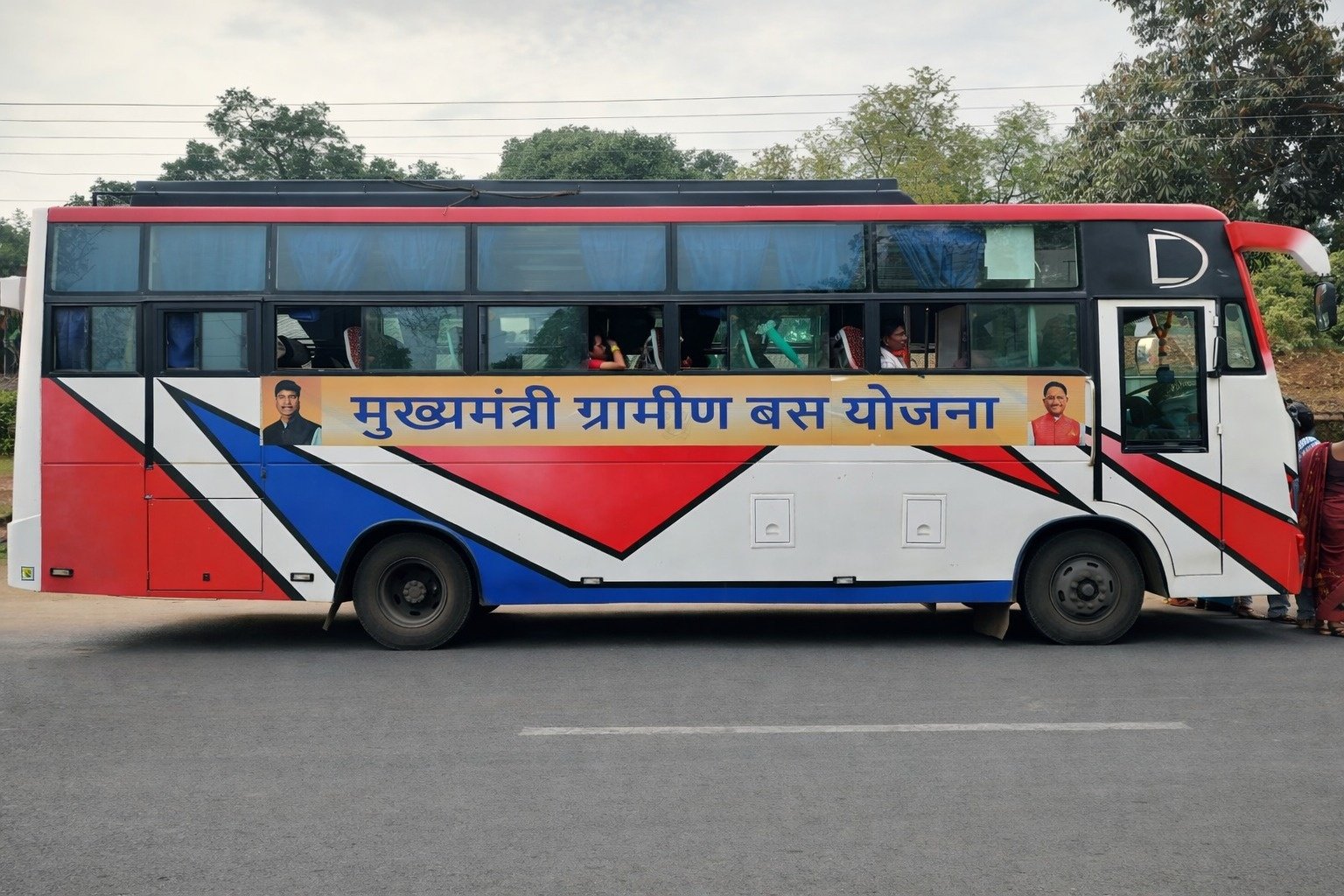
A bus operating under the Chief Minister Rural Bus Scheme, which has completed one year of service in Chhattisgarh. The scheme currently connects 850 previously unserved villages through 107 buses on 106 routes. Photo:primelookindia.com via CG/DPR
107 buses now operate across 106 routes in Bastar and Surguja; second phase aims to extend services to 4,368 unserved villages in eight more districts
Key Highlights
- Regular passenger bus services have reached 850 villages that previously had no such connectivity.
- 107 buses are operating on 106 routes across 13 districts of Bastar and Surguja divisions.
- Scheme buses have covered nearly 24 lakh kilometres in one year.
- The network currently covers around 5,300 km of notified routes.
- Bus operators have received ₹5.77 crore in financial assistance so far.
- Phase II proposes expansion to 4,368 unserved villages, potentially benefiting around 14.57 lakh people.
Raipur: From reaching a hospital on time to travelling to school, a weekly haat or the district headquarters, regular bus connectivity is changing everyday mobility in some of Chhattisgarh’s most remote areas as the Chief Minister Rural Bus Scheme completes its first year of operation.
Launched from Jagdalpur on October 4, 2025, the scheme has expanded from an initial 34 routes serving around 250 villages to 107 buses operating on 106 selected routes across 13 districts. According to the state government, regular passenger services have now reached 850 villages where such connectivity was previously unavailable.
Over the past year, buses operating under the scheme have travelled approximately 24 lakh kilometres. They currently cover around 17,500 kilometres every day, while the combined length of notified routes is about 5,300 kilometres.
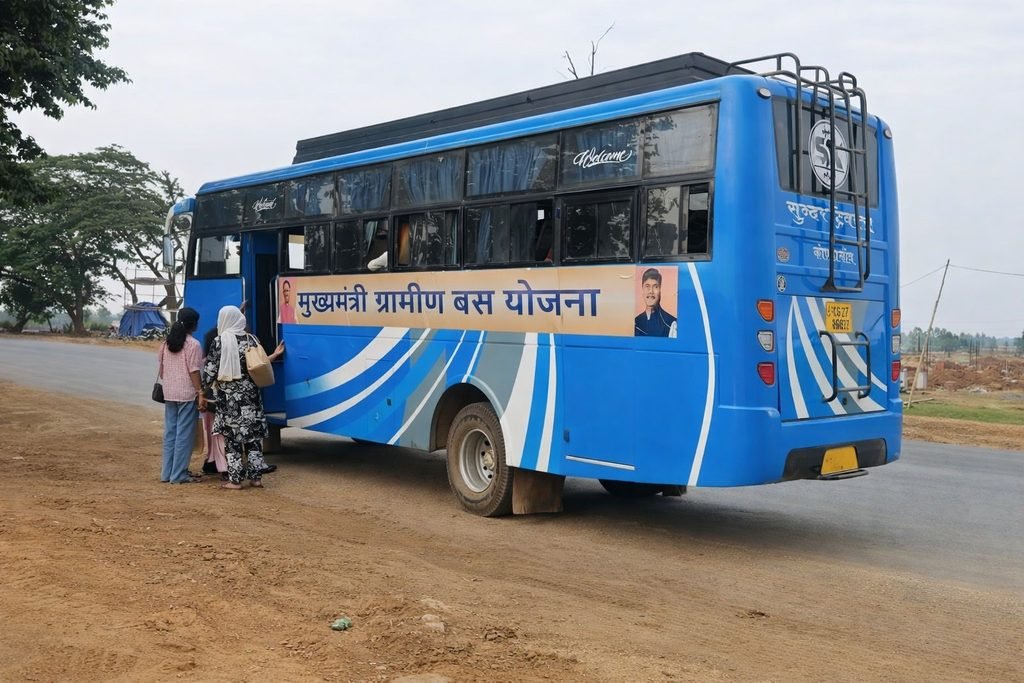
Passengers board a Chief Minister Rural Bus Scheme service in a remote area of Chhattisgarh. The initiative is designed to connect rural and tribal communities with markets, schools, hospitals and administrative centres. Photo: primelookindia.com via CG/DPR
The individual routes range from 14 km to 105 km, with most operating two trips a day.
‘Connectivity Must Reach the Last Village’
Marking the scheme’s first anniversary, Chief Minister Vishnu Deo Sai linked rural transport with access to essential services and economic opportunities.
<span style=”color:#c00000;font-weight:700;”>“A citizen living in a remote village should have the same opportunity to easily access education, healthcare, employment, markets and administrative services. The Chief Minister Rural Bus Scheme is translating this thinking into reality.”</span>
Sai said regular buses were now reaching areas where villagers previously had few dependable passenger transport options.
<span style=”color:#c00000;font-weight:700;”>“In areas where regular passenger buses once did not reach, villagers can now travel safely and at scheduled times to schools, hospitals, haat-bazaars, block headquarters and district headquarters. This is not merely an expansion of transport facilities; it is a means of connecting remote regions with the mainstream of development.”</span>
From 34 Routes to 107 Buses in One Year
The scheme was inaugurated in Jagdalpur on October 4, 2025, by Union Home and Cooperation Minister Amit Shah in the presence of Chief Minister Sai.
It began with services on 34 routes connecting around 250 villages. A year later, the network has expanded to 106 routes with 107 buses.
The first phase covers Bastar and Surguja divisions. In Bastar division, buses are operating across Sukma, Dantewada, Bijapur, Narayanpur, Bastar, Kanker and Kondagaon. In Surguja division, services cover Surguja, Surajpur, Balrampur, Jashpur, Korea and Manendragarh-Chirmiri-Bharatpur.
Replacing Risky and Irregular Travel Options
For many remote villages, the significance of the scheme goes beyond the addition of another mode of transport.
In the absence of regular buses, residents in parts of Bastar and Surguja had often depended on pickup vehicles and other goods carriers. Such journeys were particularly difficult for women, children, elderly passengers and people travelling for medical treatment.
Low passenger volumes on remote routes also made conventional commercial bus operations financially difficult. The scheme seeks to bridge this gap by providing government financial support to private operators serving identified routes.
Konta–Jagargunda Route Shows the Ground-Level Impact
The approximately 83-km Konta–Jagargunda route in Sukma district illustrates the change regular connectivity can bring to a remote region.
A field assessment conducted in June 2026 found women travelling with young children and luggage, students using the service to reach school and patients benefiting from easier access to healthcare facilities.
The buses are also helping villagers carry mangoes, mahua, poultry and other forest produce to local haat-bazaars and return home the same day. Workers and young people travelling for employment are among other users of the service.
Buses Are Connecting Villages With Markets Too
The rural bus network is also emerging as a link between isolated settlements and local markets.
Villagers can carry produce to market centres while essential commodities can travel in the opposite direction towards remote settlements. Increased connectivity between villages, haat-bazaars, development blocks and district headquarters is consequently supporting local economic activity.
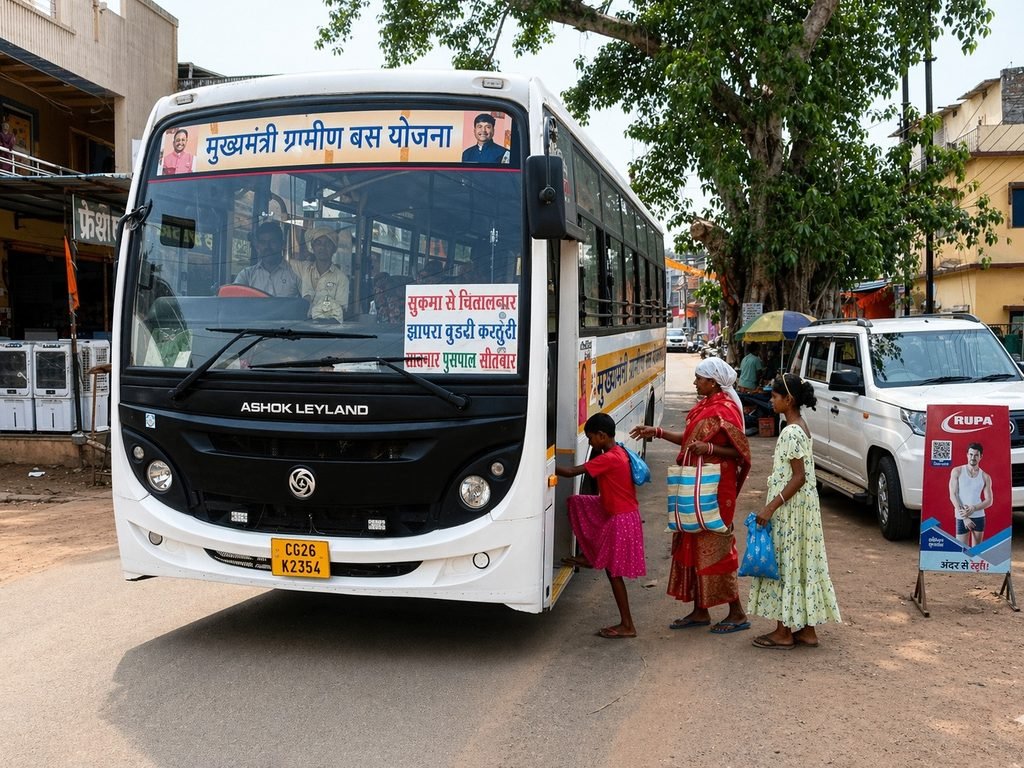
Women and children board a rural bus service as Chhattisgarh marks one year of the Chief Minister Rural Bus Scheme, aimed at providing scheduled passenger transport to previously unconnected villages. Photo: primelookindia.com via CG/DPR
The service also benefits soldiers posted at security camps situated along some of these remote routes.
Government Support Keeps Low-Passenger Routes Viable
To make operations commercially possible on routes with relatively few passengers, the state government provides operators with kilometre-based financial assistance.
The support is fixed at ₹26 per kilometre in the first year, ₹24 in the second and ₹22 in the third, for a maximum period of three years. Eligible vehicles can also receive exemption from monthly motor vehicle tax for up to three years.
So far, 107 bus operators have received ₹5.77 crore in financial assistance.
Under the model, buses remain privately owned and operated, with passenger fares going to the operators. The government provides support specifically to make regular services viable on routes where normal commercial operations would otherwise be difficult.
GPS Tracking Linked to Payments
Technology has been integrated into the scheme to monitor whether buses actually operate on their notified routes.
Every bus is equipped with a Vehicle Location Tracking Device (VLTD). Their movement is monitored through the Transport Department’s Control and Command Centre.
The MMGBY portal provides live tracking and information on trips, routes and stoppages. Financial assistance to operators is calculated according to kilometres actually travelled on notified routes, based on online VLTD records and verification by regional transport authorities.
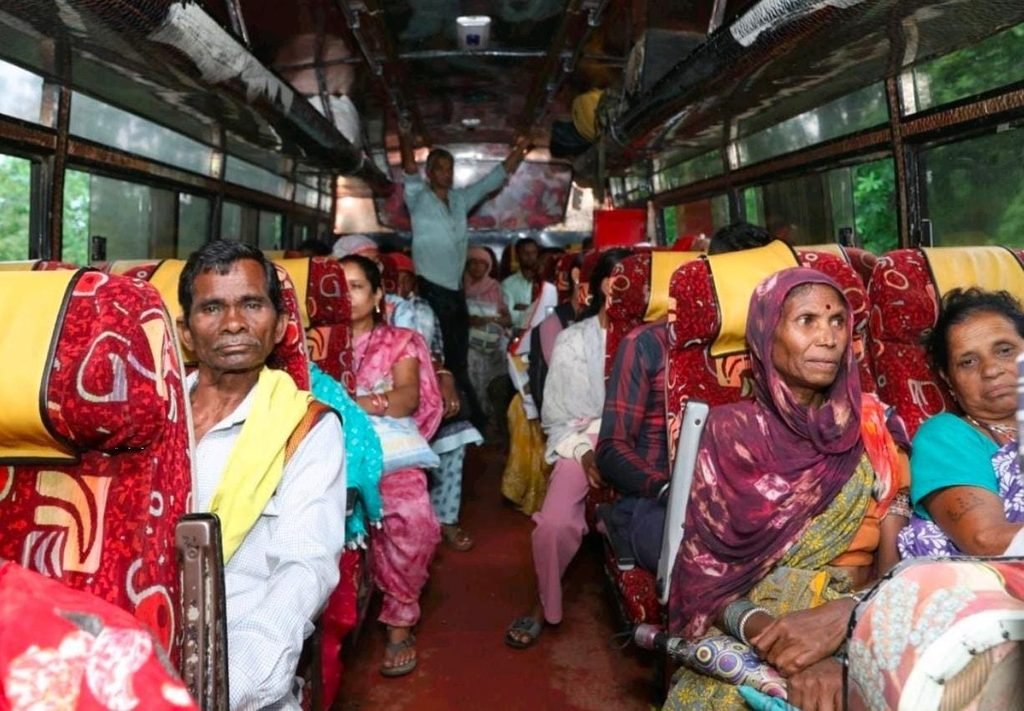
Passengers travel aboard a bus serving remote communities under the Chief Minister Rural Bus Scheme. The state government says the network has covered nearly 24 lakh kilometres during its first year. Photo: primelookindia.com via CG/DPR
Passengers can also access bus schedules through the Bus Sangwari app.
Phase II Targets 4,368 More Villages
The state government is now preparing to extend the scheme to scheduled areas in eight additional districts—Mohla-Manpur-Ambagarh Chowki, Khairagarh-Chhuikhadan-Gandai, Balod, Gariaband, Gaurela-Pendra-Marwahi, Raigarh, Korba and Dhamtari.
The proposed expansion covers 85 tribal development blocks and aims to connect 4,368 villages currently without bus services.
Around 14.57 lakh people are expected to potentially benefit, with 60 to 80 buses proposed for the second phase.
UPI and QR-code-based fare payments are also proposed as part of efforts to improve passenger convenience.
Fare Concessions for Special Categories
The scheme provides full fare exemption, along with an attendant where applicable, for specified categories including visually impaired persons, persons with intellectual disabilities, people unable to walk using both legs, senior citizens aged 80 years and above, and people living with HIV/AIDS.
People certified by the Collector as affected by Naxal violence are eligible for a 50 per cent fare concession.
Reiterating the government’s objective, Sai said:
<span style=”color:#c00000;font-weight:700;”>“Our goal is not to restrict transport facilities to cities and major routes, but to take them to the last village. The Chief Minister Rural Bus Scheme will be expanded to connect more villages without bus services with regular passenger transport, so that distance does not become a barrier to education, healthcare, employment and opportunities for development.

YOU MAY LIKE THIS