Reg No. - CHHBIL/2010/41479ISSN - 2582-919X

Musk, Luckey and Gingrich Tapped to Help Chart Future of US Warfare
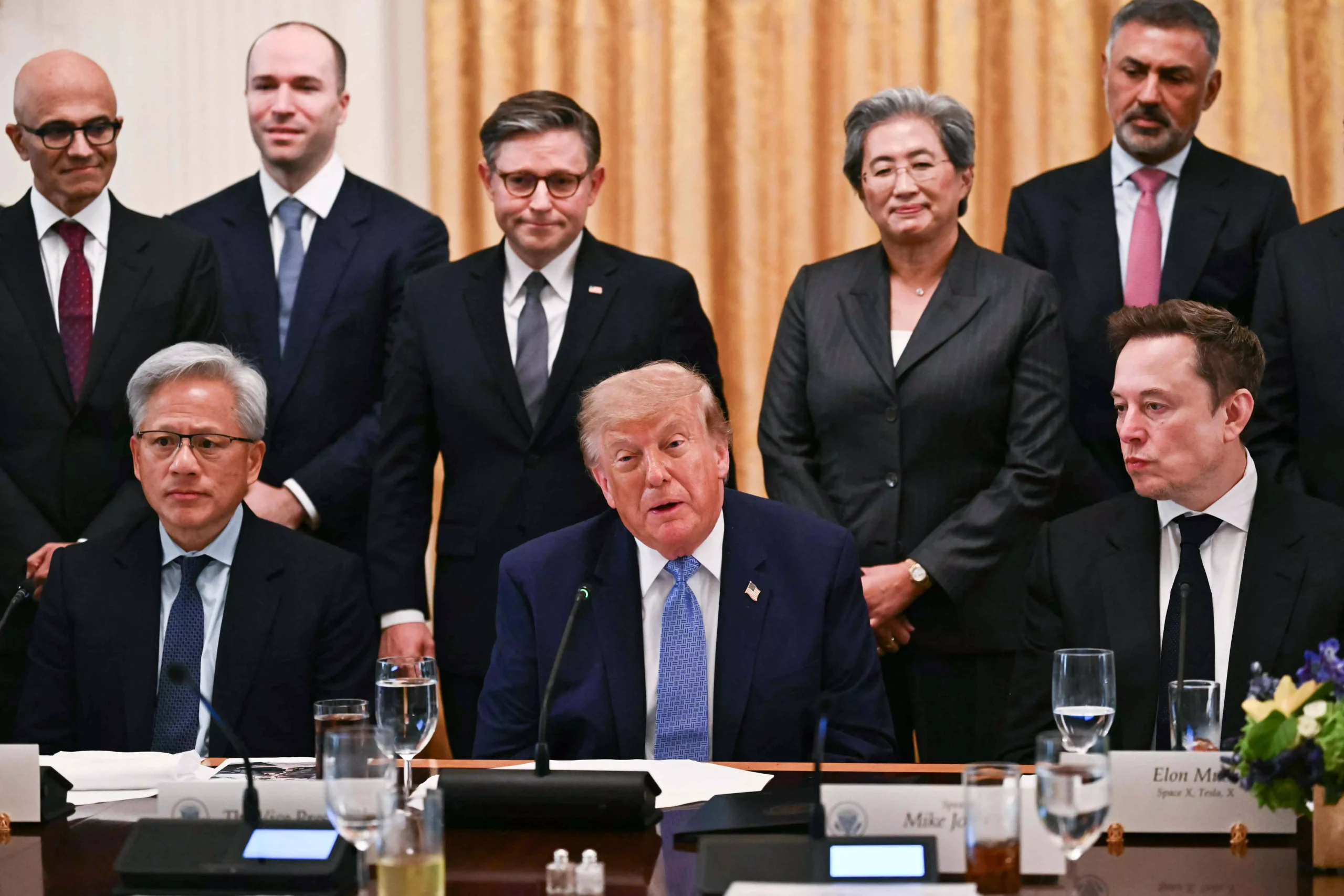
SpaceX CEO Elon Musk, seated at right, attends a meeting with US President Donald Trump in Washington. Musk has been named one of three co-directors of the Pentagon’s Project Meridian, a 120-day study examining the future of warfare. Photo: AFP
Pentagon launches 120-day ‘Project Meridian’ to examine emerging battlefields, technologies and military capabilities under the supervision of technology chief Emil Michael
Key Highlights
- Elon Musk, Palmer Luckey and Newt Gingrich will co-direct Project Meridian
- Pentagon technology chief Emil Michael will facilitate the initiative
- The study will examine future warfare domains and identify critical capability gaps
- A public final report and a classified annex are due within 120 days
- Project will draw expertise from technology, industry, academia and national-security circles
Washington DC: The Pentagon is bringing some of America’s best-known technology and policy figures into a concentrated study of how wars could be fought in the decades ahead, with Elon Musk joining defence entrepreneur Palmer Luckey and former US House Speaker Newt Gingrich as co-directors of a new initiative called Project Meridian.
US Secretary of War Pete Hegseth announced the project during his State of the Force address at Marine Corps Base Quantico on Wednesday. Rather than focusing only on today’s weapons and battlefields, the initiative has been asked to look ahead at emerging technologies, new domains of conflict and the capabilities American forces could require in future confrontations.
The project will be facilitated by the department’s Chief Technology Officer, Emil Michael, while Musk, Luckey and Gingrich will co-direct the exercise. They will be supported by specialists drawn from academia, policy, industry and technology.
Hegseth argued that forecasting future conflict should not remain an exclusively Pentagon exercise, saying outside innovators and technologists could provide perspectives that the military establishment might otherwise miss.
Project Meridian has been given 120 days to complete its work. Its mandate ranges from identifying future war-fighting environments to determining technological gaps and proposing practical approaches for developing, testing and fielding new capabilities. The department says the examination will extend across potential domains ranging from underground environments to the cislunar frontier.
The final findings are expected to be released in two forms: an unclassified report available publicly and a classified annex intended for military leadership.
Musk’s involvement gives the project particular significance because SpaceX already operates at the intersection of commercial space technology and US national-security requirements. Luckey, meanwhile, is the founder of defence-technology company Anduril. Their participation therefore brings private-sector technological experience directly into a Pentagon exercise examining what future American military capabilities could look like.
Project Meridian is an advisory and analytical exercise, however, rather than itself a weapons procurement programme. Its immediate product will be recommendations about future capabilities, not the direct acquisition of new weapons systems.